Time Again: Vashon’s Environmental Ethic
Published 3:30 pm Tuesday, April 15, 2025
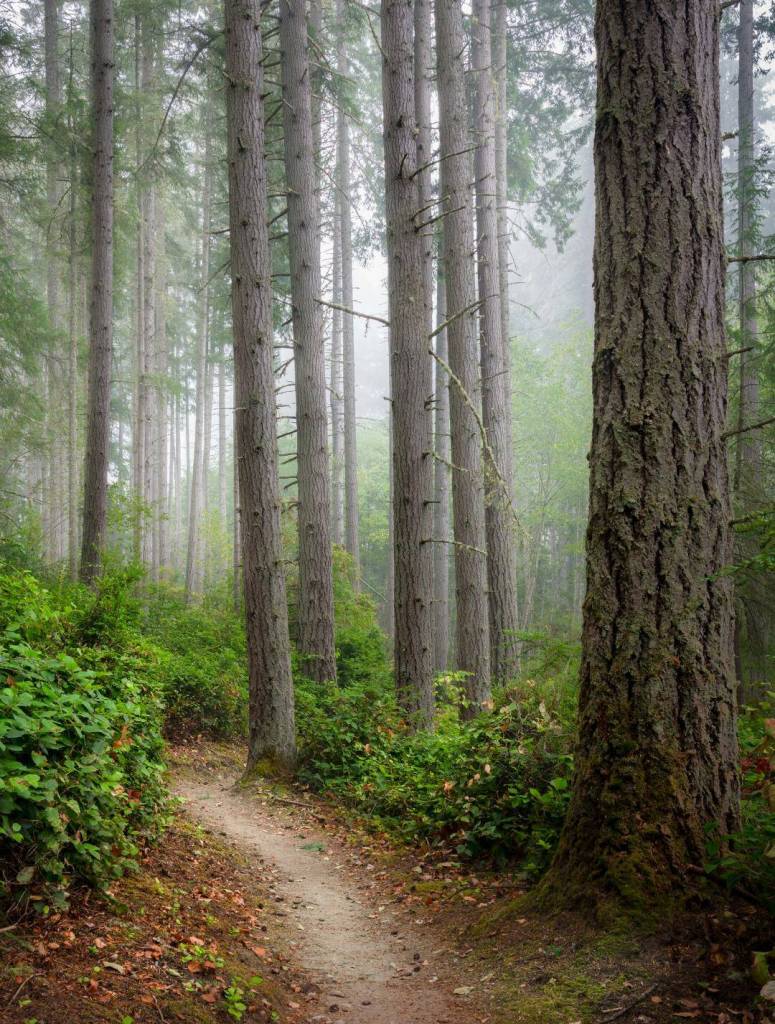
Vashon is defined by many ethics — political activism and rural self-determination among them — but part of the island’s character is its environmental ethic, which has developed over time and come to define Vashon in the first quarter of the 21st century.
On the island, five major stages reflect that evolution and the prevailing cultural and environmental attitudes of the time.
The s ̌xwəbabs, or Swift Water People, represent the first stage of environmental awareness. Their Indigenous understanding of the environment, the natural cycles of the seasons and their place within those cycles is fundamental to who they are.
The s ̌xwəbabs are named for their expert navigation of the rapid tidal changes and dangerous rip currents surrounding Vashon. Prior to European contact, an estimated 10,000 to 15,000 s ̌xwəbabs lived on Vashon, with village sites generally clustered around the shoreline of Quartermaster Harbor.
In s ̌xwəbabs culture, humans recognize they are surrounded by living relatives with special gifts and abilities: Deer People, Salmon People, Cedar People, Mountain People and Wind People. Elders teach people to thank all these others who provide them with food, shelter and everything they need for a good life. Showing respect for all things means wasting nothing and helping other beings.
The s ̌xwəbabs inhabited Vashon since time immemorial, and for millennia lived in a balanced relationship with their environment. They saw themselves as part of the earth, not separate from it.
A different attitude came with the second stage of environmental awareness, when European voyagers and American settlers brought with them the prevailing attitudes of their time. The “Doctrine of Discovery,” a legal and religious principle, declared lands inhabited by non-Christians were fit to be subdued and colonized — those places sometimes being referred to as “terra nullius” (nobody’s land).
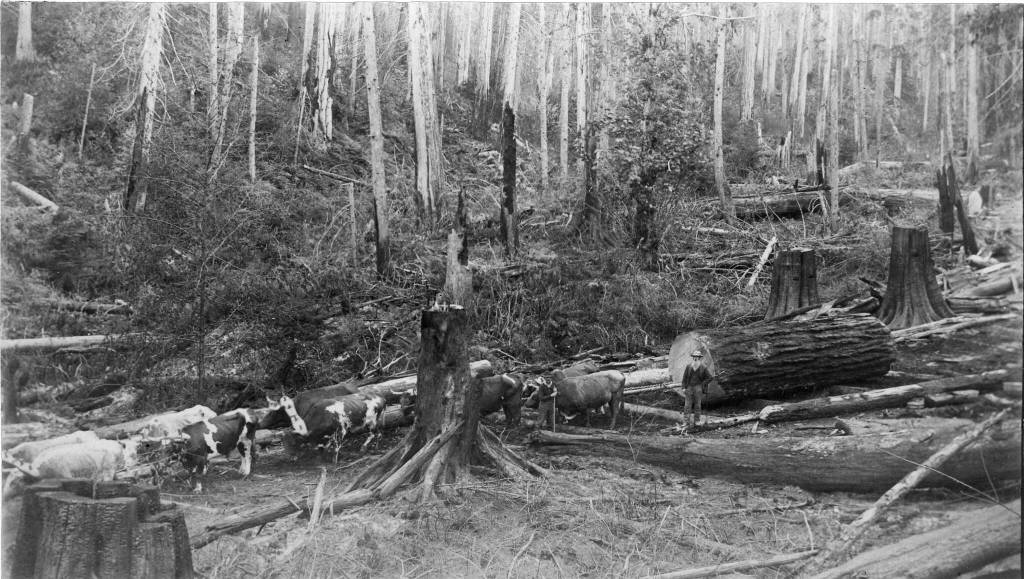
American settlers also brought with them different perspectives about the environment, including a greater willingness to see nature as something to use for their needs. The early settlement of the island was all about extracting resources for subsistence, but quickly developed into a more commercial and industrial approach to what has been termed the “big four” engines of the Northwest economy: farming, fishing, logging, and mining. On Vashon, the latter took the form of gravel mines.
The third stage of environmental awareness grew out of the agricultural development of the island economy as farmers sought to maximize yields, and out of hunters’ desire to preserve wild animals to hunt.
This agricultural foundation first appears in the 1890s with the formation of the Vashon Horticultural Society (1892) and the Fruit Growers Vashon Horticultural Society (1900). A focus on conservation expanded in the 1920s and 1930s as island farmers sought to preserve their agricultural productivity using advice from state and federal agriculture officials. Meanwhile, hunters formed the Vashon-Maury Island Sportsman’s Club in 1933 to enhance existing stocks of huntable animals, introduce new species such as pheasants, and to rid the island of “pests” such as crows and feral cats by sponsoring hunts.
The first garden clubs were formed in the 1920s and 1930s, the Vashon Garden Club was formed in 1940, and the Vashon-Maury Island Garden Club was organized in 1952. These two clubs joined forces by consolidating into one organization in 1957. Their initial focus was garden beautification and flower arrangements.
While contemporary environmentalists might balk at calling these early efforts environmentalism because of their focus on the use of nature for human purposes, these organizations represented early intentional stewardship of the island. They laid the foundation for the fourth stage of environmental awareness that first emerges in the 1960s, takes root in the 1980s, and begins to grow into the early 2000s.
In this fourth environmental stage, islanders began to appreciate nature more holistically, seeing themselves as part of a system that could suffer or thrive based on how they treated it — with the health of the island directly affecting their health, too.
Rather than focusing on the parts of the natural system, islanders began, in the words of island naturalist and librarian Rayna Holtz, “to look at native trees, wild streams, native fish and birds and insects and biomes and stars. We began to see humans not as the center of the universe, but a tiny part of the web of life in one single planet of the vast universe.”
This growing awareness was a first step toward understanding the world in ways similar to how the s ̌xwəbabs lived in their world.
The concept of an “Environmental Ethic” can be traced to a phrase coined in 1948 by writer and naturalist Aldo Leopold and developed in “A Sand County Almanac” (1949). A “land ethic,” he suggests, is “a new ethic dealing with human’s relations to land and to the animals and plants which grow upon it.”
Leopold’s idea and Rachel Carson’s book, “Silent Spring” (1962), are often credited with spurring the start of the modern environmental movement. This movement helped create a major shift in the way Americans view nature, the environment, and human beings place in the web of life.
Of the 47 Vashon environmental organizations that are operating on the island in 2025, five were formed before 1970 and 20 were formed between 1970 and 2004, during this fourth stage of an emerging environmental awareness.
These environmental organizations focus mostly on Vashon and include the Vashon Earth Day Committee (1970), Vashon Island Growers Association (1989), Vashon Bird Alliance (1989), Vashon-Maury Island Land Trust (1989), Preserve Our Island (1999, now Sound Action), the Backbone Campaign (2003), and Sustainable Vashon (2003).
Each of these organizations were born of this island and flourished with untold hours of volunteer efforts and enthusiasm. Building on work of their predecessors, they built the foundation for the island’s fifth and current stage of environmental awareness, emerging in the mid-2000s with an even wider lens and a focus on what some would call global environmentalism.
Notable about this fifth stage on Vashon is the rapid growth and variety of new environmental efforts. Nearly half — 22 — of the 47 Vashon environmental organizations operating on the island today were formed between 2006 and 2025.
Most of these organizations have a Vashon focus but also recognize that the Vashon’s issues don’t start and stop at the island’s shores, and must be confronted with a comprehensive, regional and global approach.
Still, these organizations approach environmental issues with a sense of place at their core. The relationship of people and place is embodied in their many different focuses, but they all express an ethic that is grounded in love of the island.
Now, at the conclusion of the first quarter of the 21st century, Vashon is well on its way to becoming a hub of environmental activism and leadership. This environmentalism is experienced by many islanders spiritually. Whether islanders find their deeper meaning community in a church, the Vashon Havurah, a meditation group, a labyrinth walk, a yoga class, or somewhere else, the foundation of this spirituality is grounded in something which undergirds all religions and spiritual practices: the Earth itself.
Many islanders express this concept with the expression “The earth is my church”. They live their beliefs through their involvement in Vashon’s environmental organizations, and, very often, in the way they steward their private landscapes.
For many islanders, this culture is — intentionally or unintentionally — part of a growing appreciation and respect, and perhaps even the beginning of a return to the sustainable and holistic world view of the s ̌xwəbabs, and an attempting to cultivate an informed, authentic Earth ethic and spirituality for this time and place.
The combination of active environmental organizations and deeply held spiritual connections work together to define the island as an environmental community and to create a Vashon environmental ethic.
Bruce Haulman is an island historian. Carla Pryne founded Earth Ministry in 1992 and is an Episcopal priest. Terry Donnelly is an island photographer.