Wildfire Prevention: Advice from Vashon Island Fire Rescue
Published 1:30 am Thursday, August 24, 2023
Vashon Island Fire & Rescue (VIFR) and VashonBePrepared have been receiving concerned citizen inquiries, asking if a Maui-level wildfire could happen on Vashon.
VIFR has great advice pages that can help you take steps now, including one that describes the newly elevated Stage Two Burn Ban in place for the island. Find out more about burning and burning permits, wildland fire safety, and wildfire prevention.
Could a Maui Fire Happen on Vashon?
“The loss of any property from a wildfire would be a disaster for Vashon,” said VIFR Fire Chief Matt Vinci. “That’s why it’s important for VIFR and our island partners to be prepared. VIFR staff prepares every day for the next potential or probable emergency. Our preparations include disaster planning with VashonBePrepared, daily shift staffing that allows us to cover fire and EMS responses, providing wildfire prevention education to the public, and maintaining a modern fleet of fire and EMS equipment that is ready for the next response.”
As explained on the wildfire advice pages on the VIFR website, the Chief pointed out that the fire weather situation on Vashon is different from what happened on Maui, and what happens every fire season in California or the east side of Washington State.
We don’t often have the hot dry east (Diablo or Santa Ana type) 60 miles per hour winds that blow fire-spreading showers of embers, suck humidity out of brush and trees, and turn even a small fire into a deadly one.
In addition, the island usually has overnight cooling weather and ocean humidity that recovers fire fuel moisture levels. That’s why it has been years (since 2016) since the National Weather Service last posted a Red Flag fire danger warning that included the Vashon fire weather zone.
But Chief Vinci added an additional consideration for islanders.
“It’s important to understand that it would be more than an hour before additional firefighting resources would arrive by ferry from the mainland to help VIFR deal with a major conflagration,” he said. “Our island-limited resources are the real wildfire risks that we face on Vashon. Numerous firefighters would be needed to stop a fast-moving, wind-blown fire.”
Even with the lower risks related to our local environment, there is still the risk of wildfire doing major damage here. The potential for a fire to get out of control teaches us that citizen action is essential to help prevent a wildfire disaster. Everyone should take the steps described on the VIFR website to reduce the chances a wildfire will get started, spread quickly, and endanger their neighborhoods.
Be ready with a family evacuation plan
All island preparedness begins at the household level.
Experts advise everyone to figure out two potential ways to get out, by car and on foot, and one or more places to reunite. Practice as a family to make sure everyone understands what to do, where to go, and what to take along in a go kit that you’ve assembled before you need it to flee from a dangerous situation.
It’s helpful to work with your neighbors to share information and plans. That’s an excellent reason to sign up for one of the informal training sessions by the Neighborhood Emergency Response Organization (NERO) program run by VashonBePrepared. Find out more here.
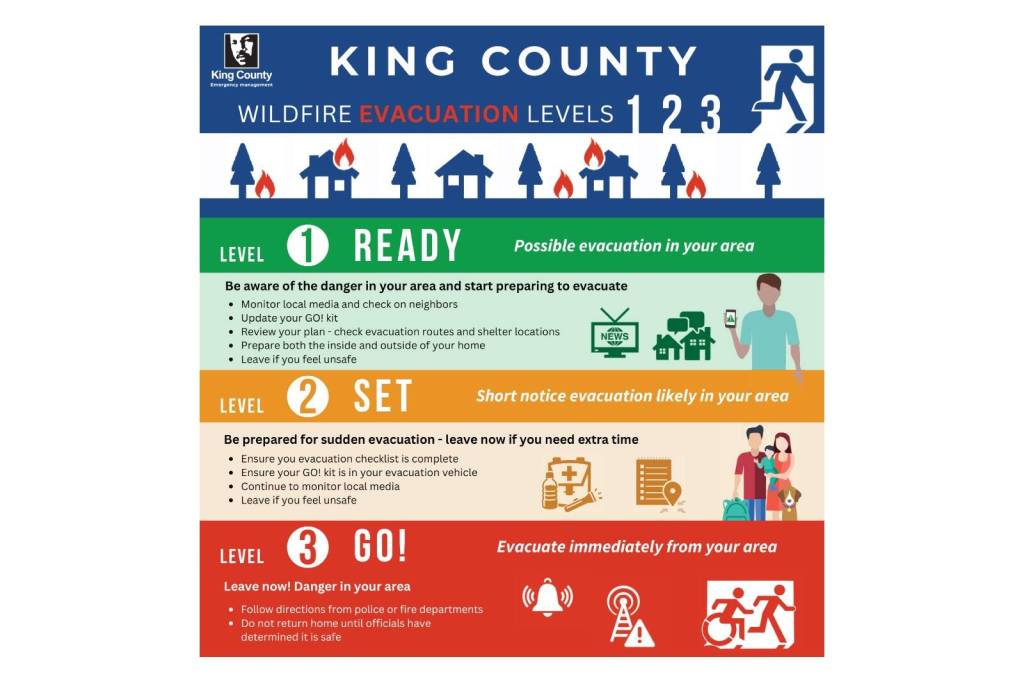
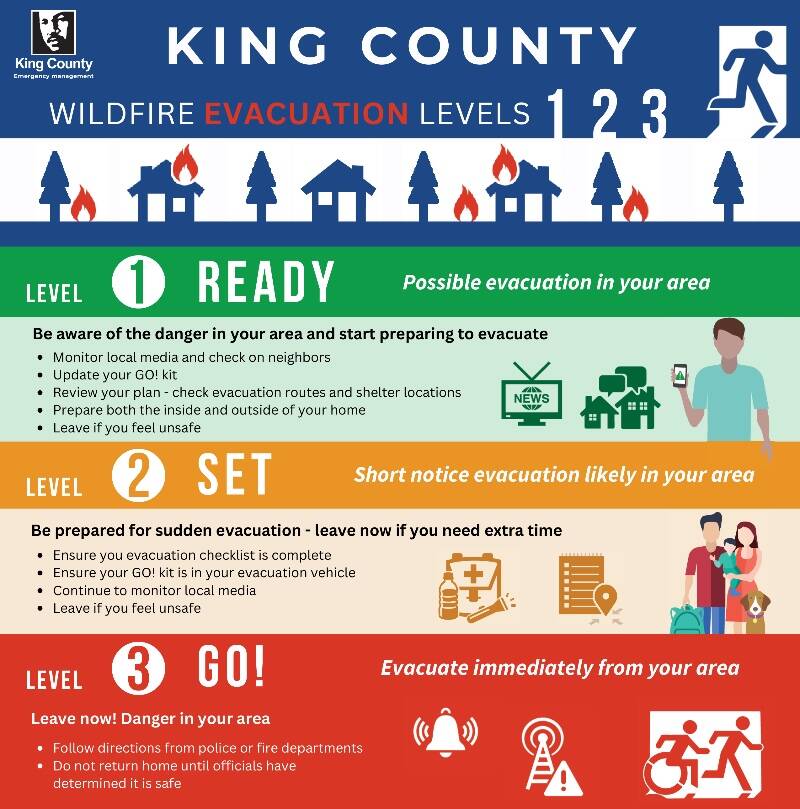
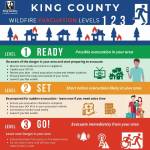
If it becomes necessary to evacuate your neighborhood, it will help if you know about the three levels of evacuation that might be requested by King County Sheriffs and Vashon Island Fire & Rescue.
The King County Office of Emergency Management calls it Ready, Set, Go! Level One (Ready) is for you and your family to be prepared and get ready. Level Two (Set) is an alert that evacuation is likely on short notice. Level Three (Go!) is for immediate danger in your area so leave now.
If you have a complex evacuation plan (such as with livestock) evacuate early so as not to get stuck. Tune to Voice of Vashon at 1650AM to get official information, and encourage family and neighbors to sign up for the VoV Emergency Alert System here.
Summer COVID Wave Update
So far, experts from multiple agencies say the new dominant variant of COVID does not appear to cause more severe disease than the variants it has been replacing.
The new mutation is EG.5, nicknamed Eris, and it now accounts for 17% of all COVID infections in the country. That’s a big leap in the space of a few weeks.
While the weekly COVID death rate has dropped below 200 per week nationally – the lowest weekly rate since the pandemic began – the COVID hospitalization rate has been increasing nationally and in our region, reminding us that COVID is still lurking and can make you sick. Caution is still warranted if you have risk factors.
Vashon Risk Level: Holding at Basic
The VashonBePrepared COVID Risk Advice Tool aggregates data in our exposure area.
That includes King, Pierce, and Kitsap counties since the island has ferry routes that generate thousands of round trips daily to those mainland areas. The primary metric evaluated by the Vashon Medical Reserve Corps is the COVID hospitalization rate since that is very reliably reported by public health agencies, unlike the poorly reported home health tests, as discussed above.
At the Basic Risk Level, wear an N95 mask indoors in public if you have been exposed to COVID, are at risk for health or other reasons, or live or spend time with someone at high risk.
If you haven’t yet had a bivalent booster or you are over 65 and it’s been at least four months since your last booster, you’re eligible now.
Maintain good ventilation at home and at work, and avoid those with suspected or confirmed COVID.
If exposed to COVID, wear a mask in public and avoid contact with those at high risk for 10 days.
Always home-test if you have symptoms. If you test positive, isolate for at least five days and until you test negative. Also check in right away with your doctor about treatment, even if your symptoms are initially mild.
If immunocompromised, discuss additional prevention actions with your healthcare provider.