Looking back — and ahead — at WSF
Published 1:30 am Tuesday, February 10, 2026
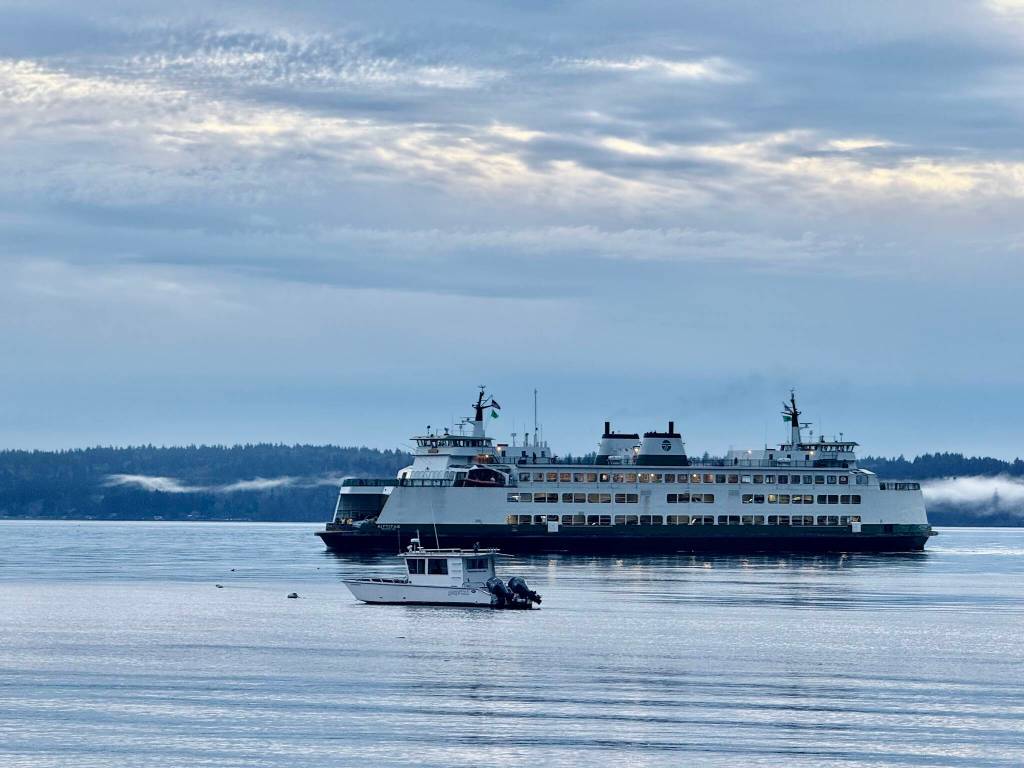
Washington State Ferries held their first community meeting of the year on Jan. 21, where a group of community members and panelists gathered to discuss the past year of service, as well as what’s ahead in 2026.
With a return to full domestic service last summer, Washington State Ferries (WSF) saw ridership up by one million customers (tinyurl.com/5n7xjrc3), with over 20 million total riders for the first time since 2019.
WSF says they had fewer cancelled trips last year caused by crew shortages, which they say reflects a post-pandemic investment in workforce development.
Washington’s 21-vessel fleet makes up the largest ferry system in the United States, serving millions of travellers annually, and connecting a network of ferry-reliant communities in Washington.
While Deputy Secretary Steve Nevey said WSF is excited to see ridership climb to pre-pandemic levels, throughout the meeting, the same message was repeated: Washington doesn’t have enough boats to meet this demand.
“Going into 2026, it’s becoming very apparent that the biggest challenge we have is that we don’t have enough vessels to provide the level of service that we’re required to right now,” Executive Director Steve Nevey said.
Between the years 2000 and 2030, Nevey says Washington will have only built seven vessels, when realistically the state should have built two boats every two years to retire the oldest boats earlier.
This means Washington has an old fleet of ferries that require a lot of maintenance, and the frequency of breakdowns is a constant point of contention. The average age of the fleet is 35 years old, with many boats in their 50s and 60s. On the day of the meeting, both the Seattle/Bremerton and the Triangle routes were down a boat, causing disruptions.
At any given time, three of the 21 boats available to WSF have to be in planned maintenance at any given time. This leaves 18 boats to run an 18-boat schedule.
“If we have an unplanned breakdown with one of those 18 vessels, we don’t have spare vessels to plug in,” Nevey said. “When that happens, most routes get downsized to be able to cope with the fact that we’re missing a vessel.”
These outages significantly impact Vashon Island, as WSF’s service contingency plan puts the triangle route on a two-boat service when a vessel is out of the system, and has caused frustration from residents. The Facebook group Vashon Ferry Riders Forum is filled with comments from islanders helping eachother plan around the two-boat schedule in order to make it to events like doctor’s appointments and work.
“I just saw that we are back to 2 boats. I’ll get up 2 hours earlier tomorrow due to potentially long lines,” one commenter wrote.
Director of External Relations Jenna Forty says she frequently hears those who rely on the Triangle route say they feel they bear a disproportionate amount of disruptions.
“For folks on the triangle, what I’d say is that if it feels like you’re getting a disproportionate amount of reduction, that reduction is actually being felt across the entire system,” Forty said.
Wendy Aman, a member of Islanders for Ferry Action, says that as WSF revises its contingency plan, it needs to prioritize restoring full-service to the triangle route. In a February 5 letter to the Governor, the group said, “Where there’s a will, there’s a way. It’s time for the Governor to gather the will to make something happen on the triangle route.”
Aman, a Vashon Island resident of almost eight years, says part of her reasoning for choosing the island to retire on was her past positive experiences with Washington’s Ferry system. But after the COVID-19 pandemic, she says she felt that things got worse.
With no city government, Aman says, Islanders for Ferry action is a way to “speak loudly” in conveying the concerns and experiences of Islanders to the State government.
“I have waited two hours, as everyone has, for a boat; you’re always prepared when you live on the island,” Aman said. “When you have boats that are breaking down all the time, somebody has to lose, we just dont think it should be Vashon’s triangle route every single time.”
Washington has already allocated funding for three new hybrid-electric ferries (tinyurl.com/ycykmcpd), two of which are already contracted to be built by Florida-based Eastern Shipbuilding Group.
WSF Assistant Secretary John Vezina says they are waiting to make sure they have a good working relationship with the shipyard before committing to a contract for the third vessel. The first new vessel is expected to enter the system in 2030.
This legislative session, Governor Bob Ferguson proposed an additional $1 billion dollars in funding for an additional three ferries in his supplemental budget. (tinyurl.com/5au7yf7d)WSF Assistant Secretary John Vezina says they won’t know until around Mid-March if the legislature will approve the funding.
Ferguson’s proposal also includes $150 million towards maintenance on the fleet’s three oldest vessels. Typically, when a new ferry enters the system, the oldest boat is retired. By maintaining the fleet’s oldest boats, WSF could keep these boats in the system until the fourth new vessel is added to the system.
If approved, WSF officials said the additional six hybrid-electric ferries would be a step towards achieving its goals of replacing its aging ferries, adding more boats to the system, and electrifying the fleet.
WSF’s system electrification plan also includes plans to add charging stations to terminals and convert existing vessels to be hybrid-electric. In July of 2025, The Wenatchee became the first converted hybrid-electric vessel in the fleet.
“When I talk to other people in the maritime industry … everybody is moving away from fossil fuels and coming up with a strategy to decarbonize,” Nevey said. “It’s really important that we modernize with the industry, and make sure that we’re building boats that are gonna be resilient for the next 60 years that they are expected to be in service.”
2026 marks WSF’s 75th anniversary, as well as the FIFA World Cup in June, where Seattle is projected to host around 750,000 visitors. WSF is expecting significant demand for the ferry system from tourists in the region, and says they are working to make sure there is only one vessel in planned maintenance during the World Cup.
This year, Nevey says, WSF is hyper-focused on maximizing the resources WSF has and trying to build on those resources for future years.
Scarlet Hansen is a contributing journalist for The Beachcomber.