Safer roads, healthier homes and senior support
Published 1:30 am Thursday, April 16, 2026
Keep wearing your hi-vis clothing
Longer days and sunshine! Is it time to put away our hi-vis vests and other safety gear? Nope.
Dressing for high visibility along Vashon’s roads is a smart thing to do any time of year, any time of day. Walkers, runners, and bikers who don’t wear neon colors blend into the background and may be difficult to see for drivers. That’s true even during sunny days. Driving in bright sunlight or along alternating shady and sunny stretches of road can impair drivers’ vision temporarily as their eyes struggle with glare or adjust to changing light conditions. That’s when walkers, runners, and bikers are extra vulnerable.
To help prevent accidents, drivers should slow down and walkers, runners, and bikers should wear hi-vis clothing and take other safety measures. See cdc.gov/pedestrian-bike-safety for additional tips for staying safe.
Plastics everywhere: should I worry?
Plastic products are everywhere in our lives – food packaging, toothbrushes, kids’ toys, and so much more. It’s hard to imagine life without the convenience and utility of plastic products. But how do plastics affect our health? And what can we do to minimize harm?
How do plastics affect our health? Exposure to plastics is widespread, from their production using fossil fuels and other chemicals that may pollute air and water, to when they are thrown away. Plastics never really biodegrade, they just break down into smaller and smaller particles (microplastics and nanoparticles). We’re exposed to the chemicals in plastics through food, air, water, and dust. Exposure to the hazardous chemicals in plastics has been linked to cancers, immune system damage, endocrine disruption that causes hormonal issues, and other health problems.
What can we do to minimize harm? Some plastics are obvious and easy to avoid, while others are more difficult to manage. Reducing use of plastics at home also means reducing the volume of plastics in the environment that will become microplastics and nanoplastic dust. The kitchen is a smart place to start making plastic-free choices:
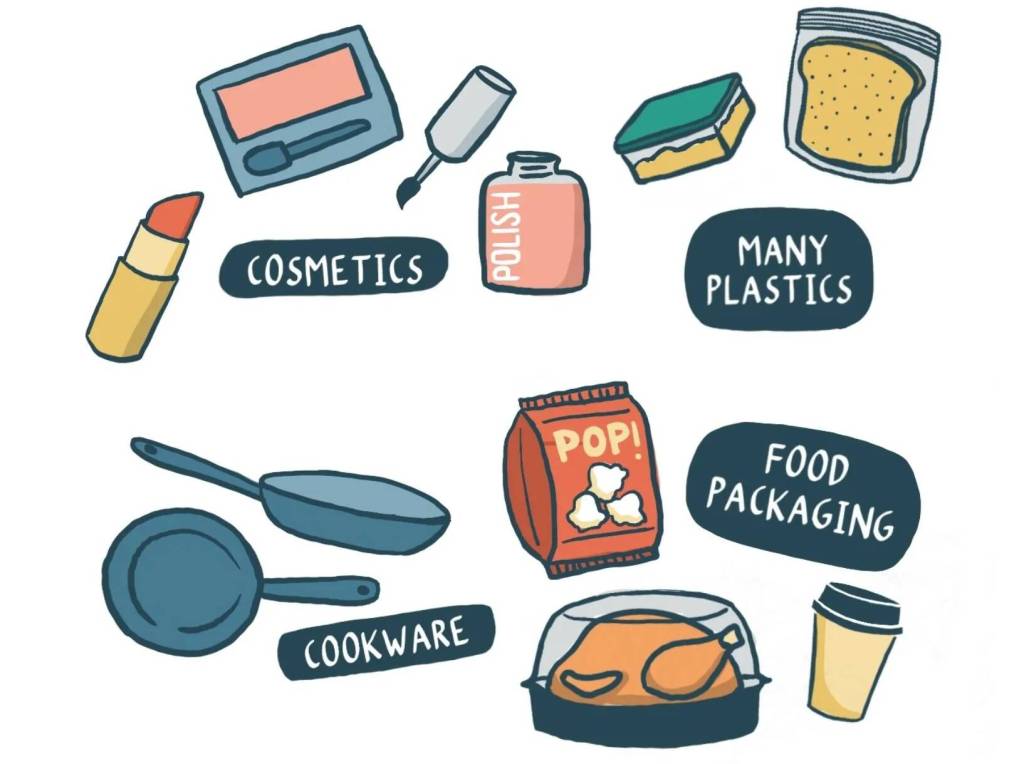
Cut back on use of plastic-coated cookware, plastic utensils, and plastic food storage containers. Instead of Teflon-coated cookware, try seasoned cast iron, stainless steel, or nonstick ceramic-coated pans. Choose utensils made of wood, bamboo or metal, and choose bamboo, wood, or glass cutting boards instead of plastic. For food storage, consider using glass containers (such as recycled food jars), beeswax-coated fabric wraps, or simply a bowl covered by a plate.
Don’t microwave foods in plastic containers. Avoid using plastic film such as Saran wrap, especially when heating food or storing hot food. Never microwave food in plastic; instead, transfer it to microwave-safe ceramic or glass. (Microwave popcorn bags have plastic liners – opt to make popcorn in a metal pan on the stove instead.)
Look for foods sold with less plastic packaging. Foods sold in glass jars can be safer than food sold in cans, because cans are lined with plastic to prevent the food from reacting with the metal. When buying fresh produce, bring your own cotton produce bags or use a paper bag.
At the cafe, when dining out, or on the go: bring your own reusable coffee cup instead of getting a disposable cup (those paper cups are lined with plastic film to make them waterproof, and topped with a plastic lid). Invest in a water bottle made of glass or metal, and minimize use of single-use plastic water bottles. Look for compostable take-out containers at your favorite restaurants.
When shopping for new or thrifted clothing, toys, and housewares, check labels to look for plastic-free products. Examples include clothing made from natural fibers (cotton, linen, wool, silk), wooden or cloth toys for young children, and furniture or decor made from wood, metal and tempered glass. Upholstered furniture marked as free from flame retardants is more likely to be plastic-free. (Because plastic-based furniture is more flammable, it’s treated with flame retardant chemicals more often.) Consider choosing floor coverings made from natural materials such as wool rugs and carpets, and wood or tile floors.
Know your numbers: plastics labeled as #3, #6, and #7 are more harmful to produce, and using them may cause toxic exposure. Plastics with those numbers are more difficult to recycle (if they even reach the recycling stream – most single-use plastics go into the landfill).
What else can we do? Wash hands (especially children’s) frequently to minimize plastics exposure. Reduce plastic dust in your home by damp-mopping, using a vacuum with a HEPA filter, and opening windows for fresh air. Launder your clothing that contains synthetic fibers on cooler settings, and avoid breathing lint when emptying the dryer’s lint filter.
Learn more about reducing your exposure to plastics, at home and beyond: plasticpollutioncoalition.org/beginners-guide-to-reducing-plastic.