Foss Miller, a larger-than-life island leader, dies at 78
Published 1:30 am Wednesday, May 6, 2026
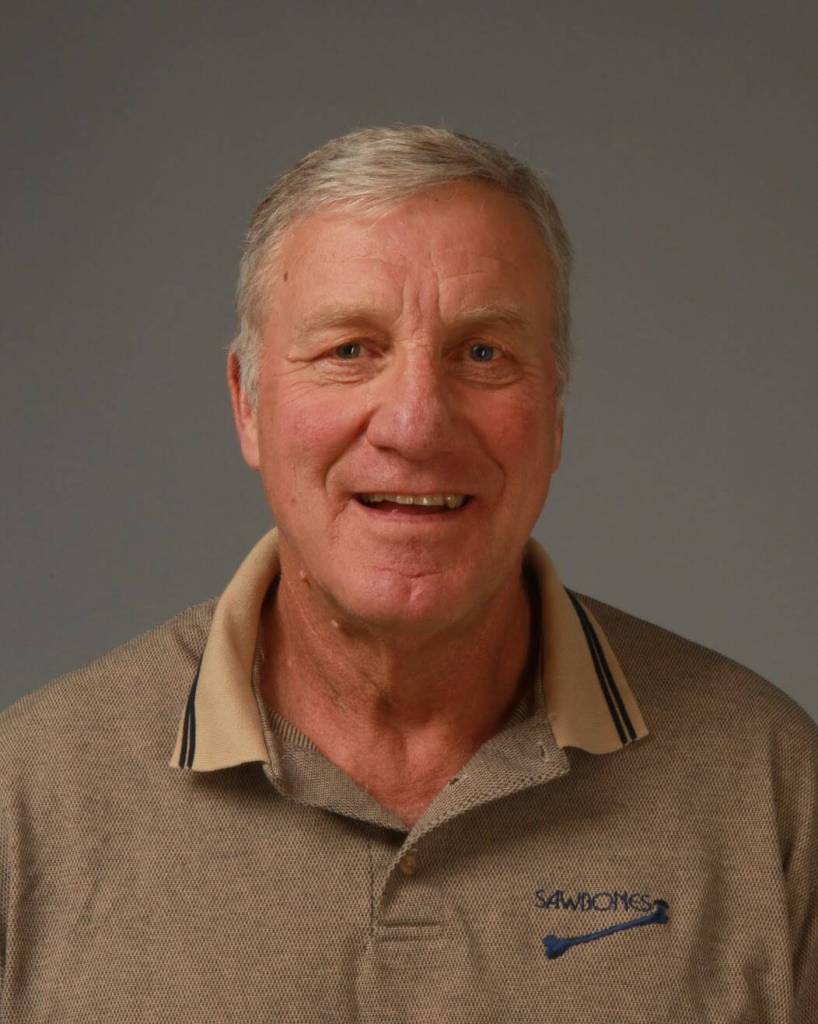
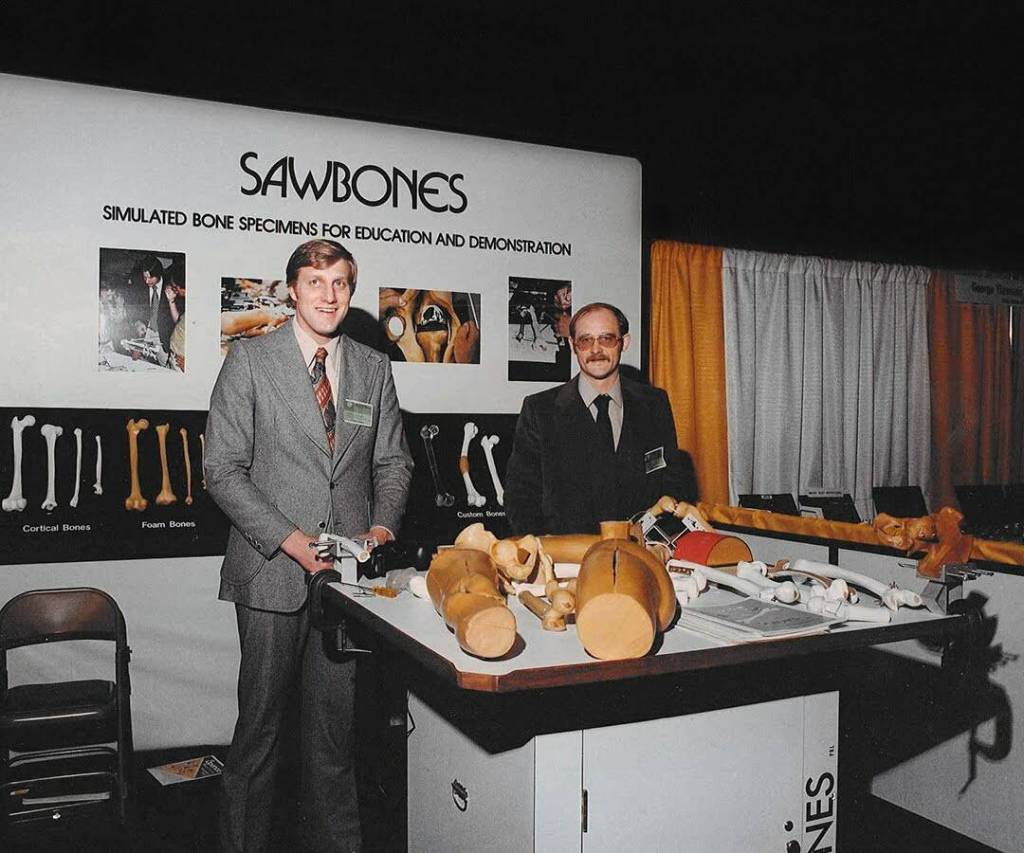
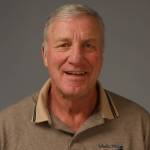

Foss Miller, a visionary businessman, devoted coach to Vashon youth and quiet but major benefactor to many island causes, died on April 6 at a skilled nursing facility in Tacoma. He was 78.
He died from heart problems and complications of two emergency abdominal surgeries that took place in February in Seattle, said Linda Sferra, his wife.
Following his sudden health crisis, Sferra said, he had been surrounded by his closest friends and family members, including his beloved son and daughter, Forrest Miller and Virginia Miller.
Foss’ purpose-filled life on Vashon began in the early 1970s when he arrived on the island shortly after earning a master’s degree from Washington State University in mechanical engineering, specializing in fluid dynamics.
After first working as an engineer at K2 Corporation, he founded his own company, Pacific Research Laboratories, in 1975.
Now known worldwide as Sawbones, the business pioneered the high-tech design and manufacture of artificial plastic bones that precisely mirrored the contour, structure and viscosity of actual bones.
These inventions have profoundly improved orthopedic training and surgical practice worldwide, said Norine Martinsen, the current CEO of Sawbones.
“Since 1975, almost everyone who has had a hip or knee replacement has almost certainly been operated on by a surgeon who trained and refined their technique on ‘sawbones,’” Martinsen said, explaining that the name of the company is now used worldwide to generically describe orthopedic training models Foss invented.
Over the years, the company — nicknamed “the bone factory” by islanders — expanded its product line to become the largest private employer on Vashon. Now in its 50th year, Sawbones employs approximately 150 people.
But it is highly unlikely that the company would still be located on Vashon were it not for a community-minded decision by Foss in 2010. The decision came with the blessing of his family, said Sferra.
In 2010, at the company’s all-staff Christmas party, Foss took the microphone to tell his workers and their family members that the company had been sold — but not to big pharma or an offshore conglomerate.
“I’ve sold it to you,” he told the crowd — a joyous moment recorded on a YouTube video.
Foss and his business partner, the late Denzil Miller, had restructured the company as an “employee stock ownership plan,” or ESOP, which would annually grant shares of the company’s stock to its employees. Workers would sell back those shares to Sawbones upon leaving the company, providing funds for their retirement.
The two businessmen had considered selling the firm and had found some interested parties.
“But nobody we talked to was able to put down in writing that they’d not move it off-island,” Foss told The Beachcomber shortly after the Christmas party. “And that’s when we decided — how cool — let’s just sell it to the people who work here.”
The benefits of this decision live on in the island economy and the community-centered culture of Sawbones.
McKee Buxton, the company’s chief of product strategy, got his start at Sawbones 35 years ago, working alongside his mother. His father, who had worked at K2, also eventually joined the staff.
Buxton described Sawbones as a kind of second home for his family, presided over by a boss who respected his employees as co-creators.
“Foss very much felt that none of this exists without the people who show up here every day,” he said.
Rusty Knowler, who joined the company in 2006 and is now its director of engineering, described Foss’ hands-on approach at Sawbones.
“He was not leading the company from his office — he was on the floor, with his lab coat on all day long, tinkering with stuff and then running off to a meeting and then back to the floor when the meeting ended,” Knowler said. “He knew what everybody was up to, because he was right next to them.”
Foss encouraged innovation and experimentation, said Thom Porro, Sawbones’ director of new product development, who has worked for the company for 43 years.
“Foss allowed us to try things and not be afraid to fail, so we did,” Porro said. “We had some wild successes and some wild failures. The thing is, you learn from failures. That’s a very rich environment to develop and grow — to not be punished for making mistakes. And Foss was very adamant that was the culture he wanted here.”
As Foss built Sawbones, he also pursued other interests, which included embracing his competitive nature as a Star class sailboat racer.
For many years, his life also included commuting to Vashon from West Seattle. But after his marriage to Linda Sferra in 1996 and the subsequent birth of their children, the family moved to Vashon in the late 1990s.
On Vashon, Foss became quickly known as an active, hands-on father to his children and a champion of the organizations that served them and other Vashon youth.
He sat on boards of Vashon Maury Cooperative Preschool, Harbor School and Vashon Basketball Club, and donated to these and many other local causes including the Vashon Island Rowing Club and Vashon Schools Foundation.
He also coached local youth track and basketball teams — a role he relished after a lifetime of pursuing sports, including track and field, basketball, sailboat racing, golf, skiing and rowing.
Islander Pat Call, whose long and close friendship with Foss began when his two sons also attended the Cooperative Preschool, recalled meeting Foss during that time.
“I remember being in awe of him,” he said. “Not only was he larger than life — he was the owner of the largest non-service business on the island. He was a legend.”
Over the course of many years, Call’s appreciation of his friend grew, as they worked together on local boards, rowed together and watched their children grow up on the island.
“However good an athlete Foss was, he was an even better coach,” Call said. “He studied coaching and technique in a way that was extraordinary and then brought all that knowledge to his work with kids.”
Jim Motroni, whose work with Sawbones as a corporate advisor and coach led to a close friendship, also marveled at Foss’ stamina and commitment to his business, family and community.
“He was always the first to raise his hand and say,’ How can I help?’” Motroni said.
He described that aspect of Foss’ character as something that was core to his being.
“If you asked him why he did what he did, in terms of service and helping the community, it was so deep in him that he wouldn’t have even understood the question,” Motroni said. “But a small island is dependent on people like Foss.”
Foss was born in 1947 in East Wenatchee to Dick and Virginia Miller. Dick, a World War II combat veteran, worked as a miner; Virginia was a schoolteacher and homemaker.
In their home, Foss learned the value of both hard physical labor and the promise of education, with his elder sister, Beverly, serving as an example of academic excellence.
Starting in his early youth, Foss’ summers were spent toiling on his grandmother’s wheat farm in Kansas. And as he grew to his full stature of 6 feet 5 inches, with broad shoulders made muscular by manual labor, he found delight in playing sports and realized that his athleticism could help fulfill his larger life ambitions.
As a teenager, his dream was “to become an engineer and invent things,” Foss wrote in 2016 commentary published in The Beachcomber, urging islanders to vote yes to a $10 million bond measure that, among other improvements, would replace Vashon High School’s deteriorating track and sports field.
Using his own biography as a means of persuasion, he recounted his determination to attend college on an athletic scholarship — a workaround for both his family’s limited means and his own less than exceptional grades.
And after his sister gently advised him that he would have to “do something very special” to receive an athletic scholarship, he vowed to work hard to do that, he wrote in the commentary.
He found his path on his school’s track team, where as a high school senior, he set a new school record in javelin, and then a Washington state record and, finally, a new national high school record.
The door to college opened.
With multiple scholarship offers, he chose Washington State University, where he continued to excel in both track and engineering before emerging with a master’s degree and ending up on Vashon.
As of 2016, he wrote in his commentary, his company, Sawbones, had returned $150 million in payroll to local workers.
“That $150 million can be traced back to one thing: my little high school in East Wenatchee had a track program that supported me,” he said.
Vashon’s passage of the school bond, he said, could lead to similar achievements for new generations of students on Vashon.
“We need to let our kids pick their dreams and support them,” he wrote. “There might be a student who gets to go to college and achieve all kinds of things because his or her high school had the facilities to support those dreams.”
In the years after the bond passed and the new track was finally built, Foss stood on its sidelines, cheering on the students he coached more loudly than ever.
Elizabeth Shepherd is a former editor and reporter for The Beachcomber. Read more about Foss Miller’s life here.