Belle Baldwin house to reopen for short-term rentals
Published 1:30 am Tuesday, May 26, 2026
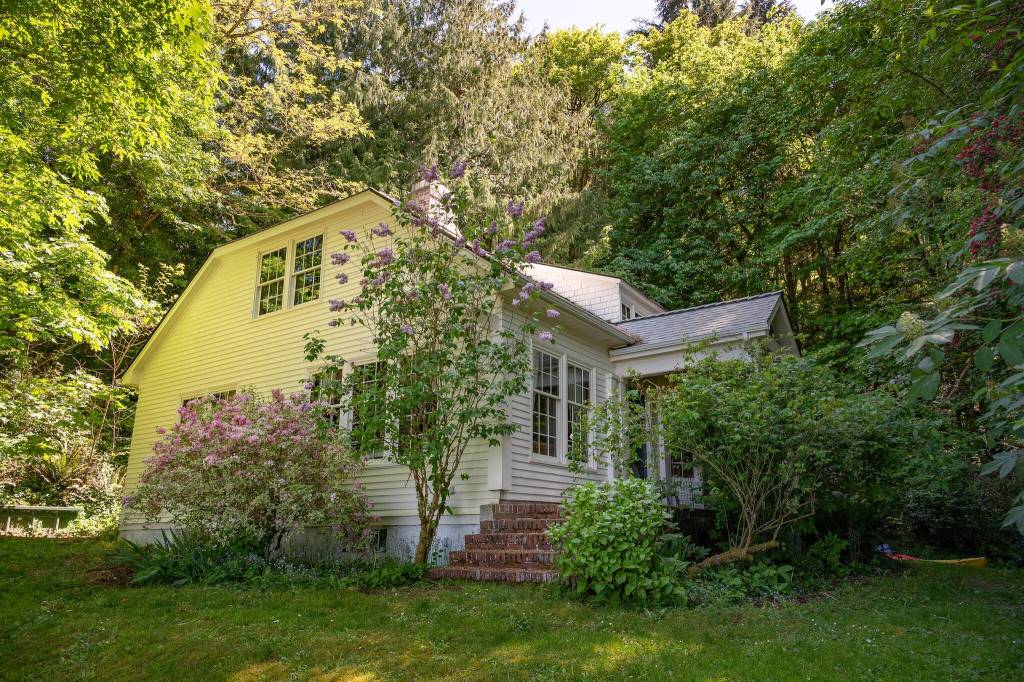
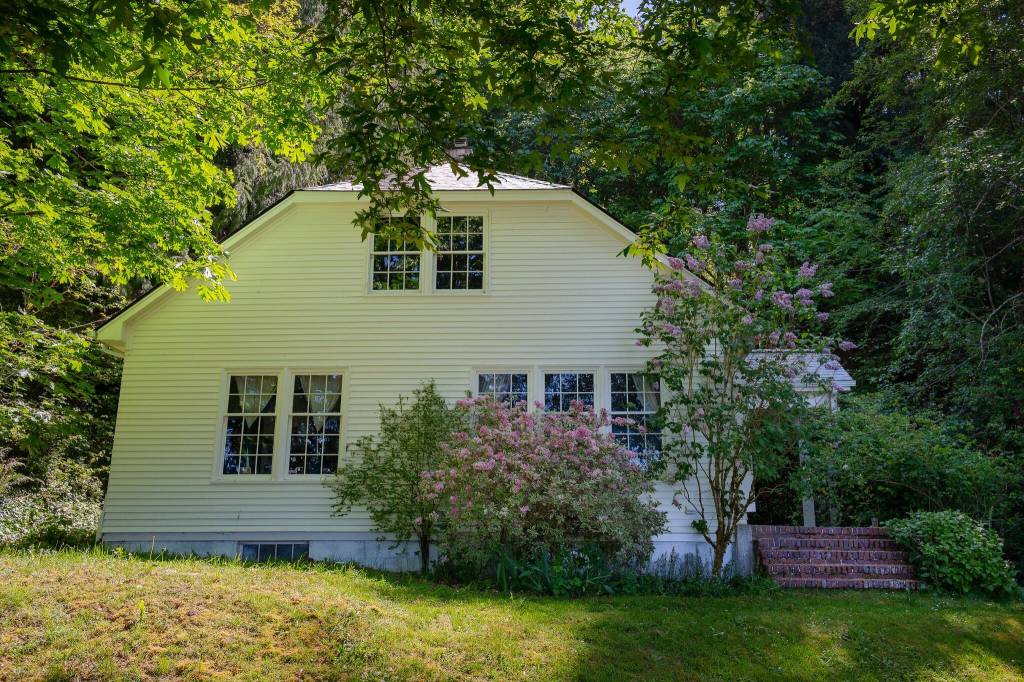
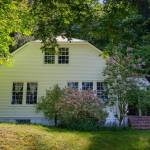
For more than 16 years, overnight guests rented the historic Belle Baldwin house at Vashon’s Fern Cove, waking up to views of an expansive estuary and the quiet of a protected preserve. The 1912 house, gracefully situated between forest and beach, was one of Vashon’s most beloved public places, drawing visitors from throughout the region.
Then, in June 2024, a state funding agency flagged those vacation rentals as out of compliance with the public grant that had enabled the Vashon Park District to purchase the property three decades earlier, and the park district abruptly stopped offering the house as a short-term rental.
The state has now reached a new conclusion.
Prompted by a recent request by the park district to revisit the original grant agreement and policies in place 30 years ago, the state has now determined that the historic home can be used for daily lodging, as long as that use does not interfere with the grant’s primary purpose: habitat protection.
The park district expects to begin taking bookings as early as October, though the house will not reopen to vacation rentals until after the current caretaker agreement ends in December.
“The story is what it is — a contract disagreement that got resolved really quickly once we got deep into the weeds of what the contract actually said,” said Tim Stapleton, executive director of the Vashon Park District.
As the Beachcomber reported in September 2024, the park district had been forced to end vacation rentals at the beloved house after the state Recreation and Conservation Office (RCO) notified the district that the use appeared to violate the terms of the state funding program used to help buy the Fern Cove Preserve, which included the Belle Baldwin house.
As a result, the district immediately removed the house from rental platforms in 2024 and shifted toward a caretaker model, renting the house at below-market rent in exchange for the tenant providing stewardship duties at the park.
But Stapleton said that when he revisited the old agreements this spring, he found language that did not match the state’s conclusion that the park district was out of compliance.
The 1994 contract, he said, obligated the park district to do two things: maintain the natural area surrounding Fern Cove and keep the Belle Baldwin house open to the public. The two requirements were intertwined — not in conflict.
“It’s as explicit as can be that we have to maintain those, keep those buildings open, keep them beautiful and available to the public,” Stapleton said. “And we’ve been doing that for 30 years.”
As the Beachcomber reported in 2024, former park district director Elaine Ott-Rocheford had found that the grant carried a requirement that structures be removed or demolished within three years unless the agency could show the structure supported its programming. At the time, that finding helped lead the district away from short-term rentals and toward a caretaker arrangement.
But Stapleton said the original contract told a fuller story.
The 1994 contract does not spell out a vacation-rental program. But it incorporates the park district’s grant application by reference and requires the district to maintain the property and its facilities for public use.
One section says “buildings, roads, trails, and other structures and improvements” must be “kept in reasonable repair” so they do not deteriorate in a way that would “prevent public use.”
It also allows user fees, as long as they are in line with public fees for the activity, and says revenue beyond operating and maintenance costs must be used for future operation and maintenance of recreation lands or facilities.
“Considering it is a home, rental use complies with the statement ‘open for public use’ for this type of facility,” Stapleton said.
RCO provided $398,550 in 1994 to help the park district acquire the 13.5-acre Fern Cove property through the Washington Wildlife and Recreation Program’s urban wildlife category, according to a April 16 email from RCO Grant Services Section Manager Kyle Guzlas to Stapleton.
The grant’s primary purpose was perpetual habitat protection, with a secondary purpose of environmental education and public connection to the natural area.
The problem was that when RCO’s compliance division scrutinized Fern Cove, it evaluated the rental use against current program standards — under which a structure on a habitat grant site would need to have been pre-approved, with its eligible use demonstrated, before the project closed.
By that modern measure, the rental use appeared to be out of bounds.
“When you first look at a use like this on a habitat-protection site, under current policies, it would immediately be called out as likely ineligible,” Guzlas said.
But those standards did not exist in the same way in the early 1990s, Guzlas said, and the more recent review had to account for that.
“When we do these types of reviews, we don’t only look at the original grant agreement,” Guzlas said. “We have to go back in time and look at the policies that were present at the time, because those policies change.”
What was clear, he said, was that the structures were on the property when it was acquired. That made Fern Cove unusual.
“I put this in the more unique side,” Guzlas said. “I’m not aware of any other jurisdictions that are using an urban wildlife habitat grant and then maintaining a structure on it for rentals.”
Still, Guzlas said he would not necessarily characterize the earlier compliance determination as a mistake.
“The person in the role at the time had a tremendous amount of experience,” he said.
The park district did not appeal that determination at the time or ask for the matter to be elevated to RCO’s director or funding board, Guzlas noted.
In his April 16 email, Guzlas confirmed the revised determination: The Belle Baldwin house’s use for daily lodging “is in compliance with the terms of the grant agreement as long as it is not impacting the primary purpose of the grant.”
The letter cautioned the park district to consult RCO before any future development at the site. New structures, expansion of existing structures, shoreline protection measures, septic upgrades or heavy public use could trigger further review, Guzlas wrote.
Stapleton said no one acted in bad faith — not his predecessors, and not RCO.
“We trusted the compliance position of RCO,” Stapleton said. “There was no ill will. It was completely above board. Their arguments were based on the laws of today — and when we reviewed those, that’s true. You cannot purchase buildings with habitat conservation dollars today.”
What got lost, Stapleton said, was the original intent of the application — and the fact that the Belle Baldwin house had been identified as a structure to be maintained and kept available to the public.
“Experts in a policy space can be so focused on the continually updated language that they lose track of the intent,” Stapleton said.
The closure had consequences. In 2024, the year the park district stopped daily rentals, the district generated about $22,500 less than its prior two-year annual average for gross rental revenue at Fern Cove, Stapleton said.
That money, he said, is used to help maintain and improve the property — and restoring revenue from the rental program will help support the park district’s broader maintenance needs.
Built in 1912 for Belle Baldwin — Washington Territory’s first female physician — and designed by Seattle architect Harlan Thomas in the Georgian Revival style, the house was designated a King County Historic Landmark in 1995.
Islanders rallied to protect the property in the early 1990s, when conservation advocates pushed for Fern Cove to become a nature preserve and environmental learning center. The grant proposal they submitted ranked first out of 23 statewide projects, according to prior Beachcomber reporting.
The park district owns only three overnight rental properties on the island — two at Point Robinson and the Belle Baldwin house — plus a handful of campsites.
Stapleton said returning the house to short-term rental use will generate more revenue than the caretaker arrangement and restore a public asset that the original agreement always intended to keep open.
“It’s really about keeping the asset in public use for as long as possible,” Stapleton said.
The current caretaker agreement ends in December, clearing the way for the house to reopen to overnight guests. But for the family now living there, the return of the rental program is more complicated.
Shauna Ahern moved into the house with her husband and two children in July.
Longtime islanders, she and her husband and her two kids left the island for West Seattle in 2024 after they failed to find an affordable rental on Vashon. “Being able to come to this house is what got us back to Vashon,” Ahern said.
When the family moved in, she said, they understood the vacation rental use was over.
“It was conveyed to us that this is a done deal and that they could no longer do it as a vacation rental,” Ahern said. “So we moved in thinking, gosh, maybe we can live for 20 years.”
Then, a few weeks ago, Stapleton called. The news was a shock, Ahern said, and leaving will be difficult. But she also understands the house was never meant to solve Vashon’s affordable housing crisis.
Still, the house gave her family a rare way back to the island — and to a place she described as full of birdsong, bald eagles, dark wood paneling and deep quiet.
“It’s a beautiful house,” Ahern said. “It’s magic down here. Being in the forest and walking on the beach every day … it’s a really, really special place.”