Emergency prep and tick safety: What to know
Published 1:30 am Tuesday, June 9, 2026
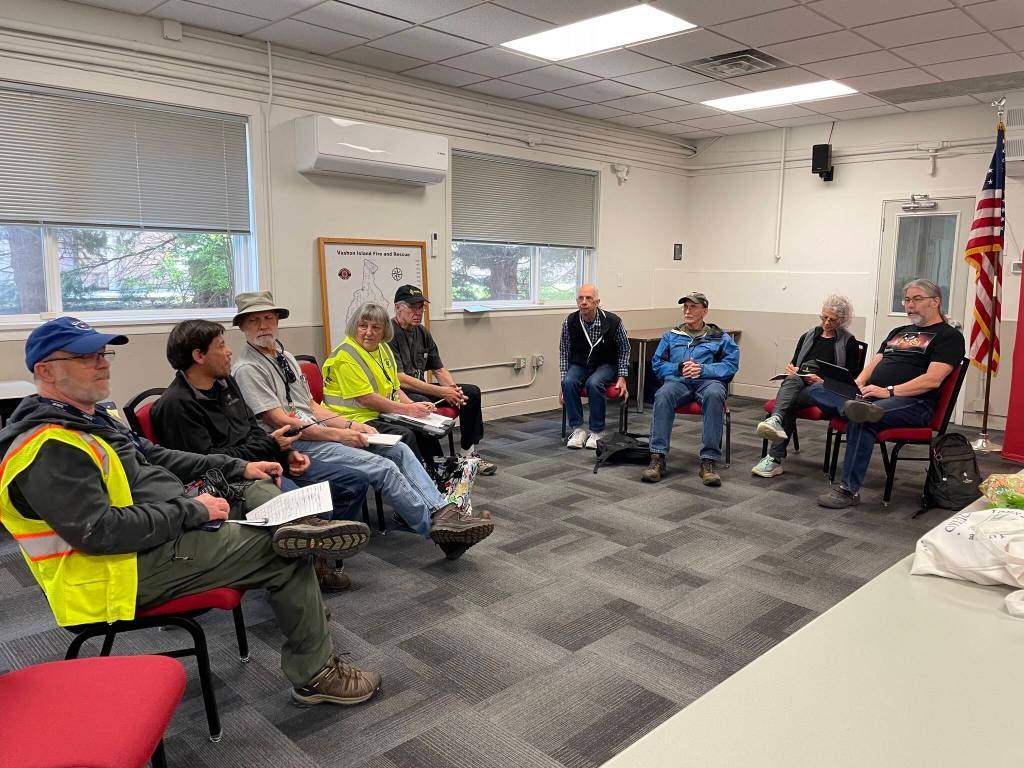
ACS: Communicators on the move
On a Saturday morning in early May, Vashon’s amateur (ham) radio operators from the Auxiliary Communications Service (ACS) received an alert asking them to deploy Portable Communications Caches (PCCs) from storage locations to various points around the island, as an activation exercise.
These PCCs are weatherproof containers that contain ham radios and antennas, power supplies, and laptops from which emails can be sent over ham radio. On top of being licensed and experienced hams, the operators have received training on how to use the PCCs. Each PCC also includes detailed instructions because, during a disaster, it’s harder to focus and remember the training.
People often ask our disaster volunteers what would happen if cellphones and landlines didn’t work during a disaster. In a real emergency, communications functions are critical for supporting the community, and it’s not known in advance which locations will need communications help.
Volunteer ham radio operators can transmit welfare messages for community members whose phones aren’t working, collect and forward critical damage reports to help first responders gain situational awareness and prioritize their responses, and help teams of disaster volunteers get the supplies and information they need to operate more effectively.
What gave this exercise an exciting sense of reality was that volunteers did not know ahead of time when and where to activate. Teams were dispatched to Ober Park, Burton Fire Station, Dockton Fire Station and Penny Farcy Training Center, with ham radio operators communicating while in transit between the sites, or checking in from home.
Ham radio operators started by reporting their availability; then some practiced sending messages by voice or email over ham radio. Problems arose, such as uncertainty about which radio repeater was in use, and transmission problems where voice messages were cutting out.
Solving these types of problems during an exercise is a powerful way for volunteers to hone their skills to provide more reliable backup communications services for our island after disaster strikes. If you’re interested in learning amateur (ham) radio or volunteering with ACS, check out their info at vashonbeprepared.org/partnerorganization/acs/.
Tick season: Things to know and do
Because we had a mild winter, and because tick ranges have been expanding, tick populations are high this spring. A number of tick-borne diseases that were formerly only seen in other parts of the country have now reached Washington. Travelers to other parts of the country may also encounter ticks — read on to know how to protect yourself, your family and your pets.
Lyme disease and Rocky Mountain spotted fever are just two well-known types of a number of tick-borne diseases. Some of these diseases may cause lasting health issues, especially if not treated promptly.
Ways to avoid getting sick from a tick bite: When planning time outdoors, dress in light colors so it’s easier to see ticks. Tuck long pants into socks, and wear a long-sleeved shirt tucked into pants. Use DEET or other EPA-registered tick repellents on clothing and/or skin, following manufacturer’s directions.
Walk in the center of trails, away from tall grasses, brush and trees. After coming inside, check promptly for ticks — the less time a tick is embedded, the lower your risk of getting sick. After spending time outside, change out of outdoor clothing, wash it on hot, and take a shower. Remove a tick using clean fine-tipped tweezers, grabbing the tick as close to the skin as possible. No twisting, no Vaseline, no matches.
Save the tick in a plastic bag in the freezer, and send it to the Washington State Department of Health (DOH): tinyurl.com/MailYourTick. This helps DOH better understand where different tick species occur and assess potential health risks from tick-borne disease. Watch for symptoms of tick-borne disease: fever, rash, fatigue, joint aches. Call your health care provider if you get sick within one month of possible tick exposure.
Treat pets against ticks according to your vet’s advice. Keep pets away from tall grass, shrubs and wooded areas. Inspect pets’ fur after they’ve been outside.
Learn more: tinyurl.com/WADOH-ticks-stats, tinyurl.com/WADOH-ticks-about.