Islanders gather to honor Juneteenth at VCA
Published 1:30 am Tuesday, June 23, 2026
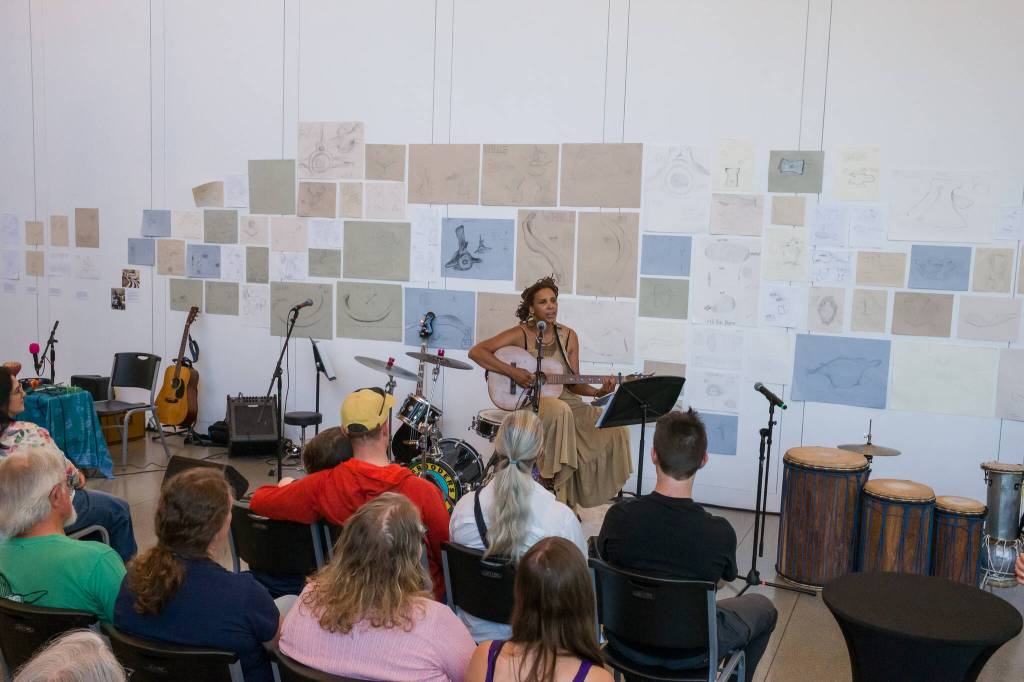

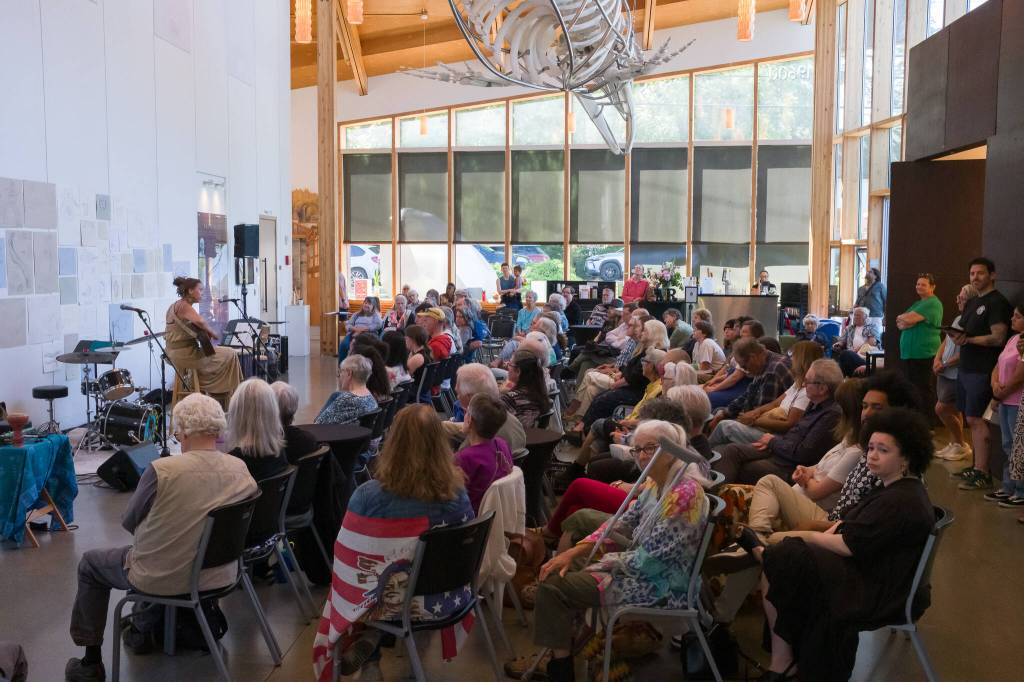



Islanders commemorated Juneteenth at Vashon Center for the Arts with an afternoon of music, dancing and discussion about the effort to make the holiday nationally recognized.
Officially declared a U.S. federal holiday in 2021, Juneteenth honors the day that enslaved people in Galveston, Texas, learned they were free after the arrival of Union troops — more than two years after the Emancipation Proclamation was issued.
Speaking to a packed room, Dorothy Berry — a digital curator at the Smithsonian National Museum of African American History and Culture — described Juneteenth as originally a local celebration, one of many that marked the gradual spread of emancipation across the Americas.
“Which raises the question, what is Vashon Island doing with a Juneteenth celebration as a federal holiday?” Berry asked the audience.
Tracing the holiday through history, Berry spoke of the effort to make Juneteenth a federal holiday, spearheaded by Opal Lee — who is often described as the “grandmother of Juneteenth.”
“All national movements start somewhere locally, often with a small group of people or even an individual who has a vision and passion to ensure their history is not forgotten,” Berry said.
Born in Marshall, Texas, in 1926, Lee was raised in a community with deep ties to Juneteenth as a celebration of Black freedom and resistance, Berry said.
As Lee grew up, becoming an educator and counselor, Berry said the celebration’s reach continued to grow as African Americans left the South in search of better economic and social conditions during the Great Migration.
By 2016, 45 states observed Juneteenth, but the United States still had no federal holiday commemorating the end of slavery.
That year, Lee embarked on a symbolic walk from Texas to Washington, D.C. — walking in 2.5 mile increments to symbolize the two and a half years of enslavement under false pretenses — and asked Barack Obama to make Juneteenth a federal holiday.
“She thought audaciously to herself that, to use her words, a little old lady in tennis shoes making her way from Texas to Washington D.C. would be really hard to ignore,” Berry said.
After years of continued advocacy, in 2021, former President Joe Biden signed the Juneteenth National Independence Day Act, making it a federal holiday.
Recognition of African American history and culture did not come easily, Berry said, but was the result of generations of work.
The establishment of the Smithsonian National Museum of African American History and Culture by Congress in 2003 is the culmination of some of that work. The only national museum of its kind, it holds more than 45,000 objects of African American importance — including historical artifacts, archival documents and works of art, according to the museum’s website.
“This drive of self-preservation and self-documentation comes from a people who can value paper, who can value material goods,” Berry said. “If a sheet of paper means that you can be safe walking down the street, then a museum is important; then an archive is important.”
The afternoon of discussion also included reflections from Betty Peralta and Amelia Bolyard, who together run Children in Bloom — an island-based consulting practice that supports children, parents and caregivers through coaching and education.
Opening the event, the pair asked the audience how they celebrate their ancestors who fought for freedom.
Around the room, islanders spoke of advocating for Palestinian rights and LGBTQ+ freedoms, as well as supporting immigrants and Native communities as ways of honoring and continuing the work of generations of activists.
Describing freedom as a process of inner-healing and resisting the status quo, Peralta and Bolyard described how they promote freedom in their daily lives.
“My freedom is hard won, I work on it every day,” Peralta said. “I work on it through self-compassion, through recognizing mistakes as opportunities to learn rather than reasons to berate myself.”
The afternoon also featured musical guest Azere Wilson, an Americana singer-songwriter and member of the Black Banjo Reclamation Project, which works to highlight the banjo’s roots in Black culture and honor the instrument’s makers and musicians.
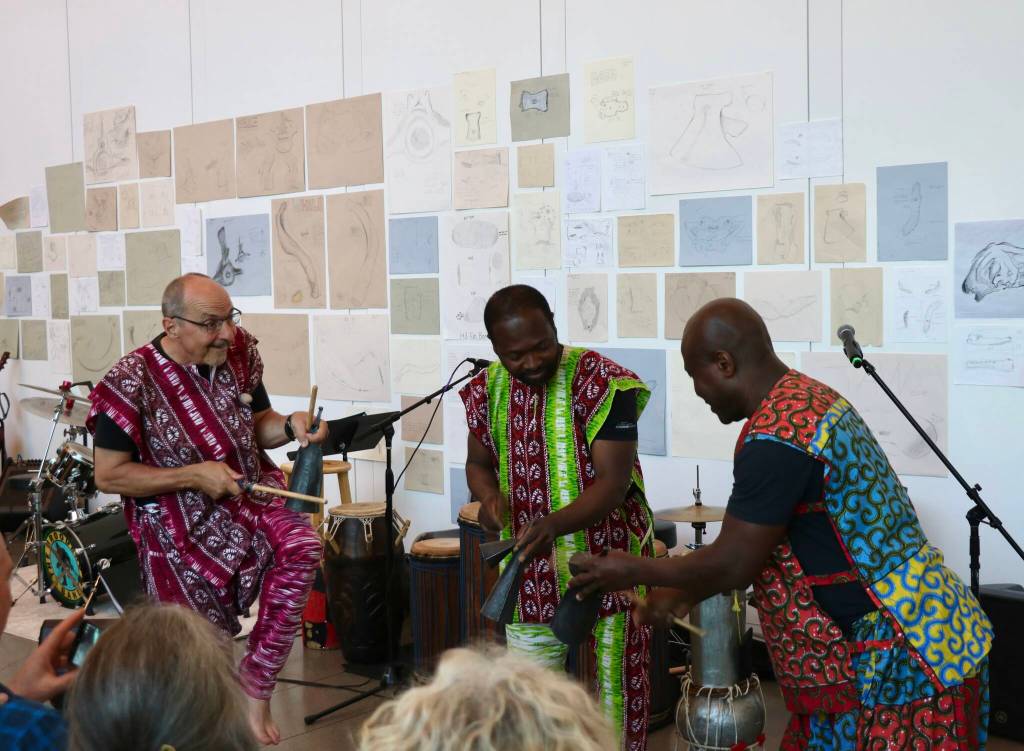
As smoky barbecue meals, courtesy of Gravy’s Chef Dre Neeley, were served, Seattle-based performing arts group Gansango filled the atrium with West-African drum beats and dance.