‘Dad Genes’ brings Vashon couple’s unconventional family story home
Published 10:30 am Tuesday, August 4, 2026

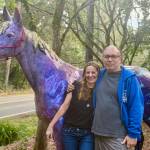
Jessica Share knew Aaron Long first as a donor number and a few lines on a sperm bank profile: brown hair, brown eyes, a master’s degree in creative writing and interests in music and games.
More than a decade later, she found him online.
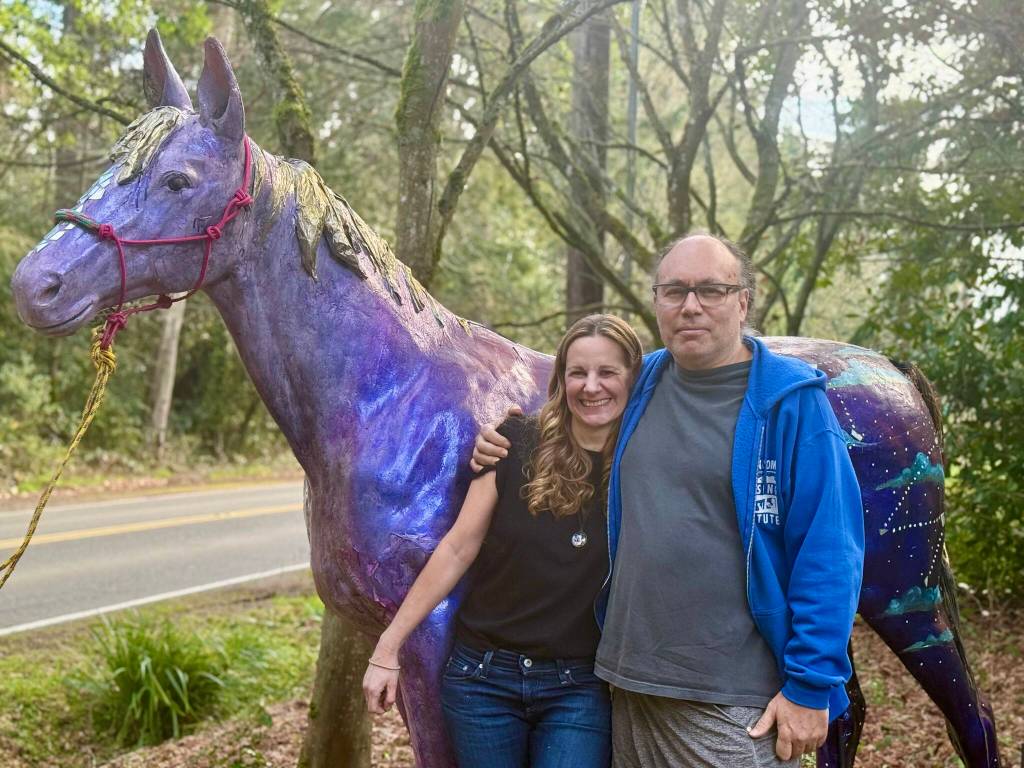
Now, nearly 10 years after cameras began documenting their unconventional family, the Vashon couple will see the completed film alongside an island audience.
“Dad Genes,” a 62-minute documentary, traces Long’s transformation from an anonymous sperm donor into the center of a sprawling biological family — and the unexpected romance that brought him and Share together. It will screen Aug. 13 at the Vashon Island Film Festival.
The couple viewed the film only recently. Watching the finished film meant revisiting a transformative period of their lives.
“Who wants to see that footage?” Share said with a laugh. “It’s a situation where you’re like, ‘Oh my God, what were we really thinking at the time? Did we really say those things?’”
The story began in Pennsylvania in 1994, when Long began donating sperm for extra money. He was paid $40 per donation and visited the sperm bank about twice a week for a year.
Anonymity seemed permanent. Long and the sperm bank signed agreements promising not to reveal identifying information, and consumer DNA testing did not yet exist.
More than 20 years later, advertisements for 23andMe made Long wonder whether the children conceived through his donations might be findable. In 2016, he mailed in a test and received one close match: a son named Bryce, then living in New York.
Long waited about a week before writing. He introduced himself as a former sperm donor, said he believed he was Bryce’s biological parent and told him he was open to contact.
Bryce replied within about 15 minutes. His message began with “Dad” — a word Long initially found alarming because, to him, it is “a cultural role, one he didn’t merit, rather than a biological fact.”
Bryce later explained that he had meant it partly as a joke. He was thrilled to connect and already knew of five other donor-conceived siblings.
The family has continued to grow. Long now knows of 22 biological children, though he estimates there could be more than 60.
Three months after Long connected with Bryce, Share’s daughter Alice took a DNA test.
Share had selected Long’s profile years earlier, when she and her then-partner were trying to have children. She wanted an anonymous donor, in part because she feared a known donor could someday threaten her partner’s legal relationship with their child.
The profile offered only fragments of a life. Long was a writer, musician and taxi driver with a graduate degree in creative writing. Share and her partner imagined him collecting stories from passengers and returning home to write.
After several unsuccessful attempts using another sperm bank, Share’s doctor recommended a different one. They chose Long’s profile, and Share became pregnant with Alice.
Alice was 11 when she asked for the DNA kit, mainly because she wanted the ancestry map promised by the service. Instead, her results showed a 50% match labeled “father.”
Share searched Long’s name online. A LinkedIn profile showed a man playing trombone, and his education, writing background and other details aligned with the donor profile. Then she found childhood photographs on Facebook. One, she said, looked uncannily like Alice with “a ’60s boy bowl cut.”
“There’s not a chance we’re wrong here,” Share remembered thinking. “This is the one.”
She messaged Long, and the two began comparing their sides of a decision made a decade apart: his donation in 1994 and her use of it in 2004. Their exchanges were friendly and intellectual, though not particularly flirtatious, they said.
Meanwhile, Long planned a “Meet My Kids” party at the Belltown cooperative where he lived. Producer Matt Isaac, a former co-op resident, saw the makings of a film and brought in Seattle director Craig Downing.
“At first, we didn’t know it was going to be a documentary,” Downing said in an email. “We had absolutely no idea what ride we were in for with this project.”
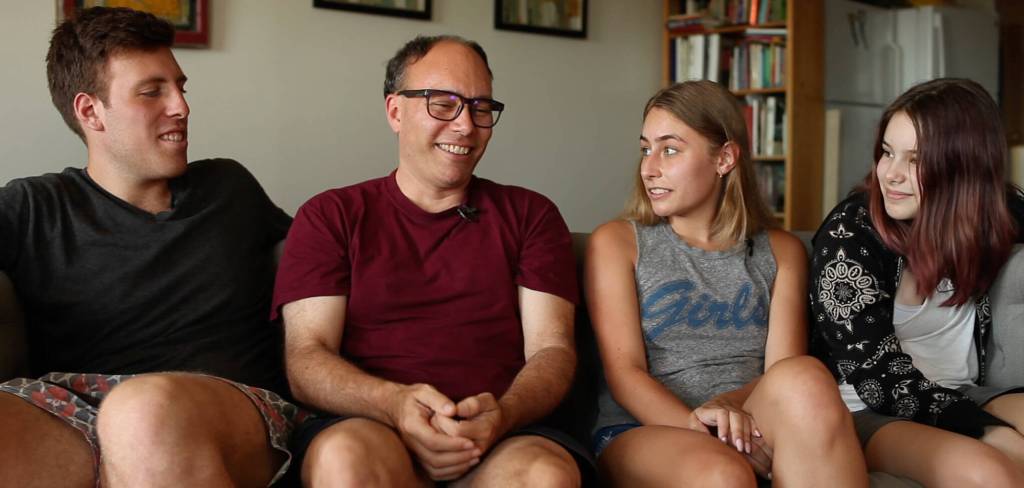
Share, Alice, Bryce and another of Long’s biological daughters, Madi, spent about two weeks with him. The group took a road trip to Oregon, with Long and Share in front and three of his biological children across the back seat.
Romance came more cautiously. Share worried that dating Long could damage the relationships her children might someday want with him.
“If I mess this up, I’m messing it up for my kids,” she said. “I’m not going to ruin this for them.”
Still, the two communicated easily and enjoyed many of the same activities. When Share needed a new place to live, she and Alice moved into a sublet at Long’s co-op. The friendship eventually became a relationship.
They moved to Vashon in December 2019, after the death of Long’s mother, whom he had cared for as she lived with Alzheimer’s disease.
Alice, now 20, sees Long less as a conventional father than as her mother’s partner and a stepfather figure. That suits them, Share said. Long never tried to force himself into the role of “dad.” He and Alice simply get along — two quiet, bookish people who trade wordplay, watch slow old movies and notice the same details.
“The three of us would just sit on the couch for years during COVID,” Long said. “We were all just comfortable with each other.”
That ordinariness became part of what interested the filmmakers. What began as a collision of sperm donation, DNA technology and instant relatives evolved into a story about people deciding for themselves who belongs in their lives.
“There was no playbook or precedent for what was happening,” Downing said.
“Dad Genes” has screened at festivals in the United States and abroad, including the Thessaloniki International Documentary Festival in Greece. It also received the jury award for best documentary feature at the Atlanta Documentary Film Festival.
Bringing it to Vashon represents “a little of a film homecoming,” Downing said. At previous screenings, audience members have lingered afterward to share their own experiences and talk about family and relationships.
“The story really confirmed for me the definition of family — it’s yours to define,” Downing said.