Busting myths about Vashon’s cougar: A talk with an expert
Published 1:30 am Tuesday, June 6, 2017


*Editor’s Note: This piece originally ran on the Vashon Nature Center’s blog. The Beachcomber is running it in two parts, one this week and one next week. This week will feature the first five myths, and next week will feature myths six through 10.
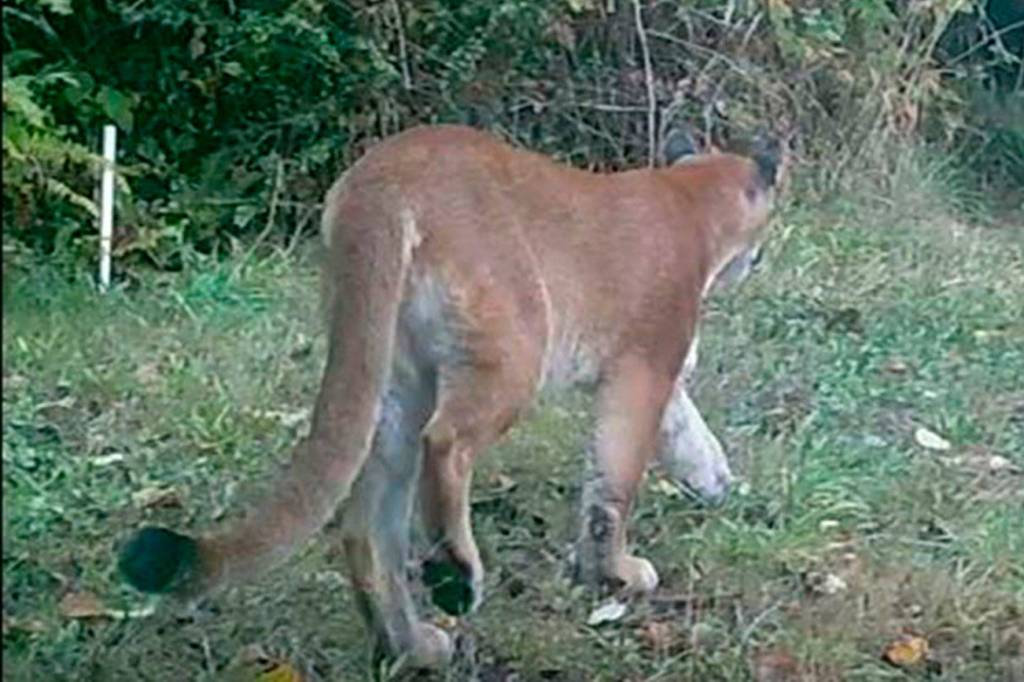
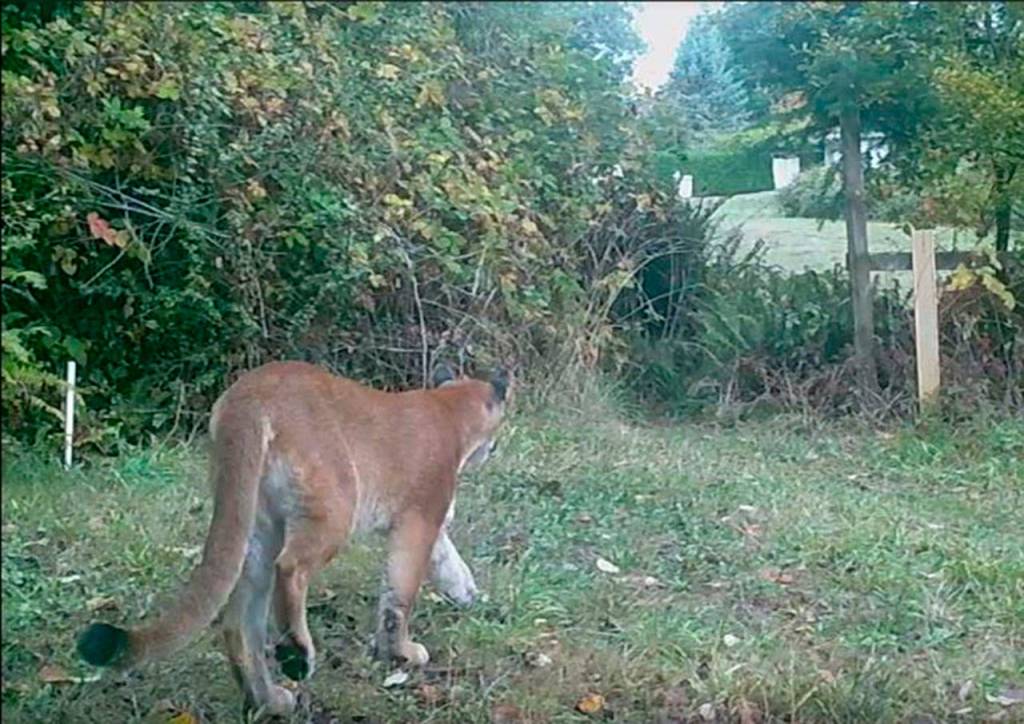
A mountain lion has made its home on Vashon since last July. Its presence inspires awe, joy, fear, excitement, and fuels rumors. At Vashon Nature Center, staff hear many questions and concerns about the cougar. The center’s volunteer outreach manager, Kathryn True, came up with a list of the most commonly held misconceptions and asked Brian Kertson, cougar expert and wildlife research scientist with the Washington Department of Fish and Wildlife (WDFW), to address them.
For more information, see Vashon Nature Center’s Living with Wildlife pages and the Coexisting with Large Predators fact sheet, or WDFW’s Living with Wildlife Cougar pages at wdfw.wa.gov/living/cougars. Questions about cougar management should be referred to WDFW, as this department is responsible for the management of cougars in the state. Vashon Nature Center is a research and education center. It fields questions about living with wildlife and collects sightings as part of the island’s natural history record, but does not manage wildlife.
Myth #1: Vashon-Maury Island is not cougar habitat.
Brian Kertson: The big driver in that equation is that there are both deer and relatively large chunks of unbroken forest on Vashon. Those two factors alone make it cougar habitat. Mountain lion habitat needs in Western Washington are not particularly complicated — they need cover and prey (mainly deer) — and island forests provide a lot of both. The residential density on Vashon is low enough that development modifies the habitat, but doesn’t make it unsuitable.
Another thing I have heard is that cougars don’t belong on islands, but the reality is that cougars swim open water all the time — across lakes and rivers — and they routinely travel island-to-island and mainland-to-island. (The cougar currently living on Vashon-Maury likely swam over from the Kitsap Peninsula on a minus tide. There is a viable, consistent cougar population on Kitsap. Most likely this cat was a subadult male that dispersed from natal territory, which they typically do when they are 18 months old.)
There is a difference between what people perceive as habitat and what cougars perceive as habitat. He’s been there for at least nine months, and if it wasn’t cougar habitat, he would have left by now. He appears to be finding what he needs to survive.
Myth #2: There have never been cougars here and they shouldn’t be here now.
Kathryn True: Vashon Nature Center has researched historical records of island cougars: They were photographed and noted in news records on the island several years from 1915 and 1924. More recently, cougar sightings were reported in 2011, 2015, 2016 and 2017.
Myth #3: There must be two cougars because they have been reported on opposite ends of the island from one day to the next.
Brian Kertson: Cougars can easily travel 10 to 12 miles in a single day. It would not take very long for the cat to traverse the island.
Myth #4: It’s easy to protect livestock in the presence of large predators.
Brian Kertson: I recognize it can be both difficult and inconvenient to round up animals and board them every night — there is time and energy involved, and better fences cost money. Persistence is important to consistently reduce the risk to your animals. But that’s the reality when you live in a landscape where large carnivores are present; you have to behave differently.
The overwhelming majority of cougar attacks on livestock occur at night. If you board animals at night, you drastically reduce your animals’ chances of being attacked by a cougar. It’s also important to have good fences that deter carnivores from pursuing livestock and keep them from being in a situation where they are more likely to be attacked. Other effective deterrents are guard dogs, good lighting and electric fencing.
Kathryn True: State investigations of depredations (including use of dogs to track cougar scent at kills) indicate that coyotes or domestic dogs are frequently responsible for livestock deaths initially attributed to the cougar. Since last summer, three alpacas, and one sheep have been confirmed as cougar depredations — four other sheep are considered possible, but unknown due to lack of evidence. Vashon Nature Center staff appreciate the high emotional toll these deaths take on their owners and the community. This makes it essential that we support each other in sharing what we learn as we make changes to adapt to the presence of wild predators. As part of this effort, VNC is creating a local resource directory of people who have had success protecting their animals and are willing to share their techniques. Let us know if there are other ways we can help each other.
Myth #5: There’s something wrong with this cougar because it keeps being seen.
Brian Kertson: Vashon is not a huge island and the human population is sufficiently large enough that the chances for any one person seeing the cat on any given day are probably a lot greater than people realize. Simply seeing it is not abnormal at all; they are very active during the day. It would be abnormal if the cougar was going into people’s garages or walking down the middle of a well-traveled road. But seeing it on edges of property or running across the road in the late afternoon or early morning … that’s just being in right place at the right time. Somebody’s going to see it here and there. WDFW routinely receives reports of cougar sightings throughout the state in situations very much like Vashon in terms of residential development patterns and human population size. Sightings might be unsettling for some residents, but there is nothing abnormal about it.
— Kathryn True is an islander and freelance writer who volunteers as outreach manager for Vashon Nature Center.