1945 — When Once Exiled, Imprisoned Families Returned Home
Published 1:30 am Thursday, December 10, 2020
By Bruce Haulman, Rita Brogan and Joe Okimoto
For The Beachcomber
The year 2020 marks the 75th anniversary of the atomic bombing of Hiroshima and Nagasaki, the end of WWII, and the closure of the concentration camps where West Coast Japanese Americans were exiled and imprisoned.
Only about one-third of the Vashon residents who were forcibly removed on May 16, 1942, returned to Vashon.
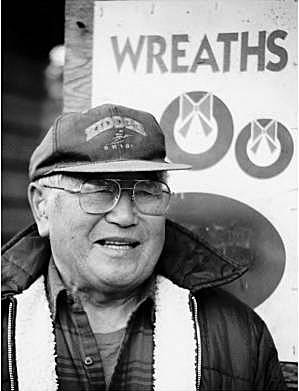
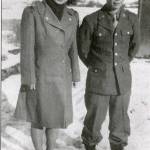
On New Year’s Eve, December 31, 1945, Augie Takatsuka returned to Vashon, catching the last ferry to Tahlequah, and then hitching a ride home with the only car on the ferry. For the next three months he lived with his parents and sisters, “doing nothing,” he said. He would often wake his parents and sisters with his “horrible nightmares.”
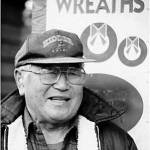
Encouraged by a friend, Takatsuka finally leased land across from where McMurray Middle School is today and returned to farming. He was able to purchase his farm on Bank Road when Rose Gorsuch offered to sell him twenty-seven acres at $50 down and $50 a year. Takatsuka said Rose Gorsuch was “our protector, ahead of her time …” Asked why he returned to Vashon, he said, “I couldn’t find any place that was as good as here …”
Takatsuka was one of the last of the Vashon Island Japanese Americans to return from the exile and imprisonment of island Japanese Americans during World War II.
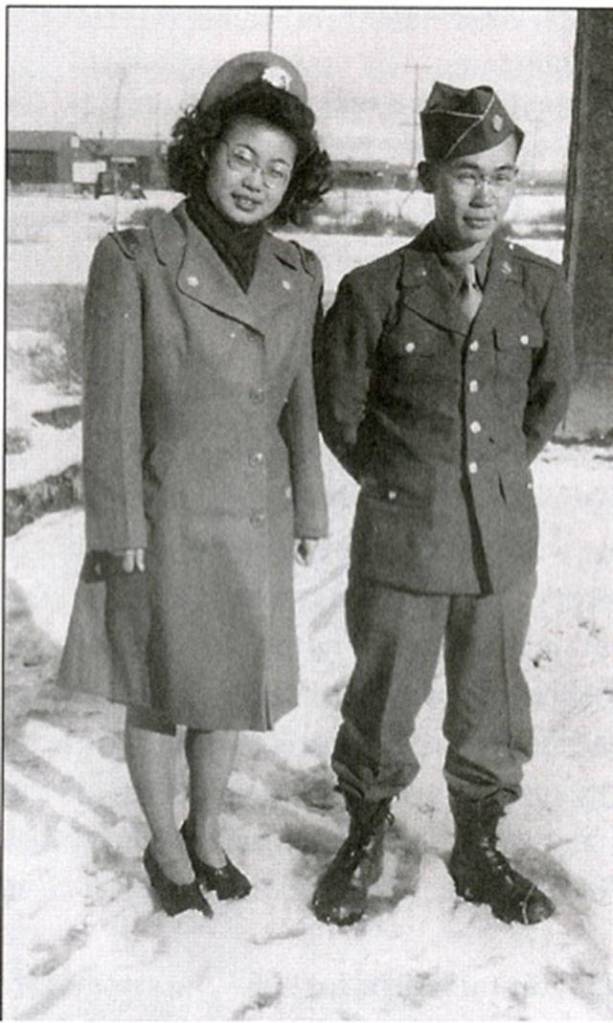
After enlisting in the 442nd Regimental Combat Team from the prison camp at Tule Lake, Takatsuka was sent to Camp Shelby, Mississippi for basic training. In late 1943, he was sent to Italy and fought through the Gothic Line north of Florence. From there, the 442nd was sent to The Champagne Campaign, which invaded southern France. Hospitalized three different times for trench foot, Takatsuka was finally relieved of combat service and served the remainder of the war in France as part of the Quartermaster Corps stabling horses and mules for the Army.
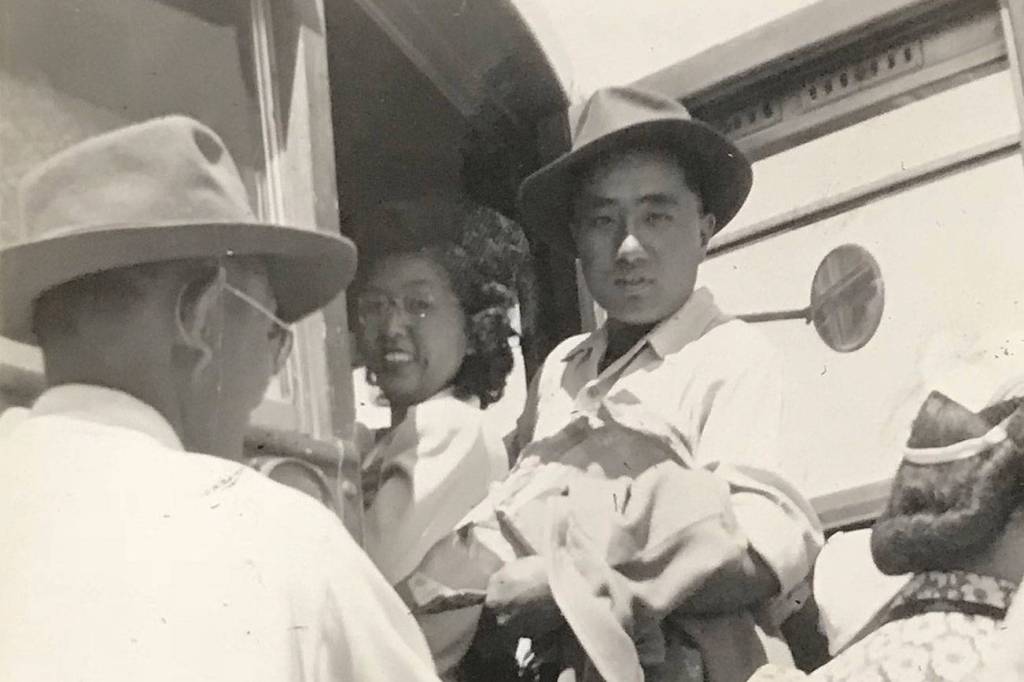
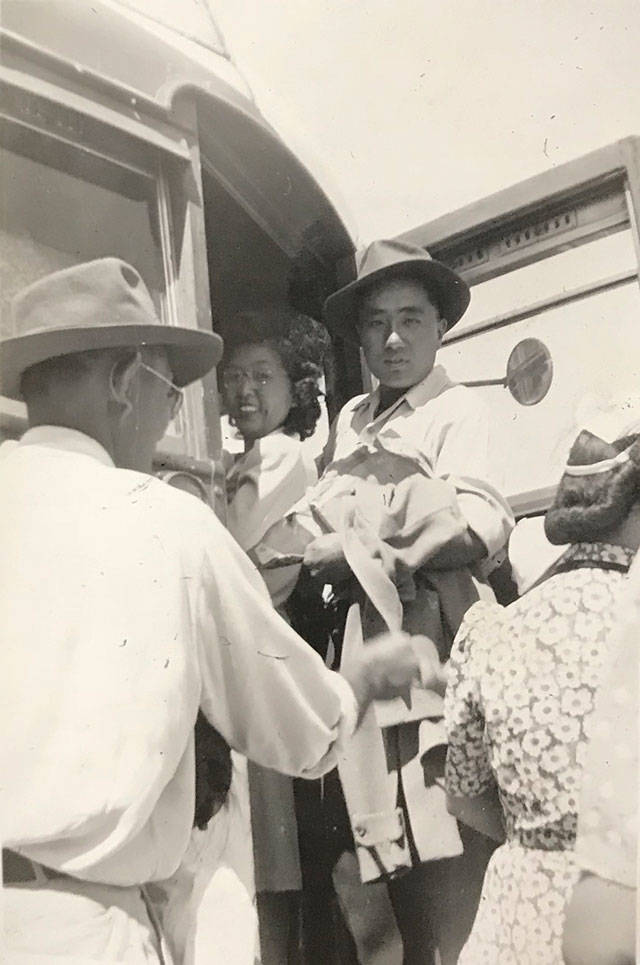
Before WWII, there were 132 Japanese Americans living in 31 households on Vashon Island. Some 17 of those individuals left before evacuation for college, the military, or jobs off-island. The four members of the Mukai Family preempted the evacuation by self-exiling outside the Exclusion Zone just before Executive Order 9022 took effect. On May 16, 1942, the remaining 111 Japanese Americans were gathered at Ober Park, shipped to Seattle, and forced onto rail cars with blackened windows for days. Destination and fate unknown.
All of the exiled Vashon Japanese Americans were initially sent to the euphemistically named “Pinedale Processing Center”, in the California desert. Pinedale was really a temporary prison until the permanent concentration camps could be built.
After three months at Pinedale, the Vashon residents were all moved to Tule Lake Relocation Camp, another euphemism for a concentration camp. When Tule Lake was transformed in February 1943 into an isolation camp for individual prisoners deemed to be disloyal, most of the islanders were distributed among six other prison camps throughout the nation: to Gila River, Arizona; Heart Mountain, Wyoming; Jerome, Arkansas; Minidoka, Idaho; Rohwer, Arkansas; and Topaz, Utah.
This forced diaspora effectively shattered the cohesion of the Vashon’s Japanese American community. Some island families were moved to as many as five different camps during the next three years.
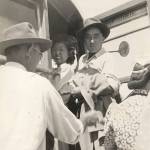
World War II came to an end on September 2, 1945. The concentration camps began to close in October and November and the prisoners were released to return home or to settle in other locations where they had job opportunities or family. Tule Lake did not close until May 1946, but the Vashon prisoners who had remained at Tule Lake were released in the Fall of 1945.
That autumn of 1945, 46 people of those 132 who were exiled and imprisoned in 1942 returned to Vashon to pick up their lives and try to rebuild the farms they were forced to leave three-and-one-half years earlier. The names of those families are familiar names to many islanders. The Mukai family returned from self-exile outside the Exclusion Zone in Eastern Oregon. They reopened their home and garden, they continued to farm strawberries, and they reopened the Cold Processing Barreling Plant.
All these years later, The Friends of Mukai have now restored the Mukai House, the Kuni Mukai designed Stroll Garden, and are in the process of restoring the Barreling Plant.
Three families returned from the Heart Mountain concentration camp in northwest Wyoming. The Fujioka Family re-established their strawberry farm at Carriers Corner (now Forest Garden Farm). Their daughter Martha had married in the concentration camp and returned to Oregon with her husband. The other children returned to the island, with George attending the University of Washington, Tashio going to work for the Post Office, and the other two girls, Mary and Susie returning to Vashon schools.
The Nishiyori Family returned to their chicken farm at the corner of Bank Road and 115th Ave. SW. The family continues to own the farm.
The Otsuka Family returned from Heart Mountain and re-established their strawberry farm on Cemetery Road. Their son Tokio later purchased land just north of Vashon Town and on Gorsuch Road (where Northbourne Farm is now located) and farmed there until he was killed in a farming accident in 2005.
The Yoshimura Family was the only Vashon family at the Topaz concentration camp in Utah, and they returned to the island to reestablished their farm on SW 188th Street. The farmhouse has been lovingly restored by the current owners.
Six Vashon families returned from the Minidoka concentration camp in southern Idaho. The Hoshi family returned to their farm and greenhouses (now Blue Moon Farm) along 91st Ave. SW and struggled to rebuild the flower and vegetable business they were forced to leave behind.
The Kamimoto Family returned to their farm along Kingsbury Road and continued to grow strawberries. The Matsuda family returned to their farm behind K2 (now the Historic Matsuda Farm owned by the Vashon-Maury Island Land Trust) and continued to grow strawberries until Yuneichi’s death in 1985.
The Matsumoto Family returned to their farm along Vashon Highway south of Vashon Town and restored their strawberry crop. Jimmy, Frank, and George Matsumoto all became active business owners on the Island.
The Takatsuka Family returned to find work at the Rand Strawberry Farm until Augie purchased his Bank Road farm where he grew strawberries and then Christmas trees until his death in 2007.
The Usui Family returned to farming their strawberry farm south of Center along Vashon Highway,.
Two single older men, Tomenoshon Ishikawa (80) and Yasutaro Kuroda (64), who were laborers for island families, had stayed at Tule Lake and returned to the island and to their jobs from there.
We should all take a moment to pause and reflect on what these islanders experienced and the places they had lived, to remember the events that led to their imprisonment three-quarters of a century ago, and to pledge “NEVER AGAIN.”