Vashon is still digging out after January landslides
Published 1:30 am Wednesday, February 16, 2022
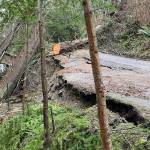

After drying out from a January full of record-breaking rain, Vashon residents are still dealing with the aftermath of recent landslides.
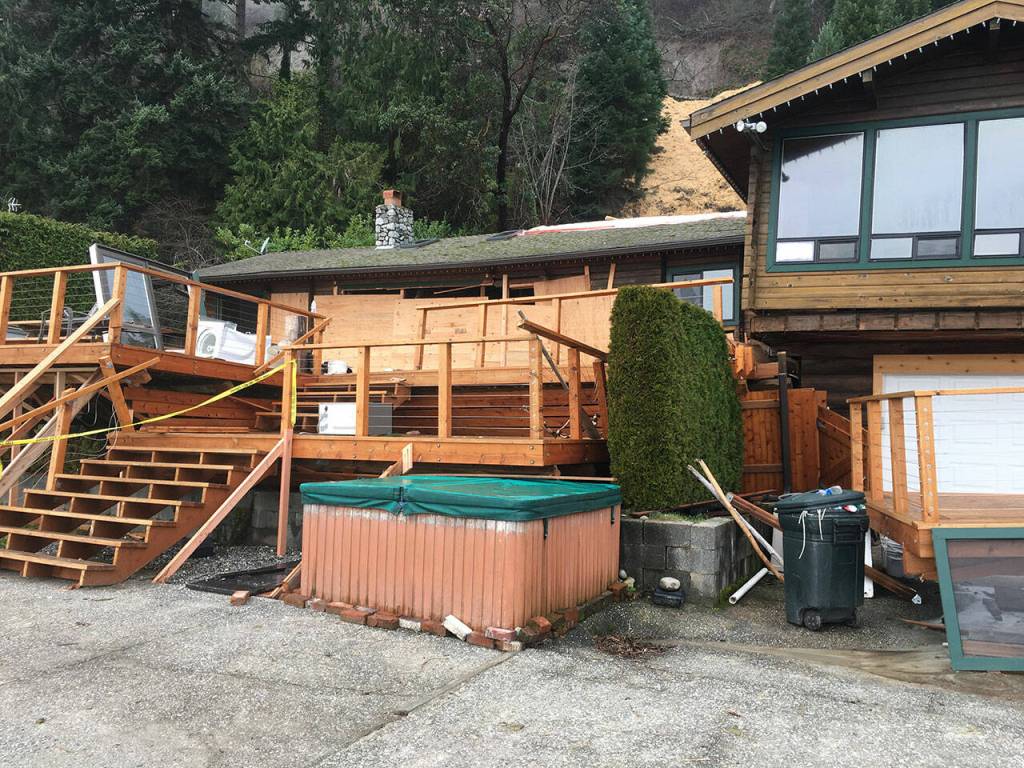
Past a closed electronic gate and down a steep hill is a sign that reads, “Possible road failure proceed at your own risk.” Beyond this are the remains of the house at Dolphin Point trail, crushed by a landslide that occurred on Jan. 7 after heavy rain battered the island. Caution tape blocks off the road and a tarp covers a broken path.
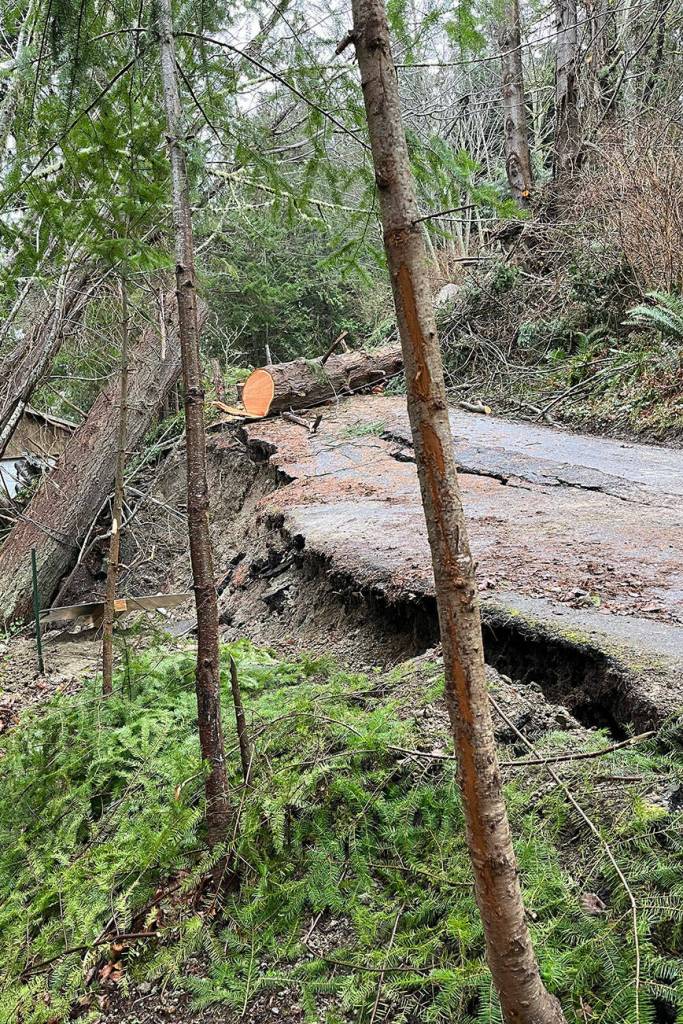
And on the west side of the island, Burma Road S.W. continues to be closed at 13311 and 13317, where tree and road conditions have made the homes unsafe after a slide. Owners were recently let in to collect their positions, but the two properties are still “yellow-tagged” at this time and unable to be occupied until safety issues are addressed, according to King County Local Services Information Officer Brent Champaco.
Champaco says there is no estimated timeframe for reopening of the closed section of Burma Road Southwest, which shuts the road in both directions. Crews have started the “geotechnical investigation” to look at the soil, help determine the cause of the slide and then work out a long-term fix. A consultant is expected to come on board this week to begin design work on the project, he added.
“That’s a really big one,” said Sunny Speidel, a neighbor who lives nearby and was out for a walk on the steep, winding road. It was the biggest slide she had seen in a while.
Having grown up on the island, she knows that slides and downed trees are just part of living here. “There are things you can do to prevent some of this,” she said, “but that really makes you think when you see something like that.”
Living with the beauty of nature, and sometimes its devastating effects, are part of life on the island. Every rainy season islanders tend to see some kind of slide. The biggest predictor of a future slide is when a particular hill has a history of sliding in the past, says Michael Sperazza, Situation Section Chief in the Vashon Emergency Operations Center. He also
serves on the Executive Committee of VashonBePrepared, a non-profit coalition that coordinates disaster-related organizations on Vashon and Maury Island.
The January rainstorm and slides were some of the worst Sperazza has seen during his six years at VashonBePrepared.
“The entire island is a gravel bar of varying composition,” said Sperazza, who is also a geologist and former college professor. He explained how the weight of water can cause havoc on steep slopes. “The water sits on the clay and water builds up pressure and pushes back on the soil creating a quicksand we call liquefaction. Grains of sand are pushed apart and things start to slide.” One of the biggest red flags to look for is flowing water down a hill on a property.
Things also get tricky when neighbors play around with drainage. “People forget about that what the person does up the hill from you is very important – they could end up in your yard,” he said.
Are there parts of the island that might be worse than others for slides? Licensed geologist and president of the non-profit Geology in the Public Interest, Greg Wessel, spent years mapping landslide hazards while working for King County. He noted that Vashon has about half of total landslide risk for all of unincorporated King County.
While there are known hazard areas, there isn’t one particular area that is more at risk than another, says Wessel. “The steeper the slope, the bigger the risk.”
Landslides are so prevalent in the Puget Sound area that the Washington State Department of Natural Resources puts out a pamphlet for homeowners with warning signs, both inside the home and out. Inside, look for things such as cracks in walls, nails popping out of walls, doors and windows that are hard to shut and water seeping into the basement. A few things to pay attention to, outside, are changes in surface drainage, bulges in retaining walls, pistol-butted or bent trees, and broken water or sewer lines.
“Just be observant and know the true risk, not the perceived risk. It’s easy to get scared when you don’t have to be,” says Wessel, who actually lives on a slope himself. “I’m literally living on the edge,” he joked. But these are problems that often have solutions, he said. “Just be cognizant of the fact that they are there and then take care of it.”
Though fighting gravity is often a losing battle, there are steps you can take to feel more secure. “Get the recommendation of a geotech if there are concerns,” said Wessel. “Sometimes they can just walk around with you for a couple of hours and point things out, but if you are building a house they will often need to test the soil and do computer modeling.
Landslide insurance is another option. Tom Trigg, owner of Trigg Insurance Agency on the island has been in the insurance industry for 40 years. A few people have asked him about landslide insurance after the bigger landslides that have just occurred in Magnolia and Bellevue, but overall, he has not had more than the usual amount of calls, he said.
A “Difference in Condition” policy can often be purchased for coverage due to landslides. It can be pricey but may provide peace of mind for catastrophic coverage. A typical policy on an $800,000 property could run about $2300 annually with a 10% deductible, he said.
“I’m sure when we are having a torrential rainstorm and someone who is living on a bluff is listening to the rain beating down, they might feel like they would be okay knowing they do have insurance,” he added.
Diana Wurn’s writing has appeared in the Washington Post, Seattle Magazine, Seattle Times, and elsewhere.