Public Health advises return to masks in indoor spaces
Published 1:30 am Thursday, December 15, 2022
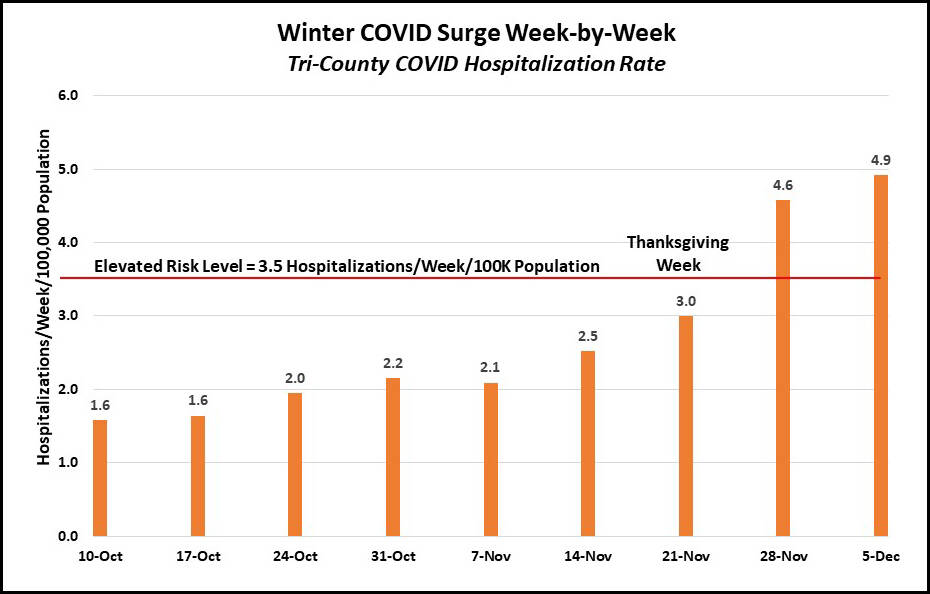

A total of 34 public health officers and healthcare leaders around the state — including King County —are now recommending a return to masking in indoor public spaces.
The recommendation is a response to the tripledemic of three serious viral respiratory diseases, including not only COVID but also respiratory syncytial virus (RSV) and seasonal influenza (flu).
The recommendation describes an “unprecedented surge in viral respiratory illnesses” and urges that “everyone wear a high-quality, well-fitting mask when around others in indoor spaces to protect against both acquiring and spreading these infections to others.”
In addition to masking, the recommendation stated that “vaccinations are the most important way to protect against severe influenza and COVID-19 infections, including hospitalization and death. Everyone 6 months and older should be vaccinated against these diseases and those who are eligible for an updated COVID-19 booster should get it now.”
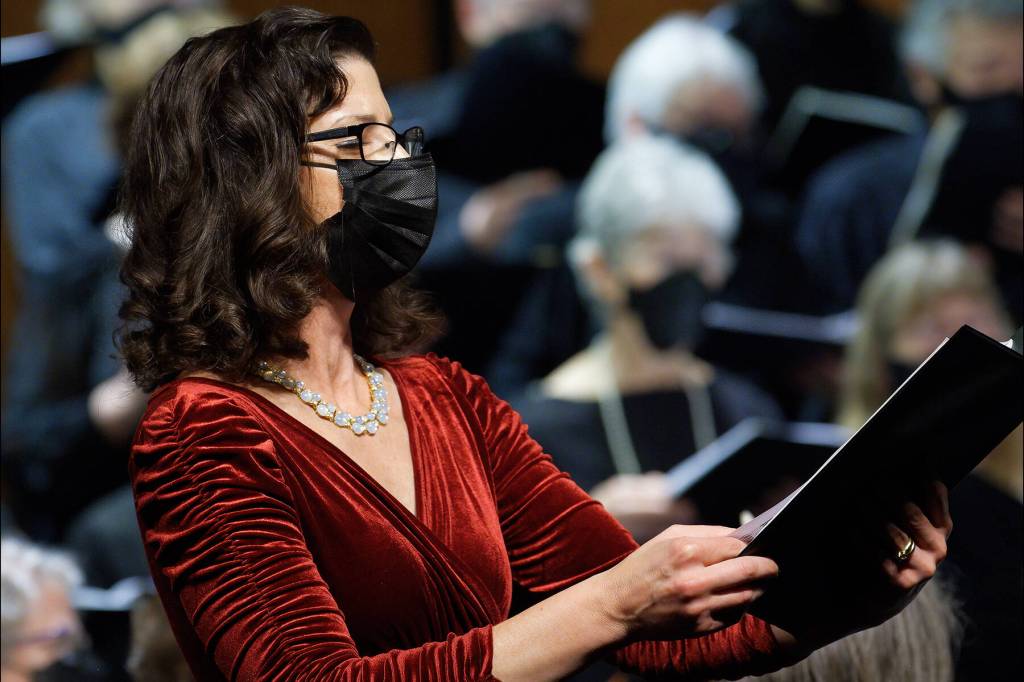
Last weekend, members of Vashon Island Chorale reflected the current recommendations, wearing masks for “On Earth, Peace!” — the Chorale’s annual holiday concert at Vashon Center for the Arts. All of the performers were required to test negative for COVID before going on stage. Everyone, including soloists, wore special singers’ masks that allow more space for breathing and projecting their voices.
“We all remember the horrible result from just one rehearsal of the Skagit Valley Chorale early in the pandemic,” said Chorale President Jo Ann Bardeen. “Dozens of their members contracted COVID. Many were hospitalized and two died. We wore masks during this concert to protect our members and our audience. Also, it’s a way for us to show solidarity with our island neighbors.”
Tracking the Winter COVID Surge
The COVID infection level began rising as colder weather arrived and people started gathering indoors. And like the last two holiday seasons, the spread of COVID rapidly increased as holiday travel and Thanksgiving gatherings began.
The rise to an Elevated Risk level followed many weeks at the lower Basic Risk level. Although we have not yet reached the High Risk level (7 Hospitalizations/Week/100K Population), the current trajectory suggests that probably will happen this holiday season.
The risk level assessment utilizes data from the state Department of Health’s COVID dashboard. In addition to hospitalization rates, the VashonBePrepared assessment also considers the trend lines for two additional metrics —the new case rate and the test positivity rate. Both have also been rising in the last few weeks.
The risk estimate takes into account that Vashon is in a three-county COVID exposure pool — King, Pierce, and Kitsap. Over 3,000 people take a round-trip ferry ride to or from the mainland each day. That’s equivalent to almost one-third of the island population. Therefore, the metrics from the three counties are blended to take into account the island’s regional COVID exposure risk.
Elevated Risk recommendations
At Vashon’s current risk level for COVID, it’s smart for everyone to wear an N95 mask indoors in public. People who are unvaccinated, at high risk from COVID, or living with someone at high risk should avoid non-essential indoor public activities.
If you must be indoors in a public place, it’s extremely important to wear an N95 mask if you are unvaccinated, and/or at risk from COVID for health reasons, and/or you live or spend time with someone at risk from COVID, and/or you are regularly exposed to COVID risk in work or group settings such as retail, school or commuting.
Additionally, the following is recommended.
- Test at home before gathering with friends and family.
- Get the bivalent COVID vaccine if you have not already done so.
- Maintain good ventilation at home and at work.
- Avoid individuals with suspected or confirmed COVID.
- If exposed to COVID, wear a mask in public and avoid contact with those at high risk for 10 days.
- Always home-test if you have symptoms.
- If you test positive, isolate for at least 5 days until you test negative.
If immunocompromised, discuss additional prevention actions with your healthcare provider.
Long COVID: Our Next Public Health Crisis?
A federal study warns that long COVID may ultimately turn into a $3.7 trillion economic disaster rivaling the Great Recession of 2008 and 2009 (cnb.cx/3h2cXek). This estimate is based on the economic costs resulting from the 80.5 million COVID cases confirmed in the U.S. to date.
A recent U.S. Department of Health and Human Services (HHS) report projects that nearly one-third of people in the U.S. will develop long-term symptoms after contracting COVID. These symptoms last for months and range from shortness of breath to fatigue, sleep disorders, body aches, and heart palpitations. Many long COVID patients suffer cognitive challenges they describe as brain fog, meaning trouble with concentration, communication, and memory recall.
The HHS report estimates that as many as 23 million people of all ages could ultimately suffer from long-term symptoms as a result of COVID. No scientific consensus has yet emerged on why some people have persistent symptoms and others do not. However, public health experts generally agree that long COVID does exist and that even mild infections can have debilitating long COVID consequences for some people. According to the HHS study, the economic impacts are coming into sharp focus: increased medical expenses, reduced quality of life, reduced income, higher household debt, lower retirement savings, and widening of already significant social inequities.
Long COVID and Masking
Despite all the uncertainties surrounding long COVID, there’s one clear way to avoid getting it: Don’t catch COVID in the first place.
“This may be one of the most important benefits of masking. You will be thankful if you don’t get COVID in your household because you masked up before going to an indoor event or before going shopping,” said Dr. Zach Miller, a Medical Reserve Corps (MRC) volunteer and infectious disease expert. “We all know the steps we can take to reduce chances of getting COVID. For example, it’s very effective for everyone to test before gathering with friends and family. But masking also works very well, and it has the huge advantage of fending off the other tripledemic diseases of seasonal influenza (flu) and respiratory syncytial virus (RSV). Both flu and RSV are particularly rough for young kids and our large population of seniors on Vashon.”
And, he added, “It’s important to get the latest Omicron booster and your flu shot. That will give you added protection as we navigate this winter surge.”