Vashon marks second death from COVID in past month
Published 1:30 am Thursday, February 23, 2023

Another Vashon resident has died from COVID.
The latest death makes two reported in February and brings the total known COVID fatalities on Vashon to eight since the beginning of the pandemic. Before these latest two, the previous COVID death was reported in August of last year. The report comes from Public Health – Seattle & King County (PHSKC).
In accordance with privacy laws and PHSKC policies, the names of patients are not released.
The Preparedness Elephant: Just Do Something
There’s an old saying that goes: “How do you eat an elephant? One bite at a time.”
In other words, you can get a lot done by just taking that first bite of a project, then another, then another. Buy an extra can of beans next time you shop. Check your flashlight batteries. Sign up for emergency alerts. We’re here to help you “eat” the preparedness elephant, one bite at a time.
Prep Tip: What if It Happened in the Night?
If the big earthquake (or another emergency) strikes in the middle of the night, will you be able to get yourself to a safe spot? One of our team vividly remembers surviving the Northridge earthquake.
All the power went out. It was completely, utterly dark. With no flashlight and barefoot, it was not safe for them to get out of bed because they heard glass breaking everywhere in the house during the shaking.
Shoes and a flashlight would have made a huge difference.
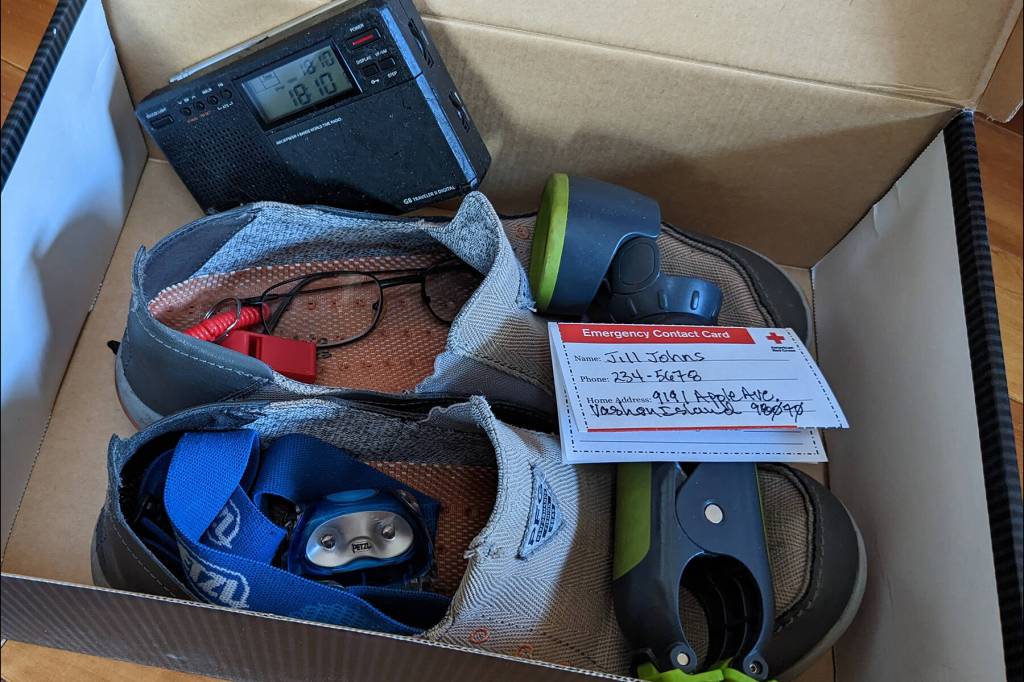
So take five minutes right now to make an under-bed bag or shoebox of useful items you probably already have, and keep these emergency survival items close at hand where you sleep.
• Sturdy shoes or slippers.
• Spare eyeglasses.
• Flashlight or headlamp.
• Whistle to get rescue attention.
• Your emergency contacts list (your cellphone may not connect in a big emergency).
• A battery-operated or wind-up radio.
Updates to Routine Childhood Vaccination Schedule
The Centers for Disease Control and Prevention (CDC) and the American Academy of Pediatrics (AAP) have added COVID vaccination to their recommended vaccination schedules.
The recommendation comes in a routine update to the schedules. It does not create any vaccine requirement for schools, since those requirements are set at the state and local levels. But it’s a guide for physicians, saying COVID vaccinations can be administered alongside measles and other childhood immunizations.
The CDC news release can be read here. See the detailed AAP recommendation chart here.
Free Telehealth Appointments
You just got the dreaded double line on a home COVID test. It’s the weekend or after hours. But here’s the good news — the Washington State Department of Health has relaunched its free telehealth service.
The free service provides a quick way to find out if Paxlovid is right for you. The telehealth service is open seven days a week from 8 a.m. to 8 p.m. You can get all the details for accessing the service here.
When you test positive, it’s important to act quickly. You must start Paxlovid within five days of first symptoms or testing positive. At the website, you’ll click through to a short intake form and be provided with a link for a video consultation with a healthcare provider. If the provider believes treatment is appropriate for you, you’ll get a prescription for the kit of oral medication that can help reduce the severity of your COVID infection.
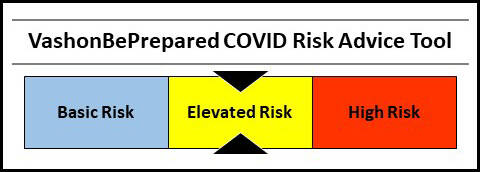
COVID Risk Level: Elevated
The VashonBePrepared COVID Risk Advice Tool remains at the yellow Elevated Risk level, based on the hospitalization rate in our three-county COVID risk assessment area. The risk level rating also takes into account the new case rate, the positive test rate, and COVID virus levels in wastewater tested by regional public health departments.
At this Elevated Risk level, it’s smart for everyone to wear an N95 mask indoors in public. It’s doubly important to mask up if you are unvaccinated, at risk from COVID for health reasons, spend time with someone at risk from COVID, or are regularly exposed to COVID in group settings such as retail, school, or commuting.
Avoid non-essential indoor public activities if you are unvaccinated, at high risk from COVID, or living with someone at high risk. Additional recommendations include testing at home before gathering with friends and family, and always test if you have symptoms.
Get the bivalent COVID vaccine if you have not already done so. Maintain good ventilation at home and at work.
Avoid individuals with suspected or confirmed COVID, and if you are exposed, wear a mask in public and avoid contact with those at high risk for 10 days.
If you test positive, isolate for at least five days after the first COVID symptoms or a positive test. Stay isolated until you test negative. Wear a mask around others for a full 10 days, even if testing negative.