VashonBePrepared recaps earthquake safety exercise
Published 1:30 am Wednesday, November 8, 2023
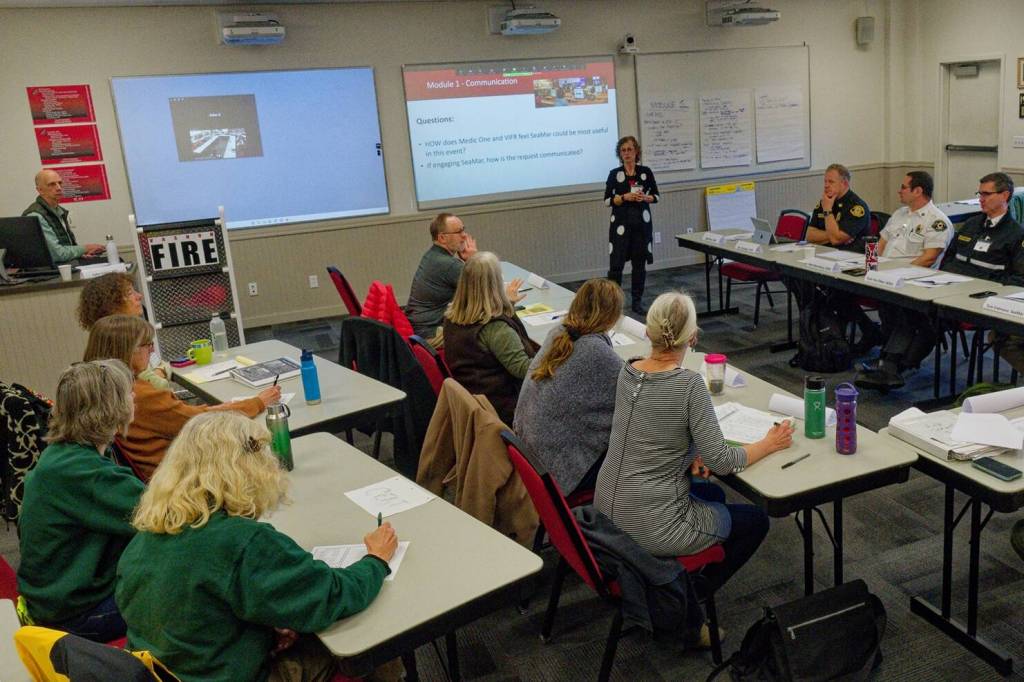

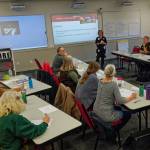
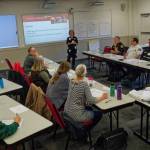
Earthquake Disaster: Planning for Treating the Injured
In the chaos of a major earthquake — with dozens injured and the island cut off from the mainland — how would Vashon’s emergency teams be organized to respond as one?
A historic test exercise has made major progress toward answering that question and identifying new questions to be addressed.
The tabletop-style exercise brought together for the first time the leaders of Vashon’s primary disaster organizations to work through the what-if questions. Who would activate the teams and, if needed, activate a centralized medical care operation to handle the surge? How would emergency teams coordinate, given their different radio systems? How would continuity of care be preserved as patients are handed off from an ambulance or triage station to the next care station?
About three dozen participants attended the exercise on October 28, including representatives from Vashon Island Fire & Rescue (VIFR), King County Medic One, Sea Mar Vashon Medical Clinic, Vashon’s Medical Reserve Corps (MRC), Community Care Team (CCT), Emergency Operations Center (EOC), Auxiliary Communications Service (ACS, Ham Radio), and Community Emergency Response Team (CERT).
Answering big questions
The exercise was conducted in a “tabletop” discussion style and tested how teams would work together to care for the injured in the early hours following an earthquake.
The exercise scenario assumed ferries weren’t running, cutting off access to mainland hospitals, potentially for days. An expert facilitator divided the session into modules that sparked practical discussions around communications, procedures, and responsibilities.
The next step will be to build on the findings by designing hands-on exercises to test and refine insights gained during the tabletop exercise.
Action steps: What to do immediately after an earthquake
After the initial shaking stops, take action on four high-priority issues: caring for the injured, preventing new injuries, ensuring safe space, and getting information. Here are some steps you can take.
Care for the injured
For serious injuries, try to reach 911. Then, do what you can to help the injured person.
If needed, begin CPR. Before the earthquake, get trained by signing up for CPR training. Vashon Island Fire & Rescue offers classes that fill quickly, so keep checking their sign-up page here.
Get out the first aid kit that you should prepare in advance and keep in your home or vehicle go-kit.
Prevent new injuries
Many injuries happen right after an earthquake when people walk on broken glass, so wear sturdy shoes.
If you go to work clearing debris and helping someone get out from under the debris, wear work gloves, as well as a hard hat, goggles, and a dust mask if you have them.
Ensure a safe space
Expect aftershocks. Move away from locations where objects, such as bookshelves or broken windows, could fall on you during repeated shaking.
After the shaking stops, walk around the outside of your building and look for structural damage. Evacuate the building if you see signs of collapse.
Check for natural gas or propane leaks. If you smell gas, turn off the supply to prevent fire. Puget Sound Energy (PSE) suggests that you only turn off the supply when you smell gas because it could be weeks before PSE can restore the supply.
If there are signs of building collapse, wiring might be damaged. It could short-circuit and cause a fire. In that case, turn off the main switch in the breaker box.
Check for broken water and sewer pipes and, if necessary, turn off your building’s water supply to prevent flooding.
If water is still flowing from your faucets, store water in bathtubs and sinks so you can use it to flush toilets, assuming the lines to your sewer or the sanitation district are intact.
However, be cautious about water from your faucets after a major earthquake. It might be contaminated if the distribution pipes of your water provider have ruptured from the shaking. Your water provider might even issue a boil water order.
Conserve water remaining in your water heater and toilet holding tanks because that pre-earthquake supply will be safe to drink.
Locate your fire extinguishers and keep them handy in case further shaking causes a fire.
Get information
Activate your family communications plan by reaching out via phone, email, or text to your out-of-state contact, so family members can check in with their locations and status.
Turn on your radio to listen for information on the Voice of Vashon Emergency Alert System at 1650 AM. If the Internet is up, monitor for email alerts.
Make notes on advice you get from the Emergency Alert System on how to get medical help, food, and water.
(Thanks to our sister nonprofit, Bainbridge Prepares, for inspiring this newsletter item.)
Vashon COVID Risk Level: Basic
The COVID hospitalization rate remains below the trigger point for an increase in our risk advice tool.
The updated COVID vaccine aims to prevent severe disease and hospitalization. The Centers for Disease Control and Prevention (CDC) recommends the latest version of the vaccine to everyone six months and older. VashonBePrepared volunteers from the Medical Reserve Corps and the Emergency Operations Center are helping out at the pharmacy to serve the high volume of those seeking the vaccine.
Wear an N95 mask indoors in public if you are exposed to COVID, at risk for health or other reasons, or if you live with or spend time with someone at high risk.
Plan on getting the updated COVID and flu vaccines in early fall.
Maintain good ventilation at home and at work.
Avoid those with suspected or confirmed COVID.
If exposed to COVID, wear a mask in public and avoid contact with those at high risk for 10 days.
Always home-test if you have symptoms.
If you test positive, isolate for at least 5 days and until you test negative. Also check in right away with your doctor about treatment, even if your symptoms are initially mild.
If immunocompromised, discuss additional prevention actions with your healthcare provider.
The VashonBePrepared COVID Risk Advice Tool aggregates data in our exposure area of King and Pierce counties. The primary metric evaluated by the Vashon Medical Reserve Corps is the COVID hospitalization rate, because public health agencies reliably report that.