Treasuring the common good
Published 10:30 am Tuesday, December 23, 2025



One of my favorite autumn pastimes is going to cider pressings. The way it usually works is that friends and neighbors bring whatever apples they have to the place with the cider press; they all help out as they are able — smashing the apples, feeding them into the press, decanting the juice — and most everyone takes home some delicious cider.
It’s a collective effort, and everyone benefits — even if it’s just by enjoying the occasion.
One of our island sages informed me that the cider comes out best when mixed varieties of apples go into making it — if it’s just one kind, some one quality or other can be too pronounced. But if there’s a good mix — Honeycrisp, Cameo, Gravenstein, Delicious, Fuji, Braeburn and Granny Smith, say (or a mix of whatever happens to be available) — the peculiarities are smoothed out and the result is just wonderful.
That seems to me a good analogy for the most effective kind of group decisionmaking too: with enough diversity of views, a greater wisdom emerges — one beyond the wisest individual — and that wisdom guides decisions toward the common good.
What do I mean by “the common good,” and why should we treasure it? The founders of the American government considered it a fundamental principle, but did they define it exactly? Can we even assume there is such a thing as “the common good,” if we can’t completely articulate or measure it?
The common good, as I understand it, is that realm of benefit none of us can claim exclusively, but all of us can experience and sustain together. It’s embodied in things like clean air and water, sufficient nourishing foods, safe roads and spaces, open beaches, parks and libraries, public paths and horse trails, quality schools and trustworthy institutions. These don’t belong to any one person; they belong to us in common. And they thrive sustainably only when we make a point of tending them together.
Once we start viewing the world through that lens, a pattern appears. The infrastructure we maintain, the organizations we support, the local taxes we pay and even the conversations we take time to have with neighbors — all of these are acts of stewardship for the common good. They are our way of combining our many apples to make something that is deeply sustaining.
The challenge, as always, is that the common good rarely has lobbyists. Private interest, urgency and profit have megaphones; the common good has to rely on patient voices and shared conscience. It asks not, What do I get? but What do we gain?
This doesn’t make it abstract or idealistic. In close communities like Vashon-Maury Island, it’s among the most practical things there is. When we come together to fix a trail, remove tires from the beach, lobby for a ferry-line solution, preserve habitat, hold a kite festival or shape land-use policy that balances housing and ecology, we’re choosing to cherish that shared inheritance rather than treat it like a disposable commodity. The common good, like the cider I described, only exists because we each bring what we have and add our efforts to the mix.
The value of what emerges depends on how well we do that work together. And like cider, the common good doesn’t keep itself; it needs sound vessels — reliable, lasting ways to hold what we’ve created in common so that it continues to sustain us. Otherwise, even our best efforts can turn to vinegar.
But when everyone’s well-being is adequately cared for, something remarkable happens: a kind of natural synergy arises. People feel secure enough to contribute their best, and the community as a whole begins to flourish in ways no individual effort could produce alone. Systems that serve all of us well inevitably serve each of us better — not by charity, but by design.
Our task, then, is not only to press the cider but to make sure we have the containers to keep it fresh — the shared structures, understandings and trust that protect the fruits of our labor and allow every islander to draw strength from them.
In that stewardship lies both our common good and our common future.
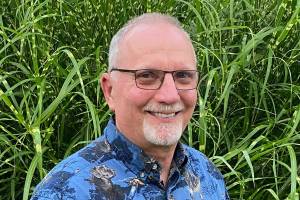
JC Graham is President of the Vashon‑Maury Community Council. He has lived on Vashon Island since the turn of the century. Email JC at President.V-MCC@proton.me or permessos@proton.me.