How one islander plants to support local pollinators
Published 10:30 am Tuesday, January 20, 2026
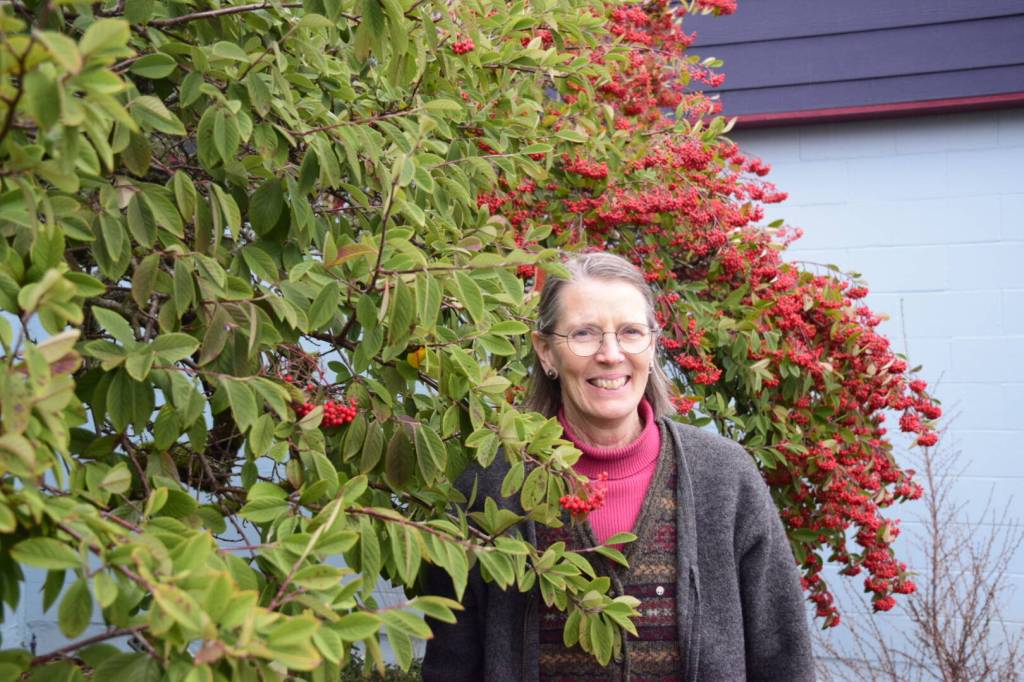
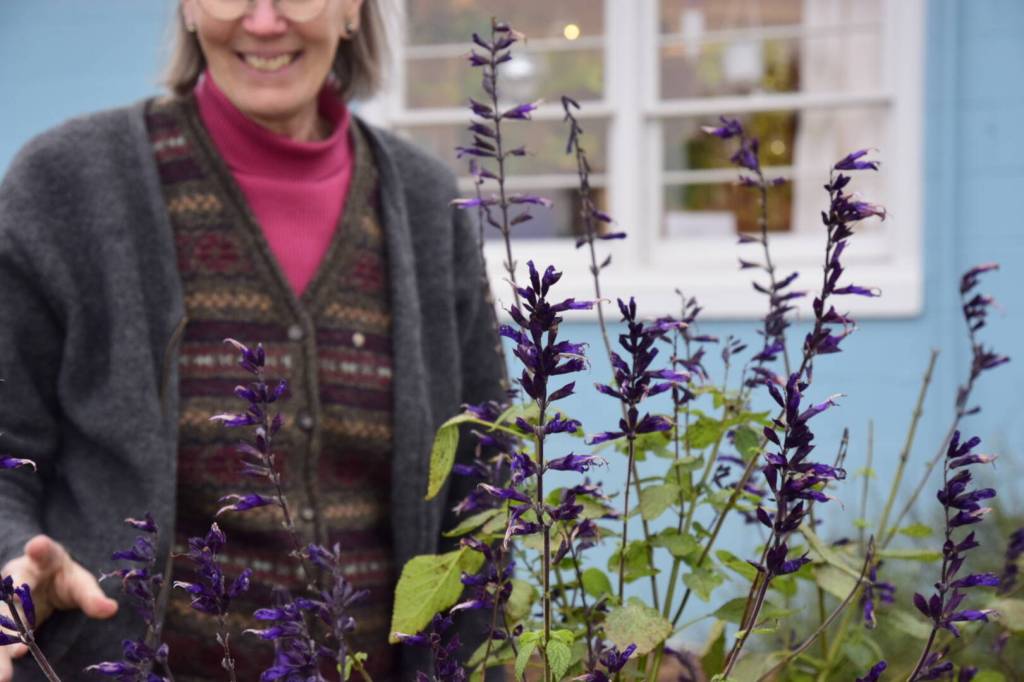


Asters blushing pink against the misty dusk, crimson-colored huckleberry stems laden with unopened buds, a clump of weedy salvia. As Julia Lakey gently trails her fingers across the tops of each plant in her garden, she decides which will be ready to propagate come spring.
She knows by heart the name of each purple bloom and half-dead cluster of leaves she brushes past, yet she is self-taught. “I’m not a trained naturalist,” she said. “I’m just a boots-on-the-ground naturalist.”
Lakey has lived on Vashon for the past half-century, though she has worked all over the country as an educator and writer. Her hands-on approach as a gardener has served her well for past projects, such as working to certify the island as a wildlife habitat community in 2020 and installing a pollinator garden at Matsuda Farms.
Her newest project is planting pollinator gardens around all of Sunrise Ridge’s major buildings, a project she has taken on solo.
“I really want to work on rewilding and helping native plants and native creatures,” she said.
The gardens are diverse, beautiful and self-proliferating. They’re also carefully curated to benefit Vashon’s pollinators, which include specific birds, bees, butterflies, wasps, or even flies.
Pollinators need pollen as a food source in order to survive, which Lakey said becomes a challenge when many plants aren’t blooming in the colder months.
The key to a pollinator garden is accessible pollen, all season long. This is important, Lakey said, “because the pollinators need food, and they hatch out at different times, and if they’re denied food then they might never complete their life cycle.”
Yet, not all pollinators are a force for good, according to Lakey.
Some non-native pollinators can threaten the well-being of other pollinator populations. “We have a lot of honeybees [on Vashon] and there is some research that shows that honeybees compete with the natives,” Lakey said. “We’re driving down the native species with our focus on honeybees.”
For native bees, this type of competition can lead to hive disasters like mites or colony collapse. “We have more than 30% of [Vashon’s] hives die out completely over the winter and that wasn’t true decades ago,” Lakey said.
Many pollinator populations in this area are suffering, and it’s partially due to what people are planting, Lakey said. She added that people on Vashon tend to be attracted to planting “exotic” species in their yards, which are not native to this area.
These non-native plants don’t have enough pollen for pollinators to use, nor are they good habitats for native insects. “So essentially, we’re planting green deserts for the native creatures,” she said.
The solution, however, is more complicated than simply replacing all non-native plants with native ones, Lakey said.
There is a fine balance between emphasizing native plants and having enough pollinators. If there are too many non-native plants, native insects won’t have pollen all season long, she said. If there are too few, habitats for pollinators become limited.
Lakey’s golden ratio? “The recommendation is to make your yard 70 to 80% native plants,” she said.
In her Sunrise Ridge gardens, native plants include salvia, huckleberry, manzanita and asters, among many others. “My new favorite late-season thing is asters, because they come in so many colors,” she said. “Blues and purples and talls and short, chubby ones.”
Lakey also emphasized that helping local species sometimes must fall on landowners, who have more space to plant. A prime example, she said, is the Garry oak tree, a Northwest native that serves as a habitat for over 200 species of insect.
“The Garry oak [is a] massive oak tree that takes a lot of room,,” she said. “It takes a homeowner with enough land to do that.”
Lakey urged people to consider more than just looks when planting trees near their homes.
“I don’t think people very often think about planting a tree based on who is going to benefit,” she said. “They just think of the aesthetics, about how it’s going to fill the space.”
To those with adequate yard space, Lakey also recommends planting the native Oregon white oak tree.
Lakey has lived a life of many chapters. She worked with Deaf children in Kansas before moving to Vashon in 1976. She helped create English as a Second Language (ESL) curricula in Seattle, worked with refugees in the Tacoma area, then became a high school special education teacher in Gig Harbor.
“I did teacher training, I wrote books. I got to do everything I wanted to do,” she said.
After years spent watering curious young minds and ensuring they had the right tools to grow, traveling all over the Pacific Northwest to serve as an advocate for others, Lakey retired and began thinking about the impact she wanted to make on her home.
“Once you’re [at] retirement age, you start thinking about your legacy,” she said.
Lakey began to ask herself, “How could I help rewild and re-naturalize a place on the planet that I love so deeply, Vashon Island?”
From her earliest moments, Lakey has always loved gardening. Growing up in the San Fernando Valley, she was the first in her family to start a vegetable garden. As she grew, she carried with her the importance of staying connected to the land.
“Any place I’ve lived, I’ve planted some kind of food or flowers around me to enjoy the seasons,” she said.
Lakey’s formal introduction to naturalism came from the National Wildlife Federation, which she said provided excellent resources as she worked to certify Vashon as a wildlife habitat community in 2018.
Then, in a cooperative project with the Land Trust and Matsuda Farms, she installed her first pollinator garden in 2020.
Along with an enthusiastic group of volunteers from the Garden Club, Lakey began the planting process with some native seedlings she bought from a local grower.
“We had a planting party,” she said.
With this first garden plot, which Lakey said measured three feet in width and over 200 feet in length, she learned the value of a self-propagating garden, a technique she would go on to use at Sunrise Ridge.
After a few years of growth, Lakey said, the garden begins to plant itself as flowers drop seeds into the soil below. “You end up having a wonderful carpet of the plants that you want,” she said.
Lakey has since stepped back from the Matsuda farms pollinator garden, appointing a new coordinator. The space is also a time of transition, since the Land Trust has recently leased the farm to new tenants.
The Sunrise Ridge board, drawn by Lakey’s new reputation for pollinator garden knowledge, approached her in 2022 and asked her to redo the small garden outside Sea Mar Clinic. She transformed the space into a vibrant, densely populated garden directly in front of the car lot.
In 2025, Sunrise Ridge approached Lakey once more, this time seeking a pollinator garden in front of the Vashon Maury Co-op Preschool.
“It’s a much larger area,” she said, adding that its slope provided a landscaping challenge.
In Lakey’s newest garden, which sits adjacent to the preschool’s fenced-in playground, some dark purple asters and pink penstemons bloomed in defiance of the blustery January wind. Hummingbirds flitted past, scavenging for late-season pollen.
“This is not what a garden normally looks like in the wintertime,” she said, attributing the unusual blooms to the fact that Vashon has not yet had a hard freeze this winter.
“We’ve already moved into a new planting zone because of [global] warming,” she added. As the climate changes, the plants that thrive on Vashon will also change.
The new garden is sparsely covered in shrubs and flowering plants, bursts of color against a bed of wood chips. As time goes on, Lakey will propagate the plants to create more coverage of the space, just as she did in her first garden.
“I used the money judiciously,” she said. “If I had triple the budget, I could have covered all this in flowers and plants immediately.”
As her gardens move into public spaces, Lakey hopes to dispel the fear some people hold of stinging pollinators, like bees. “I worked five years in the pollinator garden,” she said, referring to her time at Matsuda Farms. “Number of stings?” She made a zero with her hand.
Sunrise Ridge was so pleased with Lakey’s success that they requested she build a third pollinator garden, then a fourth. “By the end of 2026 or early 2027, all the major building areas will have landscaping,” she said.
Yet, Lakey said that she isn’t overwhelmed by taking on these projects on her own. She has her community, after all. “I can go to nursery people and pick their brains, and I read and read and read,” she said.
Lakey’s self-education is paying off. Plant by plant, she is creating natural sanctuaries that welcome everyone, from Vashon’s citizens to its smallest pollen-inclined inhabitants.
Tess Halpern is a contributing writer for The Beachcomber.