Vashon artist Donald Cole looks back — and keeps creating
Published 1:30 am Wednesday, May 6, 2026
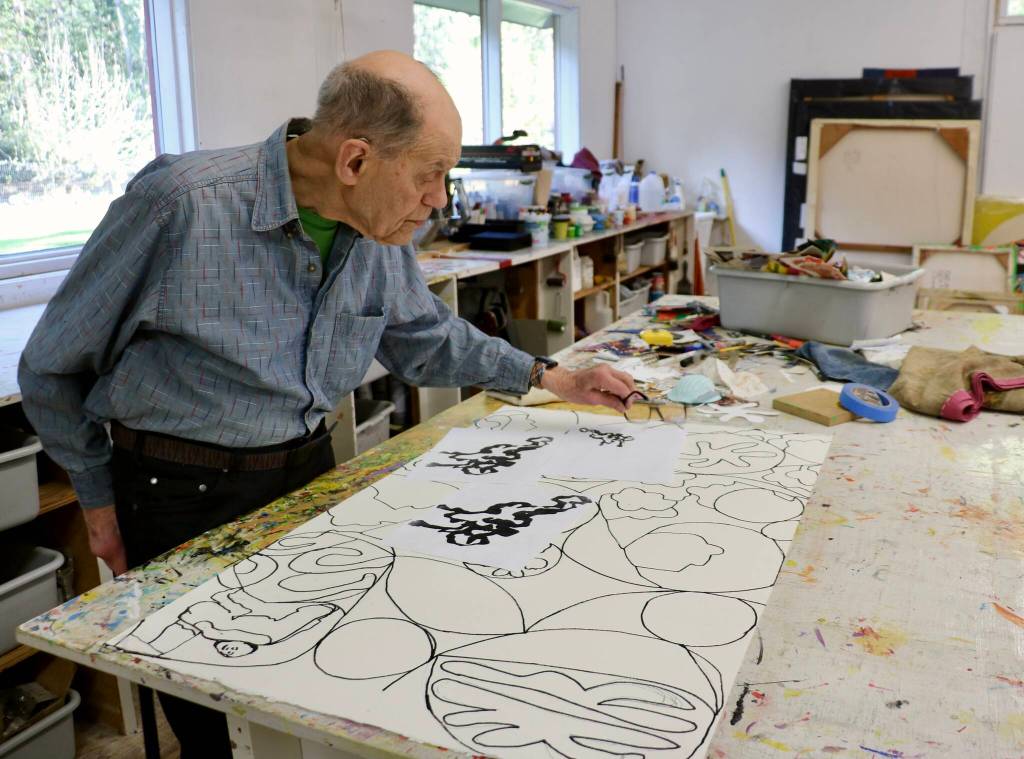
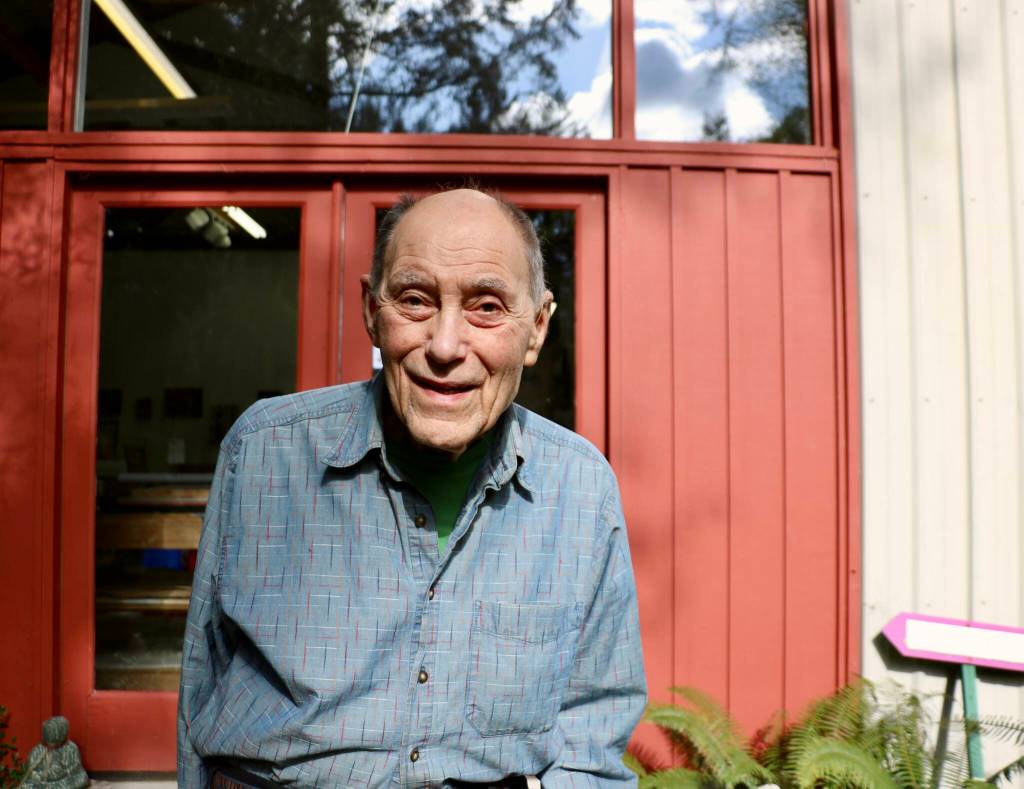
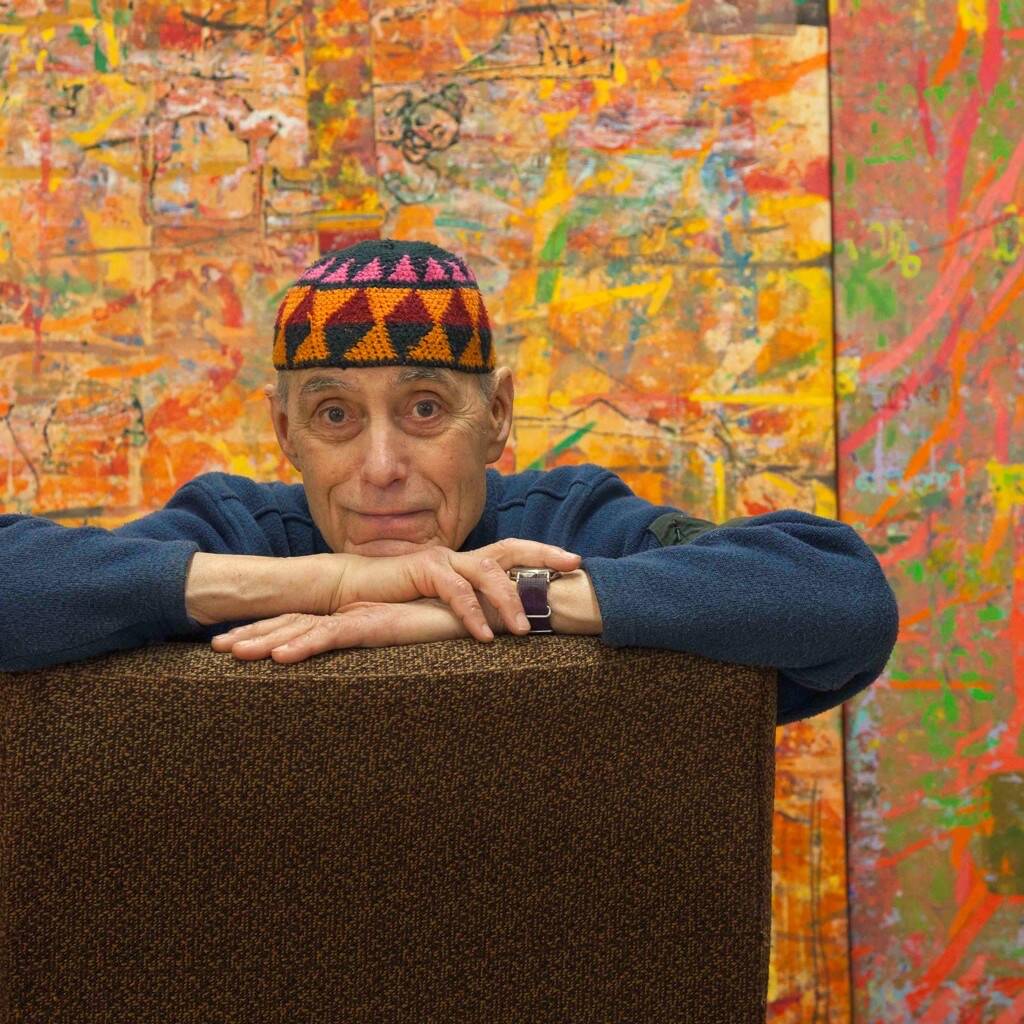
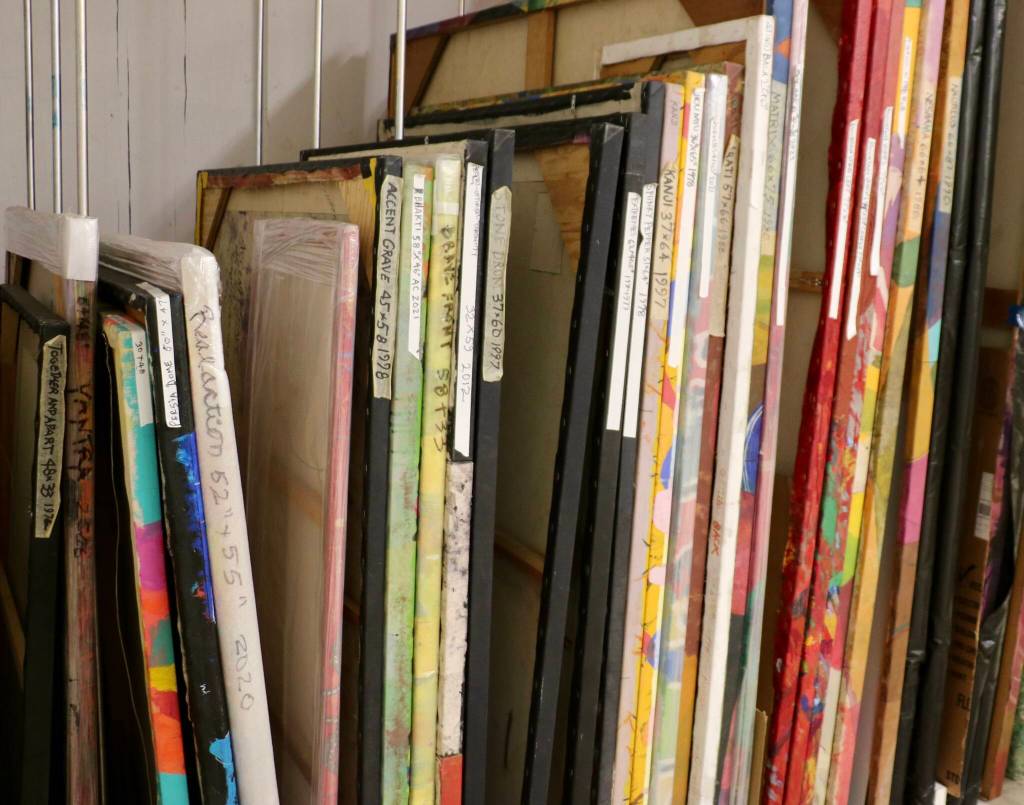
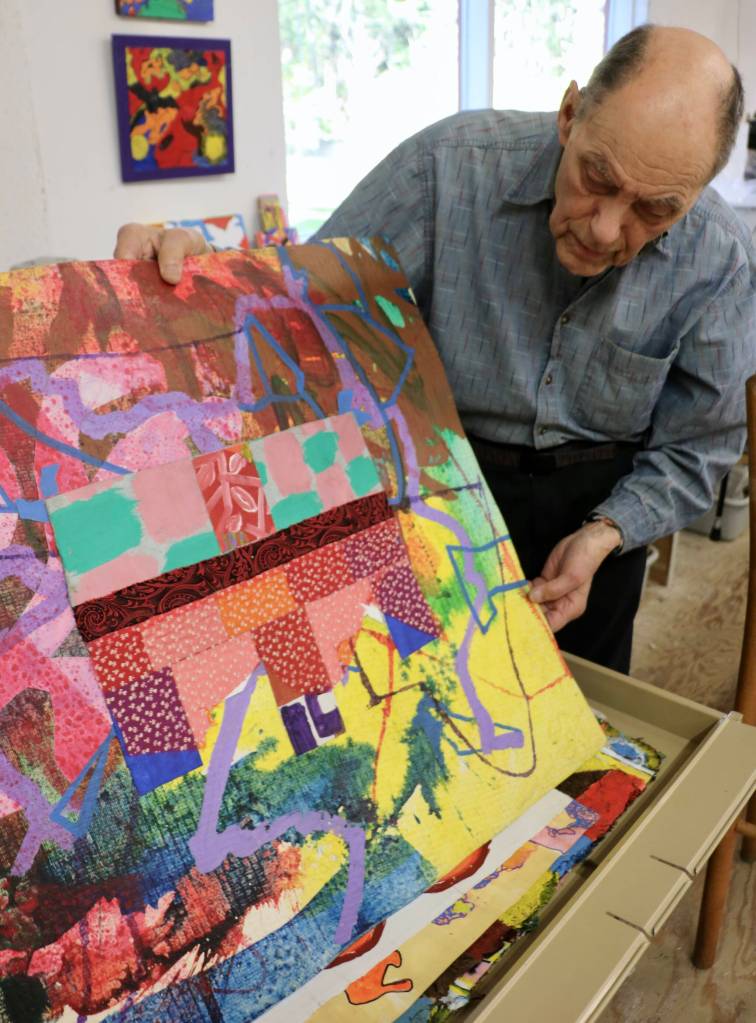



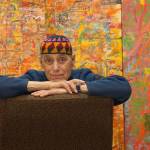

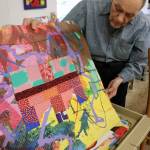
Inside a sunlit Vashon studio, Donald Cole opens drawer after drawer crammed full of paintings and drawings.
Around him, collages and diptychs lean against walls and rest atop tables. Art rolled up in tubes hang above canvases that line nooks and crannies. For every piece, he reminisces on the experiences and senses that brought them to life.
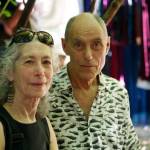
At 95, Cole still works for hours a day in his free-standing studio just across the lawn from the former church he and his wife, artist Joan Wortis, turned into a home after arriving on Vashon in the 1990s. The pair had never before heard of the island when they came and didn’t know a soul.
But the church’s walls were big enough to hold Cole’s canvases, so they made an offer and their bid was accepted.
“It happened by magic,” Cole said.
When asked why he started painting, Cole starts right at the beginning.
His lifetime fascination with the visual arts can be traced back to a third-grade school field trip to the Metropolitan Museum of Art, where he first laid eyes on a painting by French artist Henri Matisse.
“It woke me up, it just turned me on,” Cole said, seated in the office of his Vashon Island home. “It affected me strongly, and it put a seed in me.”
It’s a seed, Cole said, that remained with him for life.
While that seed has continued to grow and evolve, Cole said his core artistic throughline of visual perception and imagination has never wavered.
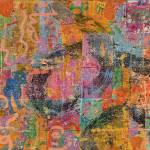
Cole’s current exhibition, “Throughlines” — showing at ArtX Contemporary, a gallery in Seattle’s Pioneer Square — follows this thread across decades of work, drawing on inspirations of travel, moments of social and political unease as well as ordinary moments of daily life.
Cole has long viewed life through a visual lens, finding muse in the everyday.
Growing up in New York City, Cole witnessed the abstract expressionist movement challenge convention and shift the art world’s epicenter from Europe to the United States. Defined by experimental painters like Jackson Pollock, artists emerging from this movement became some of his earliest influences.
But despite his enrapturement with the art world, it took years for Cole to accept his fate as an artist and pursue it wholeheartedly.
“It never really occurred to me that I could do it,” Cole said.
After studying engineering and subsequently serving in the Korean War, Cole used the GI bill — which provided education and training to millions of veterans — as his opportunity to earn a Master of Fine Arts from the University of Iowa.
In the decades that followed, Cole established himself as an artistic force in creative centers like New York’s SoHo neighborhood in the abstract expressionist movement, forged by young artists who had grown bored with pop art and minimalism.
“Things were very rigid and minimal; they called it minimal art, and it was not my thing at all,” Cole said. “But then, younger artists, which I was then, began doing something else, and galleries started to look.”
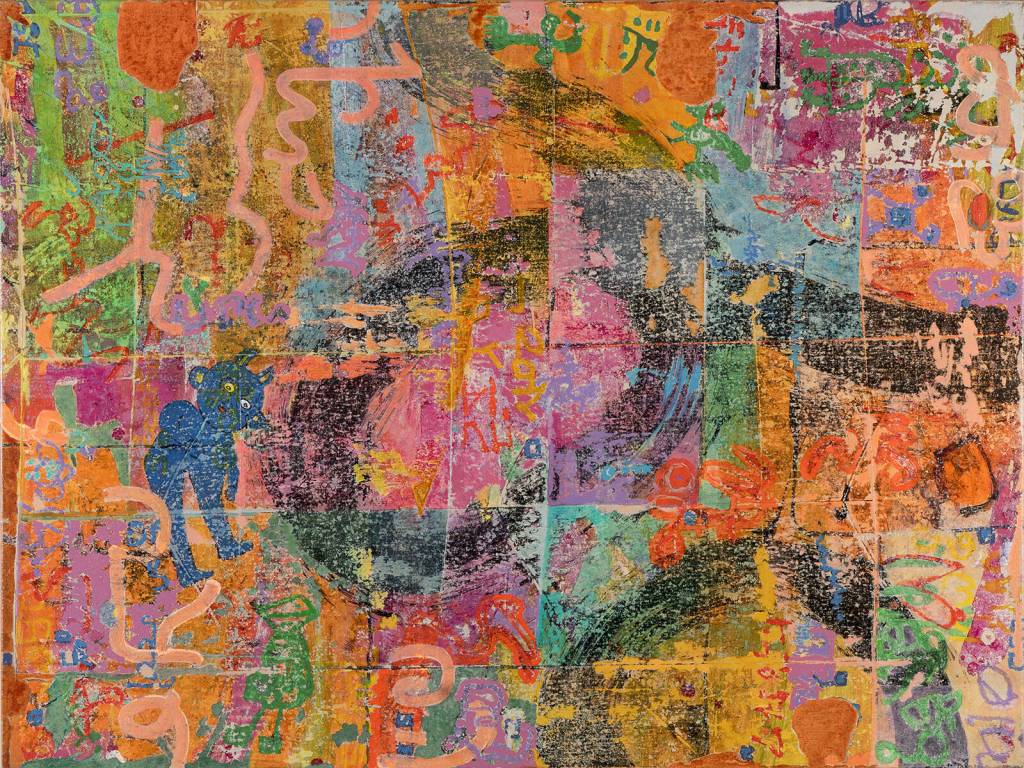
Cole’s style — an abstract fusion of vibrant colors, distinctive shapes, patterns and lettering — is driven by the idea that anything can be inspiration.
He lets his imagination go where it wants, thinking of it like walking a dog, and allowing the dog to meander through the neighborhood as it pleases, rather than forcing it to walk the sidewalks.
Much of the imagery included in some of his most beloved works were born out of extensive travel across Asia, Europe and the Middle East after marrying Wortis.
Travelling through India and China, Wortis said the pair became fascinated by posters plastered across city walls. Although they couldn’t decipher the words’ meaning — guessing they were perhaps an advertisement or a public-service announcement — they gravitated towards the hand-painted letters.
At night, the two would venture out to peel them off and roll them up, or plead with maintenance crews removing them to let them keep the posters, Wortis said.
Those artifacts, along with other remnants like scraps of faux fur that Cole said he dumpster-dived for to use in his work while working in SoHo, are still kept by the pair in their shared studio on Vashon.
Sipping tea in the couple’s living room, Wortis gestures to several paintings by both artists lining the walls around us, where traces of those posters still remain.
”We’ve taken that lettering, both of us in different ways, and utilized it in our work,” Wortis said.
But even seemingly ordinary relics of everyday life are an inspiration. Cole recalled seeing a tattered piece of Kleenex in his office recently, and instinctively moving to throw it away before thinking, “Those holes really are nicely placed.”
Just as Cole has absorbed the architecture, landscapes and textiles in the places he’s travelled, he’s also incorporated many of the political and social upheavals that defined the decades during which he was entering adulthood and working as an artist.
Serving in the Korean War prior to his formal entry into the art world has always affected his work in some way, Cole said.
“I saw war, I saw what war was, what war does,” Cole said. “When you’re in a place where people are dying, and you see that, or you know that, it affects you.”
Teaching first-year design at Auburn University in Alabama during the tumultuous era following Brown v. Board of Education, the Supreme Court case that ruled school segregation unconstitutional, Wortis said Cole and many of his colleagues became involved with the Civil Rights Movement.
The department’s social justice bent, paired with teaching styles that emphasized abstract, creative design, ultimately played a part in many of the staff’s terminations, Cole said.
“There was a big reaction against all kinds of abstraction and modernism, and they really cleared house,” Cole said. “They did not understand what we were doing.”
During the ‘80s, Wortis recalls Cole as outraged at Reagan-era policies, and much of his work from this period reflects a sense of political dissatisfaction — not unlike more recent pieces that draw on frustrations surrounding enduring issues like homelessness and climate change.
These periods, Wortis said, instilled values of social justice that helped to define the kind of message Cole wanted to — and continues to — express in his art.
“When you’re presented with something that gets under your skin, you do want to do something about it,” Cole said.
On the short walk from Cole’s home towards his studio, he reflected on the chance decision to move to the island in the ‘90s, and the community of fellow artists that have welcomed him.
After returning from a stint in Asia, during which Cole taught at the Kanazawa International Design Institute in Japan, Wortis said the pair rented a car in San Francisco and drove north, looking for a spot to settle down. They stumbled on Vashon by pure luck and never left.
Over time — Cole built a place in the island’s deep visual arts community.
Cole is a Vashon Island Visual Artists member, and his work has been featured in several of the organization’s shows, bringing his art — which has been shown in galleries in Los Angeles, New York and around the Pacific Northwest — to the community he’s chosen to call home.
Every day, Cole works in his island studio, only taking a break when Wortis calls him in for lunch, he says with a smile.
“Life is fun when you’re doing what I’m doing.”
“Throughlines” will show at ArtX Contemporary in Seattle, located at 512 1st Ave. S., until May 23.