At Ober Park, Vashon remembers Day of Exile
Published 1:30 am Tuesday, May 19, 2026
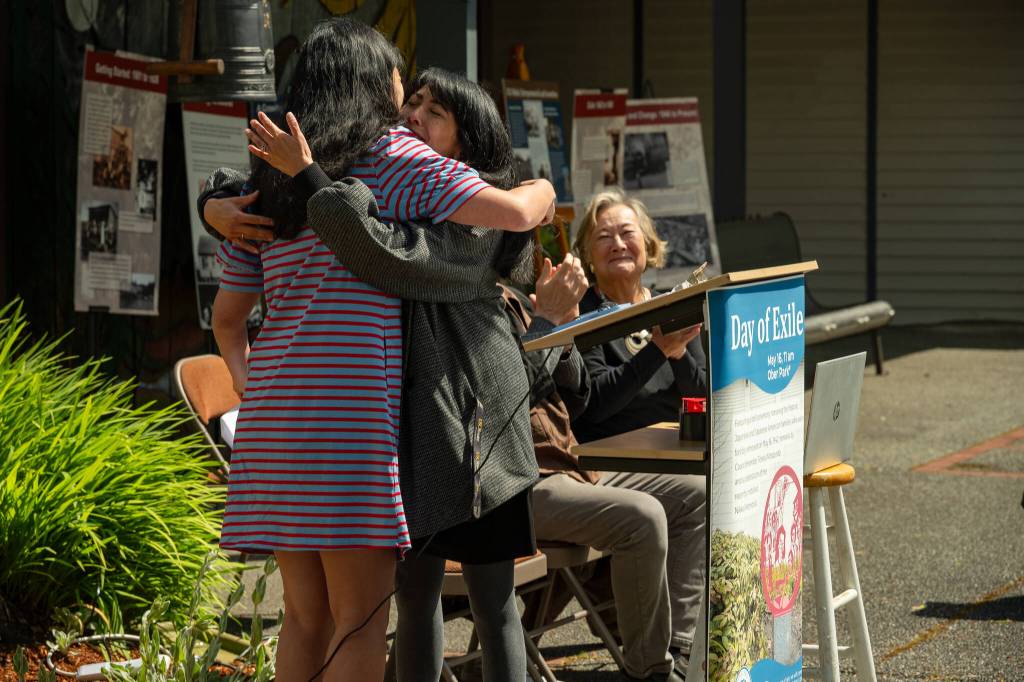
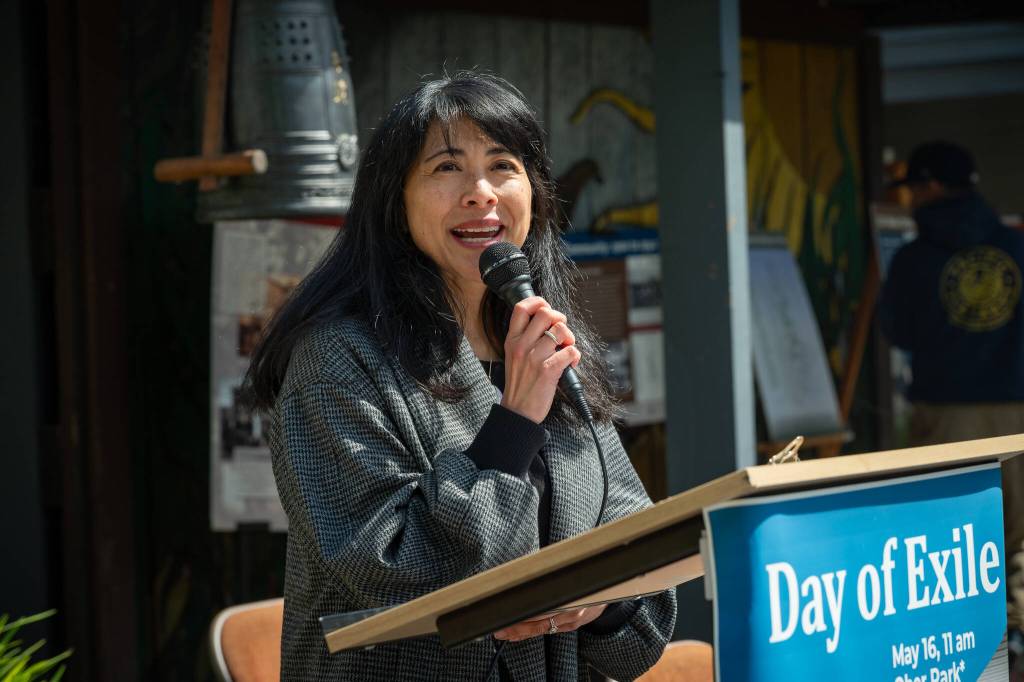
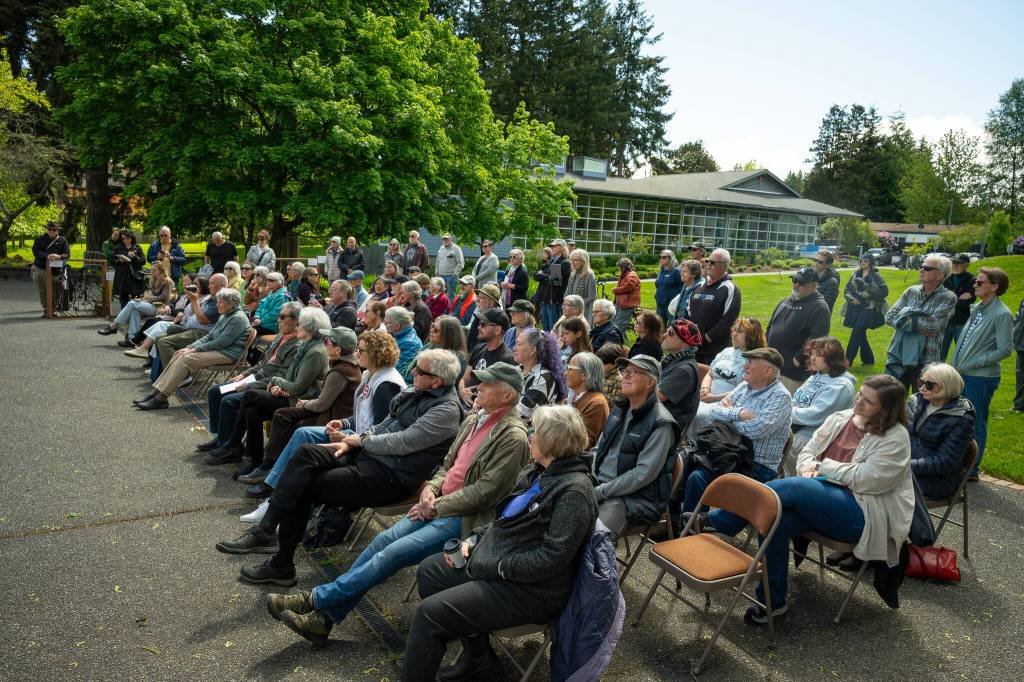
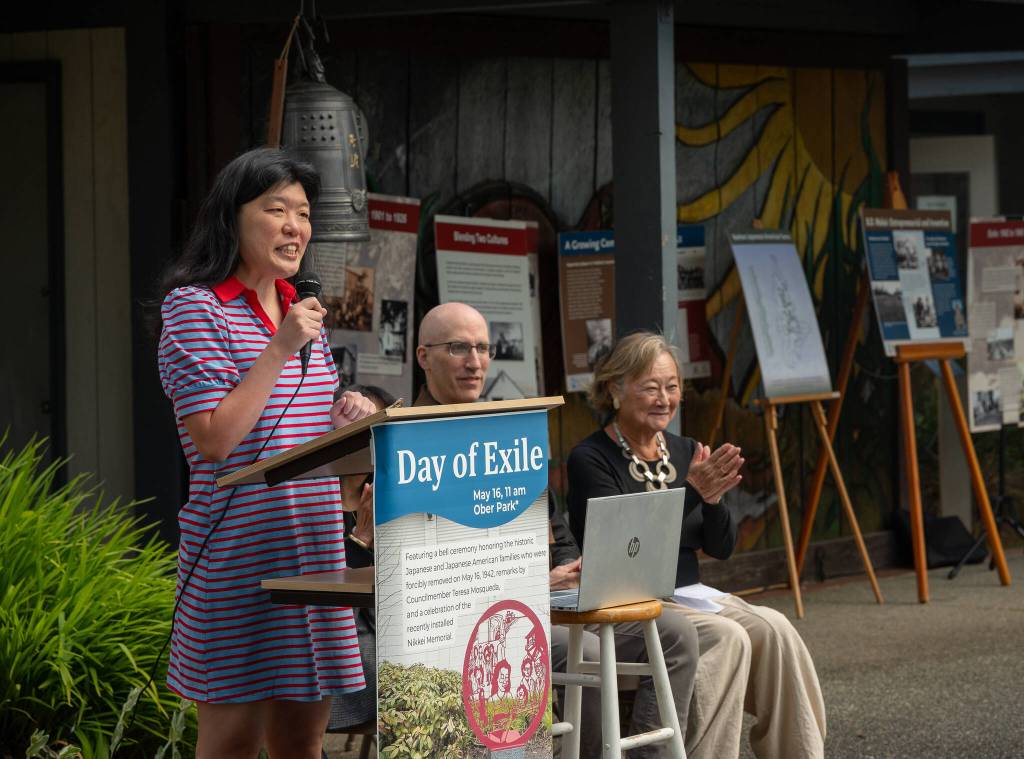
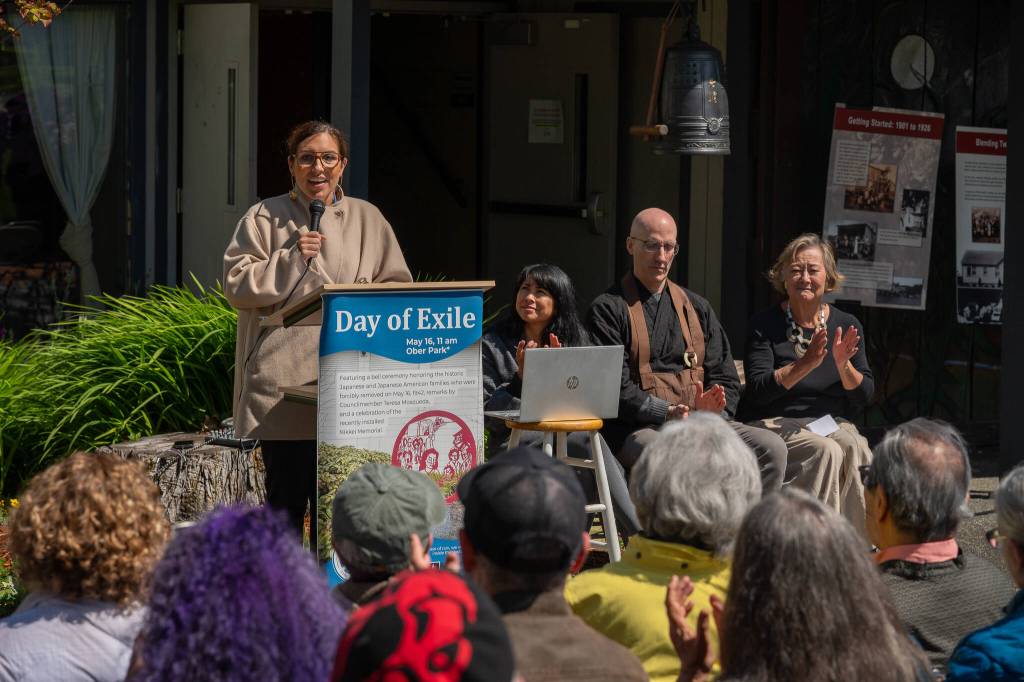
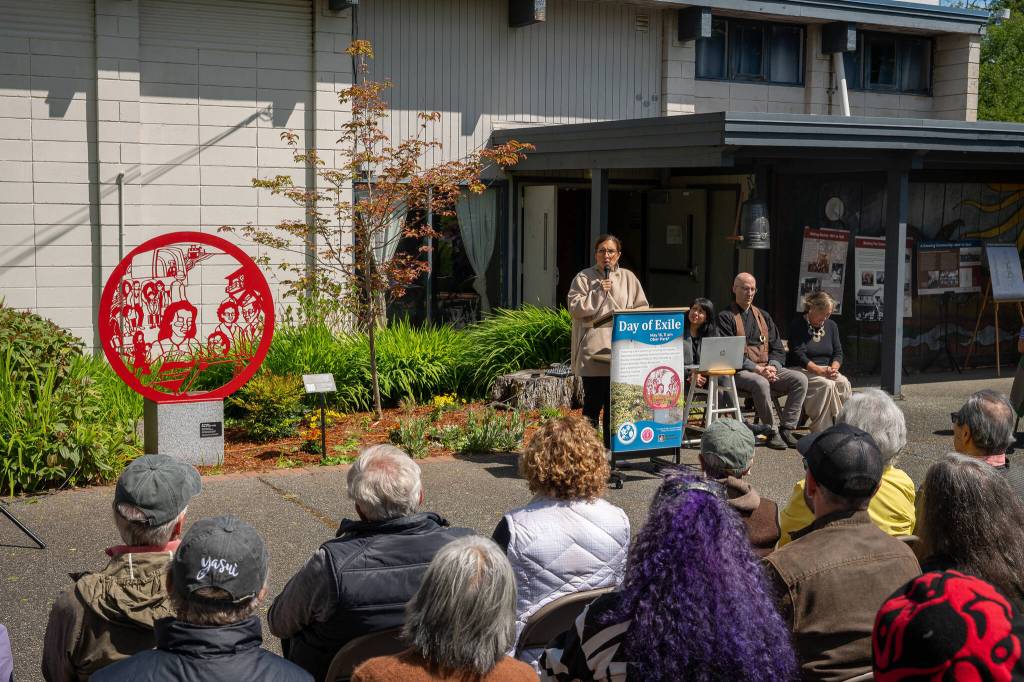
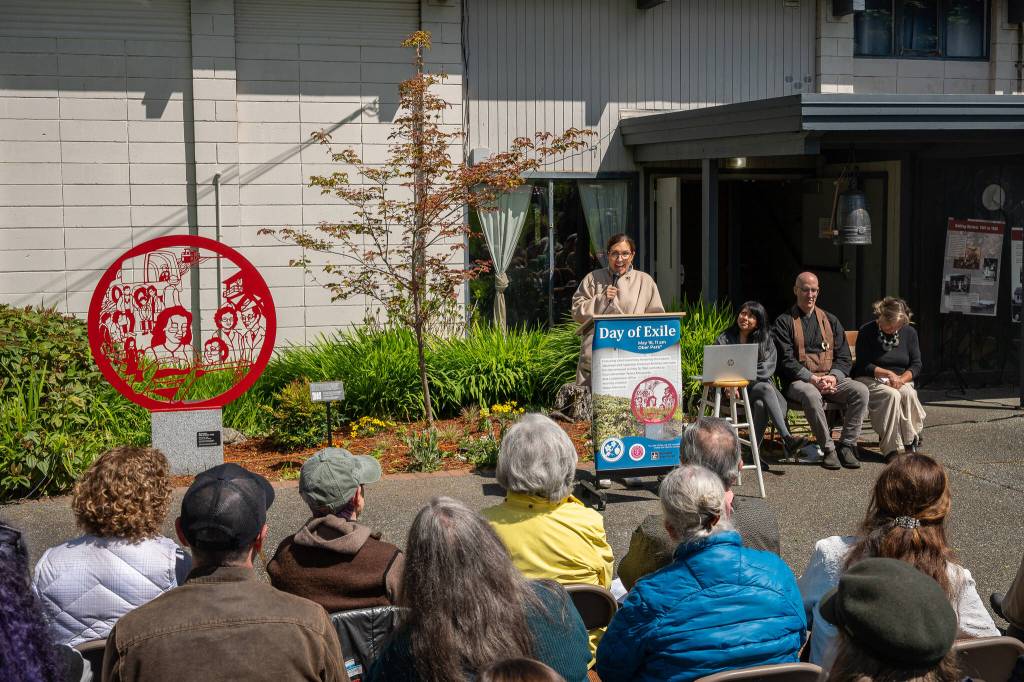
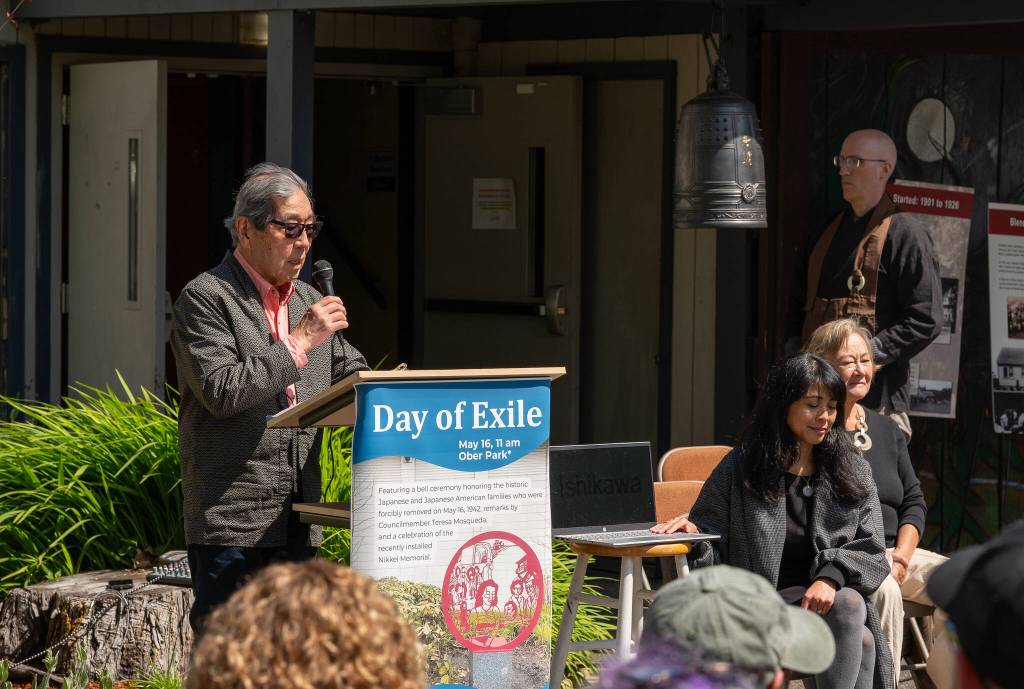
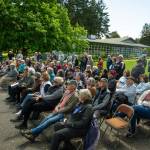
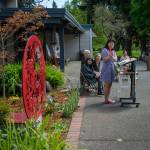
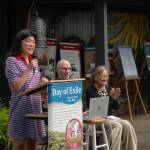
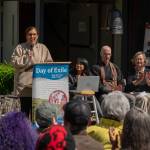
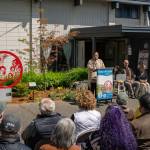
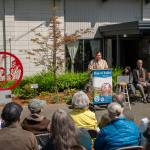
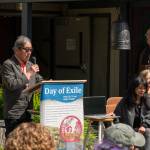
More than 100 islanders gathered Saturday at Ober Park, where 84 years ago Vashon’s Japanese and Japanese American families were ordered to assemble before being forced from their homes.
The event, Friends of Mukai’s annual Day of Exile program, marked the May 16, 1942, removal of 111 Nikkei — people of Japanese ancestry living outside Japan — from Vashon Island under Executive Order 9066, the wartime order that authorized the forced removal and incarceration of Japanese Americans from the West Coast.
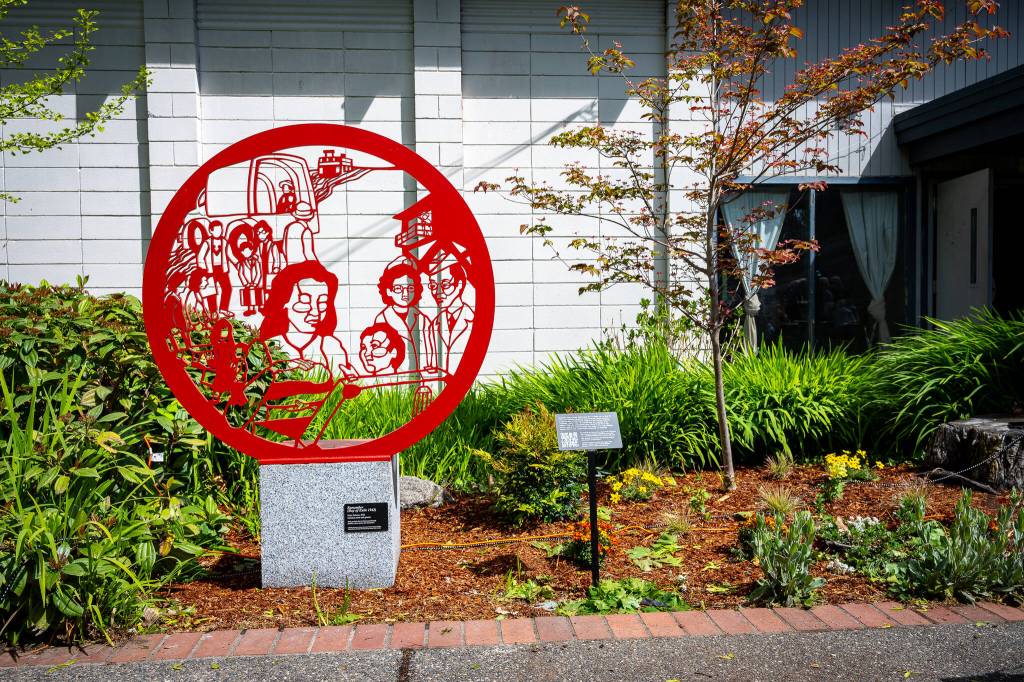
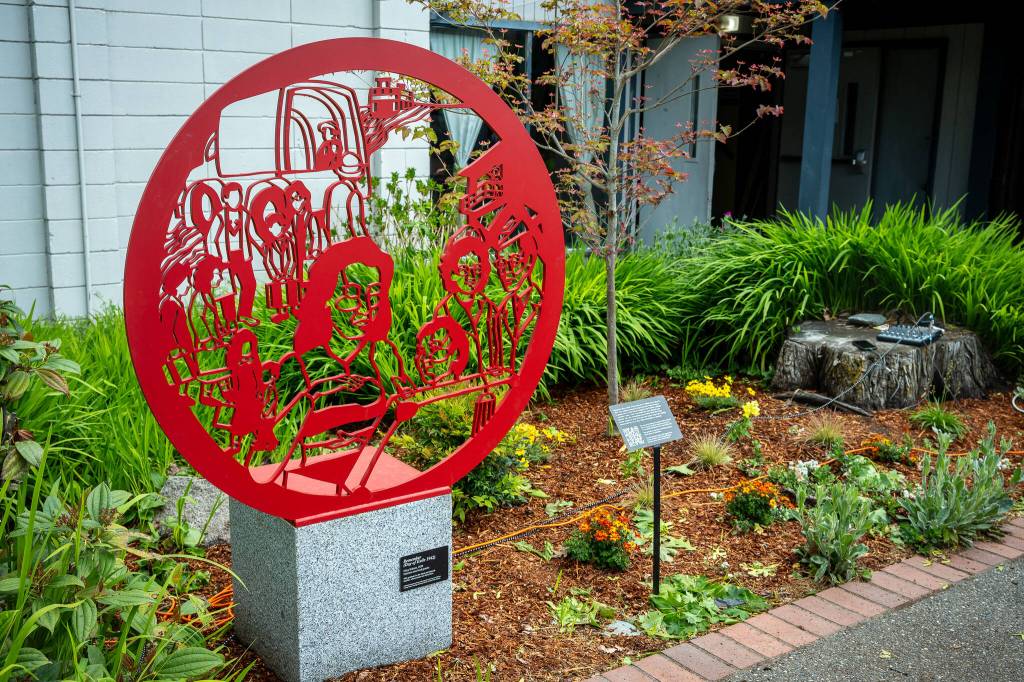
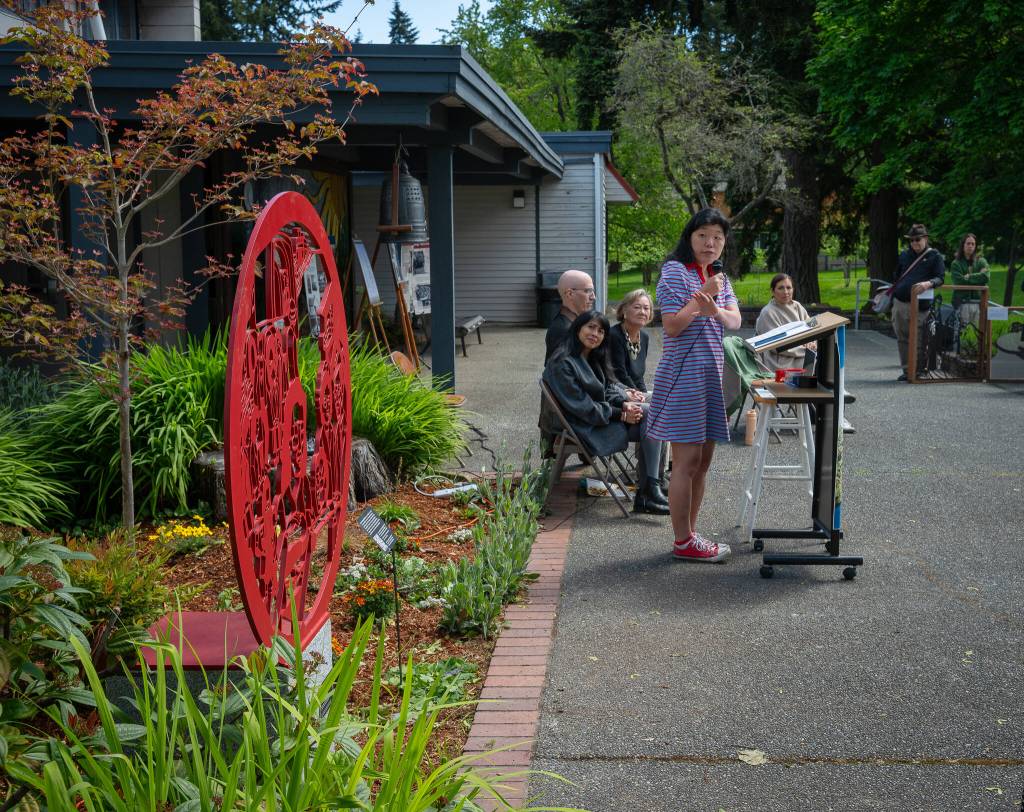
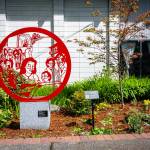
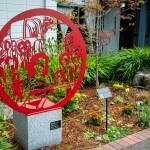
This year’s ceremony also unveiled “Remember,” a new red, circular, cut-metal sculpture honoring those families, installed outside the Vashon Park District office.
“This sculpture is the fruition of a dream we have had for many years,” said Rita Brogan, immediate past co-president of Friends of Mukai. “We have always wanted to be able to commemorate this site, so that such an injustice could never happen again.”
The sculpture was designed by Miya Sukune, a Japanese American artist who lives and works on Vashon, and funded by a $45,000 T-Mobile Hometown Grant. Sukune also designed the metal-cut panels unveiled at last year’s Day of Exile ceremony.
Jade Agua, executive director of Friends of Mukai, opened the program by thanking the descendants of Vashon’s Japanese families, community partners including the Vashon Park District, Vashon Library and Vashon-Maury Island Heritage Museum, and the volunteers who helped bring the memorial to Ober Park.
The ceremony began with a blessing from Abbot Koshin Cain of the Puget Sound Zen Center.
“Let us remember today the suffering of the islanders who were taken from their homes because of their ethnicity,” Cain said. “May the remembrance of that suffering guide us toward wise choices and compassionate action in our daily lives and in our civic lives, and may this sculpture standing here in front of us carry that remembrance forward to those who come after.”
Sukune said the sculpture was inspired in part by a photograph taken May 16, 1942, of the Sakai family children as they prepared to leave their Vashon home — a family whose descendants traveled to attend Saturday’s ceremony.
“When I look at it, I think about the uncertainty of that moment — a family portrait of children who don’t know if they’re returning home, if or when,” Sukune said.
In the sculpture, Sumi Sakai is shown packing a suitcase while her younger brother looks toward her with questions. Other families are depicted walking toward Ober Park to board army trucks and buses. A watchtower and armed guard appear on one side of the piece, evoking the camps where families were confined.
“The watchtower represents not only the confinement and the surveillance, but also the consequences of fear, racism and a failure to protect civil liberties,” Sukune said.
Sukune said the memorial was designed to honor individuals, not just a historical event.
“I wanted to focus on this moment, because history is not just made of dates and executive orders,” she said. “We are not looking at an anonymous mass of 125,000 Japanese Americans who were incarcerated, but individuals who are leaving their businesses, homes and their communities. Everyone has a name. Everyone has a story.”
The sculpture also references Mary Matsuda Gruenewald, a Vashon resident who later wrote the memoir “Looking Like the Enemy,” and her brother, Yoneichi Matsuda, who served in the segregated 442nd Regimental Combat Team during World War II.
Sukune said the memorial’s circular shape reflects the fact that the story does not have one ending. Only 12 families returned to the island after the war, she said. The Sakai family rebuilt their lives in California. The Matsuda family returned to their farm on Vashon.
As Sukune spoke, her voice broke, drawing tears from members of the audience.
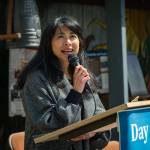
“They happened here in this community, to friends and neighbors,” she said. “This memorial exists because families are willing to share their stories, because many people believe those stories deserve to be remembered.”
Sukune closed by expressing hope that the memorial would serve future generations as both a warning and an inspiration.
“My hope is that this installation stands as both a remembrance of injustice and a testament to perseverance and community,” she said. “The stories of the Sakais, the Matsudas, and the 111 islanders are part of our collective history, and it is an honor to help preserve them here.”
After her remarks, Agua invited the crowd to take a shared exhale, saying it was important to feel and process what the ceremony had brought up — for themselves and for the community.
Councilmember Teresa Mosqueda said the gathering at Ober Park was an act of remembrance and responsibility.
“We stand here today at Ober Park, not by coincidence, but by intention,” Mosqueda said. “For 84 years ago on this date, 111 Japanese and Japanese American residents of this island were ordered to gather here. They came with what they could carry. They did not know when or whether they would return.”
Mosqueda said the sculpture’s image of Sumi Sakai packing a suitcase while her younger brother looks on captures the confusion children may have felt as their families prepared to leave their homes.
“Where are we going? When are we coming back? Why is this happening?” she said, referring to questions children may have asked as their families packed to leave. “Questions that I am sure no one could easily answer back then, and in every way they’re questions we still can’t answer today. They’re questions that demand answers, reparations, and policy corrections.”
Mosqueda also connected the memorial to the longer history of Japanese American life on Vashon, including families such as the Mukais, who came to the island in the early 1900s, farmed strawberries and helped build an agricultural community — including the fruit barreling plant that still stands today — despite discriminatory laws barring Japanese immigrants from owning land.
The Mukai family purchased land in their American-born son’s name to work around those laws.
“They built everything around a discriminatory law,” Mosqueda said. “That’s resilience. That’s ingenuity. And yet that’s wrong, that they had to do that.”
Agua said Friends of Mukai continues to mark the Day of Exile each year because the history must remain visible.
“What the Japanese community faced then is the same thing that different communities now are facing,” she said. “It’s a lesson from history that we need to always remember.”
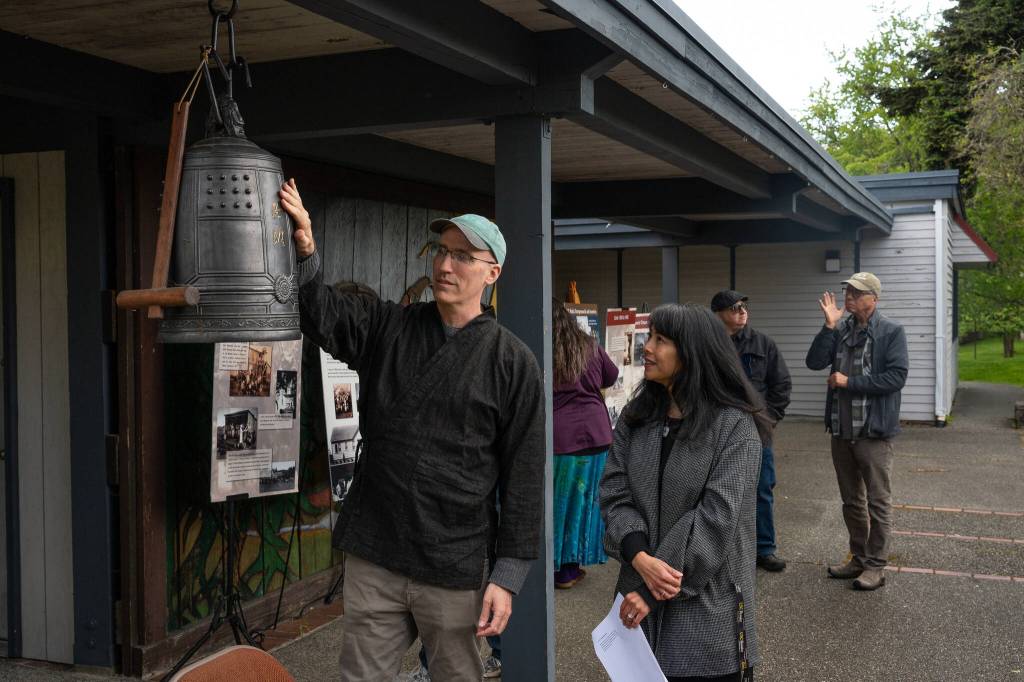
At the end of the ceremony, descendants in the crowd were invited to stand. Joe Okimoto — a Vashon islander who was himself among the Japanese Americans unconstitutionally uprooted and incarcerated during World War II — read aloud the family names of those exiled from Vashon.
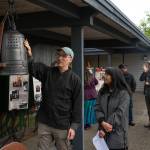
A bell rang between each one: Abo, Fujioka, Hoshi/Tanaka, Igarashi, Ishikawa, Kamimoto, Kunugi, Kuroda, Matsuda, Matsumoto/Usui, Mishiro, Miyoshi, Nagai, Nakamichi, Nishida, Nishiyori, Nita, Otsuka, Owada, Sakahara, Sakai, Sakamoto, Takatsuka, Tanimura, Togami/Tomikami, Yamamoto, Yamane, Yorioka, Yoshida and Yoshimura.