County gets funds to restore shoreline
Published 12:30 pm Wednesday, August 27, 2025
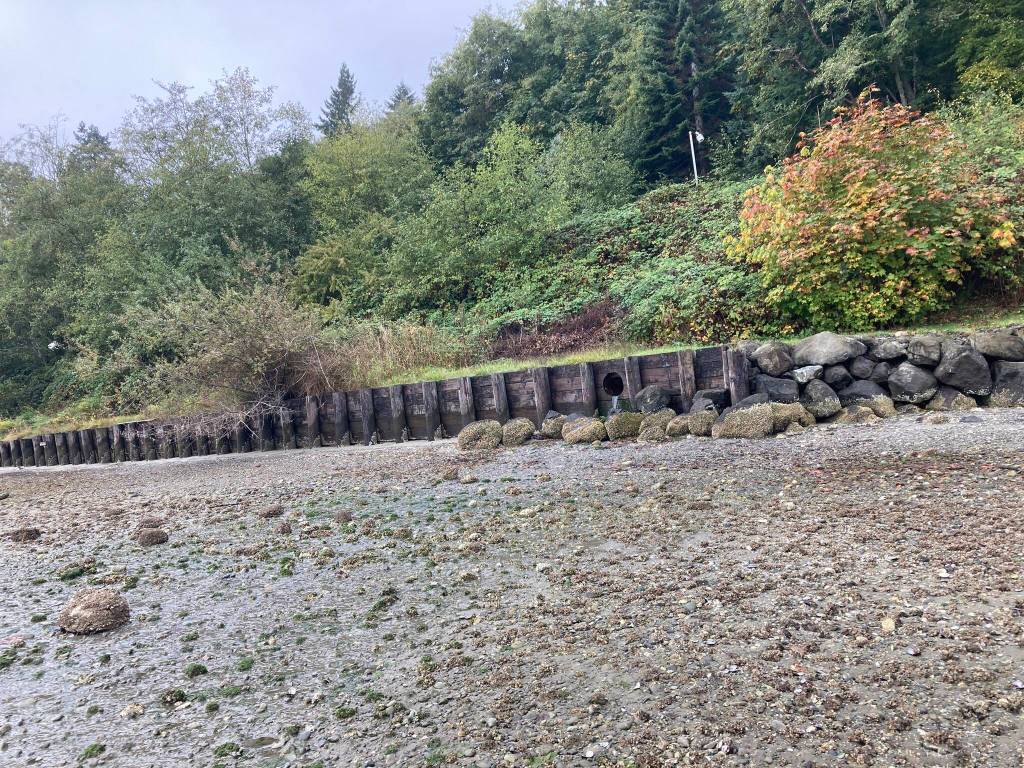

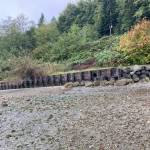
King County’s decades-long effort to safeguard critical stretches of Vashon’s shoreline got a boost last week, when the state announced it was awarding the county $1.15 million to remove bulkheads, install native plants and take other steps to restore shoreline habitat on the island.
The funds from the State Department of Fish & Wildlife’s Estuary and Salmon Restoration Program will enable the county to remove 400 feet of bulkhead just north of the Lost Lake Preserve on the southern end of Vashon. Another project will take place near Piner Point on Maury Island.
The county matched the state grant with $575,000 of county funds from the park levy and Conservation Futures, said Greg Rabourn, Vashon Maury Island Steward for the county’s Department of Natural Resources and Parks.
The funds will enable the county to restore land that it purchased previously from private landowners, continuing work that is critical to salmon recovery and the health of the region’s iconic orca whales, Rabourn said.
Bulkheads and other beach-hardening measures destroy spawning habitat for forage fish, the basis of the Puget Sound food chain. They shorten the beach, interrupting the natural drifting of sand and sediments and causing high-energy waves that scour the beach. What’s more, they’re often made from logs covered in creosote, a toxin to fish that leaches into the salt water or remains on the sand where fish spawn.
When bulkheads are removed, Rabourn said, a natural shoreline returns quickly. Wracks of driftwood begin to accumulate; overhanging vegetation returns, dropping insects into the water; sandy stretches begin to form. Such beaches provide habitat for surf smelt, sand lance and other forage fish to spawn, which in turn feeds salmon and ultimately orca whales, he said.
“What we have seen at previous bulkhead removal sites is that once the bulkhead was removed, we had fish spawning within months,” Rabourn said. “That’s why I love shoreline restoration so much.”
So far, the county has removed about 2,000 feet of bulkhead and other kinds of shoreline armoring on Vashon Island, most of it in the Maury Island Aquatic Reserve, a huge swath of nearshore surrounding most of Maury Island and taking in all of Quartermaster Harbor. The county is also doing shoreline work on other parts of the island: In September, crews will remove about 200 feet of bulkhead near Corbin Beach on the northwest side of Vashon.
Tom Dean, conservation director at the Vashon-Maury Island Land Trust, said such work on Vashon is critical to Puget Sound’s overall health. The island has an outsized impact on the health of the region, he said, in large part because of heavy development in the rest of the county. “We’re uniquely positioned in the Sound to have a big impact,” he said.
The work is making a difference, he added. A new study shows that chinook salmon are beginning to return to the island’s creeks and pocket estuaries.
The project near Lost Lake will include not only bulkhead removal, but also work that will daylight an unnamed stream that comes off the bank and onto the shoreline via a culvert, Rabourn said. County crews will terrace the banks after the bulkhead is removed, stabilizing it with native plants. Three cabins were recently removed from the site. Another two cabins will be removed from Piner Point, he said.
The work at Lost Lake is enabling the county to connect stretches of shoreline previously protected, Rabourn said. “And generally speaking, in terms of habitat, bigger is better, and connected is better.”
He expects the removal work will occur in the summer of 2027. Removing bulkheads is a complex endeavor, requiring a long permitting process, he said.
Rabourn, who has been working on protecting Vashon’s shorelines for about 15 years, said he’s inspired by what his program, assisted by county and state money and strong support on the island, is beginning to accomplish. Besides the 2,000 feet of shoreline already restored, another 1,000 feet of work – separate from the Lost Lake project — is in the queue.
It’s a large-scale, long-range effort, he said — the kind that he believes will make a difference over time.
“Vashon Island is rich with opportunities to chisel away at unnecessary shoreline armoring and restore that precious ribbon of habitat where forest and streams meet Puget Sound,” he said. “So much life is dependent on a natural shoreline.”
— Leslie Brown is a former editor of The Beachcomber.