Time & Again: P. Monroe Smock took Vashon by storm in the 1920s
Published 1:30 am Thursday, October 12, 2023


The Roaring 20s did not roar as loudly on Vashon as it did in other parts of the country.
The 1918 flu pandemic had an impact but was quickly over in the minds of most islanders.
The post-World War I economic turmoil affected the Vashon shipyards, but the Seattle general strike and labor unrest of the times did not significantly impact the island except for the closing of the Pike Place Market and the disruption of agricultural shipments off the island during the strike.
The rise of intolerance toward immigrants and toward Black Americans was echoed in some letters to the island newspaper. This intolerance does not seem to have been directed toward the Japanese-American families who had settled on the island, but rather at the itinerant pickers of all races.
The largely single young men who drove the expanding natural resource extraction economy of the late 19th and early 20th centuries began to leave for new frontiers like the Alaska and Yukon goldfields.
The decline of logging, fishing, and mining (gravel and clay) left farming as the only viable economic engine for the island. While farming expanded on Vashon during the 1920s, the island relied more on smaller family farms and less on large green-grocer greenhouses, flower farms, chicken ranches, and berry farms.
A nationwide agricultural depression made life even more difficult for Vashon farmers as markets shrank and crop prices dropped.
Pressure on farmers increased with the rapidly expanding use of machinery like tractors, which were expensive to purchase and maintain. This triple-pronged threat (decreased demand, falling prices, and increased costs) foreshadowed the Great Depression of the 1930s and created conditions in rural communities such as Vashon that left them vulnerable to the hardships that were to come.
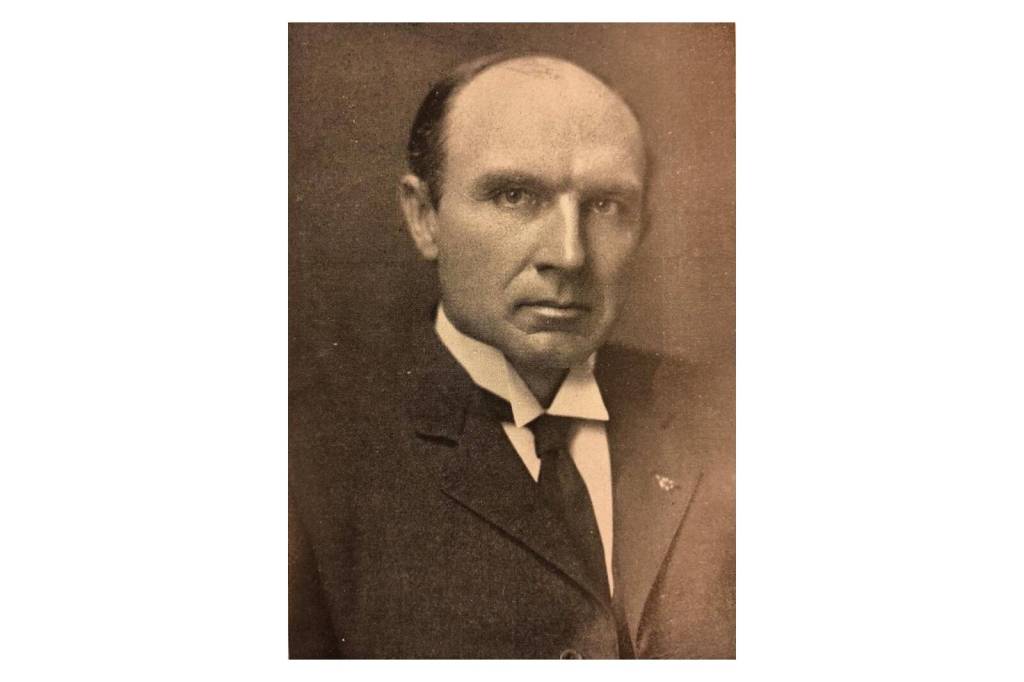
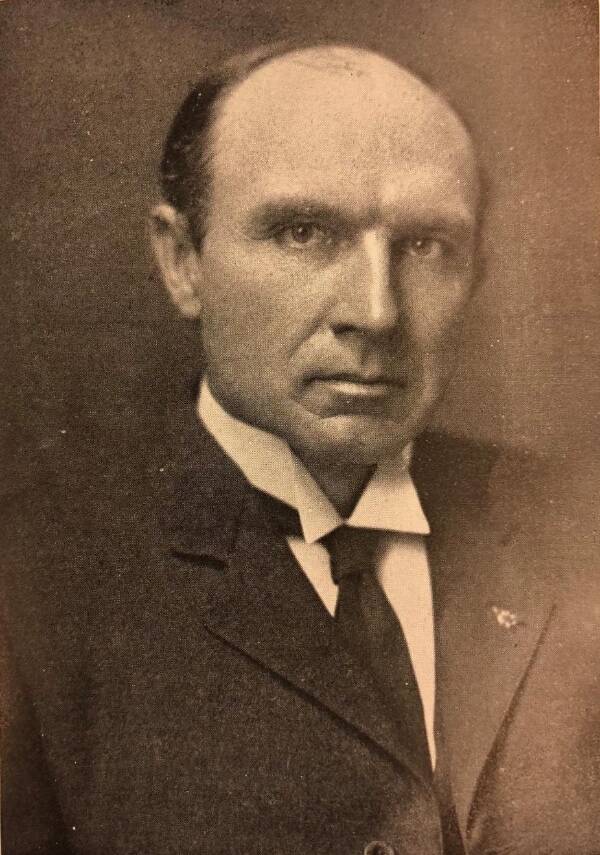
P. Monroe Smock arrived on Vashon in 1920, having purchased the newly created Vashon Island News-Record, which combined the Vashon Island News (printed in Burton) and the Vashon Island Record (printed in Vashon).
Confronting a declining economy, P. Monroe responded as any good promoter and newspaper editor would: he became one of the champion spokesmen of Vashon.
Smock’s boosterism and unflagging energy turned him into a kind of “Energizer Bunny” for the development and publicization of the Island.
Smock, born in Pennsylvania in 1874, became a superintendent of schools at age 19, and an ordained Baptist minister at 22, going on to serve several churches in Iowa, South Dakota, and Idaho.
In 1909, Smock and his wife Anna moved to New Plymouth, Idaho, where he organized a church, became the city attorney, and was president of the Fruit Growers Union. He lost in a bid for Congress in 1912, under the banner of Roosevelt’s Progressive Party.
Smock later worked as an auctioneer, and then became owner/editor of the New Plymouth Sentinel, beginning his newspaper career.
In 1915 he became the Idaho delegate on Henry Ford’s Peace Ship Expedition, which sought to bring an end to what would be called The Great War. On his return, he promoted the (ultimately unsuccessful) mission by addressing large crowds.
Smock married his second wife, Agnes May Lias, in 1919. Agnes was a schoolteacher who had taught in Iowa, Colorado, and then Idaho, where she met P. Monroe.
When the newly married Smocks moved to Vashon Island in 1920, P. Monroe wrote in one of the first issues of his paper: “We are entire strangers here, are busy getting our house in order, but we expect to spend a share of our time rambling over the island, and if we don’t meet you, drop in the office and meet us. We are the same height as Abraham Lincoln, nearly as homely, but are pretty good-natured as a rule, so send in the news, and drop in soon and say, Howdy.”
Smock immediately began promoting his island.
He joined the Royal Arch Masons, sponsored a revival of the Strawberry Festival, wrote poetry hyping the island, and replaced the banner on the News-Record with the slogan “Vashon-Maury Islands – The choicest territory between Seattle and Tacoma.”
P. Monroe was a tireless worker. He helped establish Water District #19, served on the Vashon School Board, helped secure land for the new golf course, and was instrumental in establishing the Goodwill Farm at the location that became Vashon Community Care.
Smock gave numerous lectures and talks, and as one observer commented in the News-Record, “Mr. Smock’s address was like Fulton’s steamboat — hard to get it started, but harder to get the blamed thing stopped.”
He emceed the opening of the Point Defiance-Tahlequah Ferry to a crowd of over a thousand people and gave the opening address at the 1923 Strawberry Festival in Ellisport.
In June 1928, Smock left his wife Agnes and their three young children, moving to Seattle where he served as King County District Horticulturalist.
Agnes, now a single mother, took over ownership of the News-Record, became the paper’s editor, and became the “voice” of Vashon for the next 14 years.
Agnes’s ownership of the News-Record created a legacy of local ownership that continued well past her 1942 retirement into the late 1990s, fostering a focus on local issues and news that continues today in The Vashon-Maury Island Beachcomber.
Agnes’s story stands on its own and will be told more fully in a future Time & Again.
P. Monroe was only on Vashon for seven years, but he made a deep impact. Perhaps the peak of his boosterism came in May of 1926 when he presented a half-hour talk on the newly-fledged Seattle radio station KFOA.
Titled “It’s Vashon Isle!” the broadcast shamelessly promoted all things Vashon and generated hundreds of breathless and enthusiastic letters to the editor that took weeks to reprint.
The Vashon Island of this broadcast comes alive on the stage of Vashon Center for the Arts as Jeff Hoyt, the island’s modern-day “voice” of Vashon, presents four unique performances of Smock’s radio broadcast, putting the island’s finest attributes on display with images and music. If you want to hear “The Speech That Put Vashon On The Map,” come to Vashon Center for the Arts on October 13-15 to attend any one of the four performances of “It’s Vashon Isle.”
Jeff Hoyt and special guests will discuss the issues that link the Vashon of then with the island of today, while also bringing a broad range of Vashon singers and musicians to the VCA stage to punctuate P. Monroe’s rosy oratory with song.
Get tickets at vashoncenterforthearts.org.
Bruce Haulman is an island historian; Mike Sudduth is an island historian and researcher; and Terry Donnelly is an island photographer.