Desert Island Bookworm: A history of a historian
Published 1:30 am Wednesday, August 13, 2025
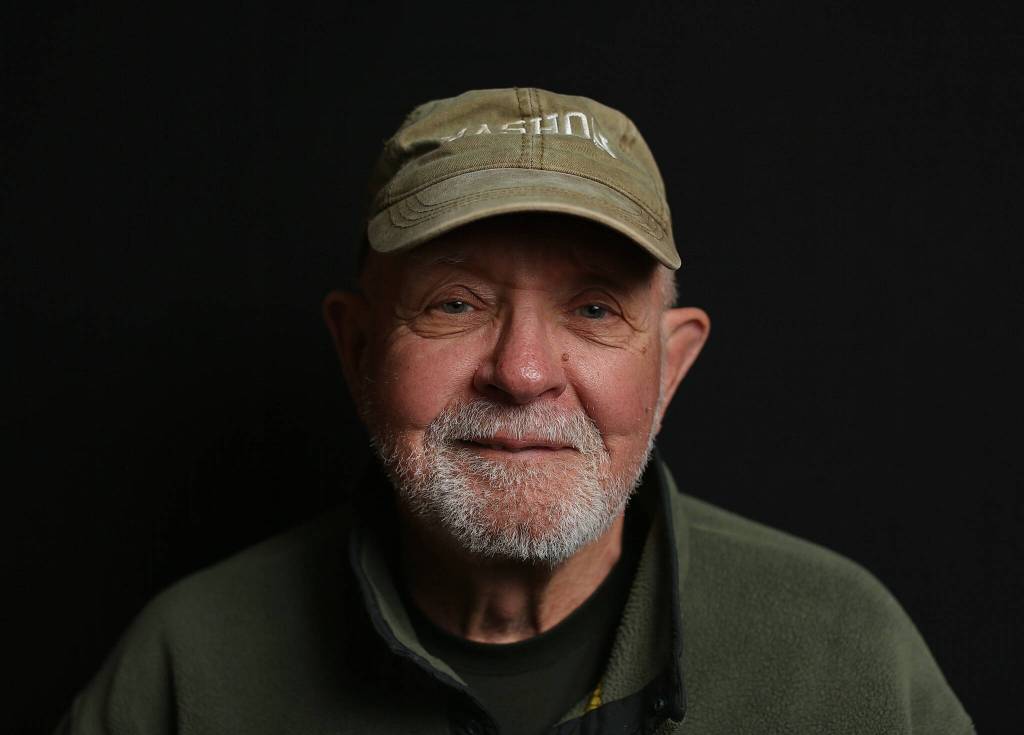
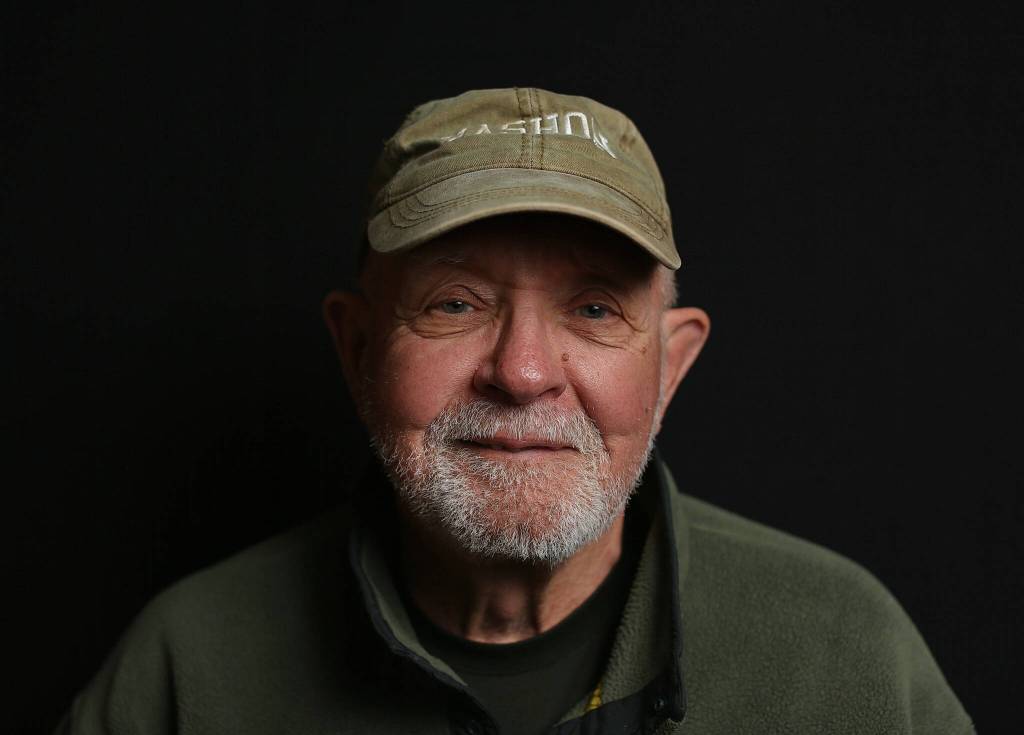
Bruce Haulman’s five-decade tenure on Vashon Island can be traced back to a trip he made with his first wife to the Pacific Northwest in 1971.
More specifically, it owes its origin to said wife, who became, he said, “fascinated with the romantic idea of living on an island.” Well, we can all relate to that.
The well-known Vashon historian was born in Washington, D.C. in 1943, the son of an electrical engineer in the US Navy. At age ten, the family moved to Panama City, Florida which was, Haulman noted, “very different in those days: It was just a small town with some nice beaches and a couple of motels.” He grew up on the water, and upon graduation attended Stetson University. A double bass player, he was a music major. “I dinked around at it,” he said, but he didn’t make a career of it.
He instead switched to a new program, American Studies, before undertaking a Masters at Florida State in international relations. He fell in love with the inter-disciplinary nature of the work, and realized he’d found a career. Next came a PhD program at the University of Texas in Austin, where he found the school “desperately in need of teaching assistants” for the rapidly expanding program.
He chose as his research topic price controls in World War 2, although he never finished that thesis. Fifteen years later he entered a PhD program at the University of Washington and completed a dissertation there. It was a film genre study comparing western “cowboy” movies to “education films.”
“Cowboy films are masculine in nature,” he explained. “They’re all about action and exclusion. In contrast, movies set in schools or other educational institutions — think “Dead Poets’ Society” — are feminine, and focus on feelings and inclusion.”
After stints teaching in St. Louis and Oklahoma, Haulman made that fateful trip to the PNW, and ended up moving to Vashon in 1973. His employment history was varied, working at Green River College, as a management analyst for King County and a budget administrator for King County Metro. After a ten-year stint as Dean of Green River College, he went back to teaching full-time.
“As an administrator, I knew how to game the system,” he said with a smile. “It allowed me to develop and teach some really fun courses” — all of them inter-disciplinary in nature. He taught in Tofino (British Columbia) and the United Kingdom.
In 2000, he developed a study-abroad program that took him to Melbourne, Australia during our (northern hemisphere) winter. Haulman did that for four years before establishing a companion program in New Zealand; he taught for six weeks in each country, a gig that lasted for twenty years. “It was a great way to divide the year and get out of our wet winters for awhile,” he noted.
Haulman retired in 2011, but continued working on projects. Among these was the Study of the U.S. Institutes (SUSI) exchange program, which brings women from other countries to learn development skills — such as fundraising, presentations and accounting — that they can then apply back at home.
In 2001, he obtained a grant from King County to develop the website vashonhistory.com. This involved (among other things) digitizing census data for the island, which in turn led Haulman to a project documenting the history of the Japanese on the island (including their incarceration during World War 2). He joined the Heritage Museum’s Board in 2000, becoming its president in 2020.
So what books would Haulman take to a desert island? “I’d definitely want books that expand your world,” he says. Among these would be a set of sacred texts, including the Bible, together with the complete works of Shakespeare. “Both deal with every human emotion,” he notes, “as well as providing lessons in morality.”
He’d also take Tolkien’s “Lord of the Rings,” which he describes as “a remarkable world that is infinitely expandable.”
Another author to bring along would be Carlos Castenada: “His books deal with a world of magical realism that may or may not exist. They make you think that perhaps the world is a very different place than you believe it to be in your reality.”
Much of his view complements his long immersion in inter-disciplinary studies. That’s reflected in another choice, “Gödel, Escher and Bach,” a 1973 book by the American cognitive scientist Douglas Hofstadter that explores common themes and mathematical links in the works of the three individuals in the title.
“Ultimately, it’s about connections,” he says, “looking at the world with different eyes, and different perspectives. I find that fascinating — and very useful.”
Haulman’s comprehensive text about local history, “A Brief History of Vashon Island,” is available from the Vashon Bookshop.
Phil Clapham is a retired whale biologist who lives on Maury Island. His comic romance novel “Jack” (under his nom-de-plume Phillip Boleyn) is also available at the Vashon Bookshop, and on Amazon.